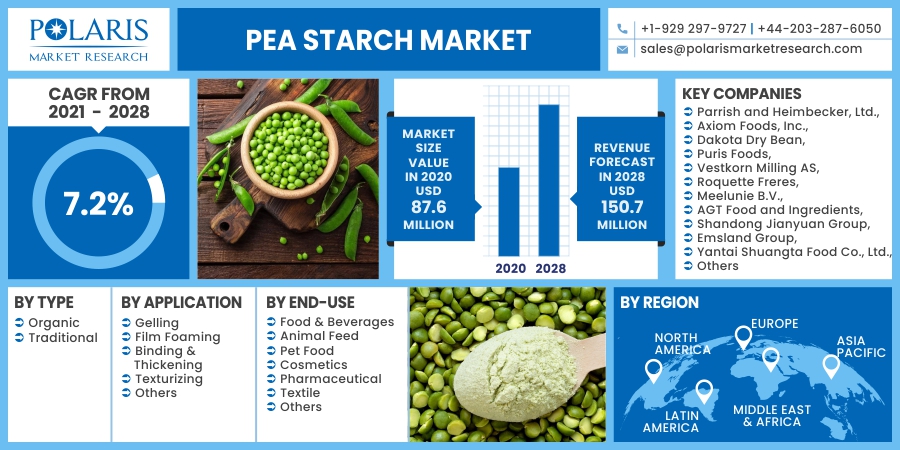



The global pea starch market is estimated at USD 426.9 million in 2024 and is projected to reach USD 671.8 million by 2029, at a CAGR of 9.5% from 2024 to 2029. The pea starch market has witnessed significant growth in recent years, driven by increasing consumer demand for plant-based and sustainable ingredients. Pea starch, derived from yellow peas, has become a key ingredient in the food and beverage industry, as well as in various non-food sectors like pharmaceuticals, textiles, and biodegradable plastics. This blog explores the key trends, growth drivers, and future opportunities in the pea starch market.

What is Pea Starch?
Pea starch is a natural carbohydrate extracted from the seeds of yellow peas. Known for its high starch content and excellent gelling and thickening properties, pea starch is used in a wide array of applications. Unlike other starches, pea starch is non-GMO, gluten-free, and offers an allergen-free alternative to many other starch sources like corn and wheat. This makes it an attractive choice for manufacturers looking to meet the rising demand for clean-label, healthy products.
Rise of Plant-Based Products: The global shift toward plant-based diets has significantly boosted the demand for plant-derived ingredients. Pea starch, as a plant-based starch, is seen as a healthy alternative to traditional starches, making it popular in vegan and vegetarian products. Its versatility in food products, from snacks and sauces to dairy-free alternatives, is further fueling this demand.
Clean Label and Sustainable Packaging: Consumers are increasingly concerned about the ingredients in their food, with a growing preference for clean-label products free from artificial additives and preservatives. Pea starch offers a natural, clean alternative to other starches, making it a preferred choice for manufacturers. Additionally, pea starch is biodegradable, making it a viable option for sustainable packaging solutions, such as eco-friendly food containers and wraps.
Health Benefits: Pea starch is rich in dietary fiber and offers several health benefits, including improved digestion and a low glycemic index. These properties make it a sought-after ingredient in functional foods, snacks, and even baby food. As consumers become more health-conscious, the demand for pea starch is expected to continue its upward trajectory.
Versatility Across Industries: Beyond food, pea starch has applications in pharmaceuticals, cosmetics, and even the production of biodegradable plastics. Its use as a binding agent in tablets and capsules, as well as its ability to thicken and stabilize formulations in skincare, is contributing to the growth of the market. The expanding use of pea starch in non-food sectors opens up new revenue streams and growth opportunities.
Advancements in Extraction Technologies: Ongoing advancements in extraction technologies are making the production of pea starch more efficient and cost-effective. This, in turn, helps to lower the price of pea starch and make it more accessible for a variety of industries. Innovations in enzymatic processing and separation techniques are expected to drive market growth.
Pea Starch in Gluten-Free and Allergen-Free Products: The demand for gluten-free and allergen-free products is increasing rapidly. Pea starch serves as an ideal alternative to wheat, corn, and other allergens, making it a go-to choice for gluten-free products, particularly in the bakery and snack industries.
Pea Protein and Starch Co-Products: With the growing popularity of pea protein, pea starch often emerges as a co-product. The rise in demand for pea protein, especially in plant-based meat alternatives, provides a boost to the pea starch market as it is produced simultaneously with the protein. This dual production opens new opportunities for value-added products in the food and beverage industry.
Download PDF Brochure: https://www.marketsandmarkets.com/pdfdownloadNew.asp?id=78961382
Pea Starch Market Regional Insights
North America: The North American market is a key player in the pea starch industry due to the strong demand for plant-based and gluten-free products. The U.S. and Canada have witnessed a rise in health-conscious consumers, and the increasing trend toward clean-label foods is expected to drive further demand for pea starch in the region.
Europe: Europe is another major market, driven by the increasing popularity of plant-based diets and sustainable packaging solutions. The European Union has stringent regulations on food safety and sustainability, which is encouraging the adoption of pea starch in various applications.
Asia-Pacific: The Asia-Pacific region is poised for significant growth in the pea starch market, particularly in countries like China and India, where the demand for plant-based foods and natural ingredients is rising rapidly. Additionally, the region's growing food and beverage industry presents opportunities for pea starch manufacturers.
Request Sample Pages: https://www.marketsandmarkets.com/requestsampleNew.asp?id=78961382
The Future Outlook
The pea starch market is expected to experience strong growth, driven by trends like the rise of plant-based diets, sustainable packaging, and health-conscious consumer choices. Innovations in extraction processes and the growing demand for gluten-free, allergen-free, and clean-label products will continue to propel the market forward. As the demand for plant-based ingredients expands across industries, the potential for pea starch as a key ingredient in food, pharmaceuticals, cosmetics, and beyond looks promising.
In conclusion, pea starch is a versatile and sustainable ingredient with enormous growth potential. As consumers continue to prioritize health, sustainability, and clean-label products, the demand for pea starch will only increase. Companies that innovate and adapt to these trends will be well-positioned to capitalize on the expanding opportunities within this dynamic market.