


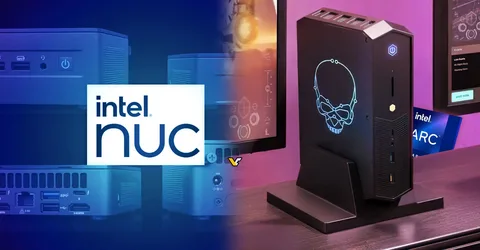
Gone are the days when bulky, space-occupying servers were used in various data centres. Times have changed, and technology has blessed us with advanced Intel NUC servers (Next Unit Of Computing). These new-generation servers are designed to offer next-gen computing solutions in a compact form while maintaining the utmost efficiency across all enterprise-grade operations.
According to one report, the worldwide market for NUC servers will probably surpass $7.47 billion by the end of 2033.
Whether you are an entrepreneur, a developer, or a hardcore tech enthusiast, these space-optimizing servers can be placed perfectly in existing rack-mount server systems. From edge computing to other cloud environments, NUC servers are all about performance, power, and efficiency.
Let's talk and understand why these servers can be the next big thing for the future of computing.
Defining Intel NUC Servers
When buying a server for your data center, an Intel NUC server (Next Unit of Computing) can be a perfect pick because it is designed to handle various workloads while maintaining a compact factor. These SFF (small form factor) servers are fitted with the latest processors from Intel, along with options for high-speed storage and enterprise-grade networking, and they can be housed in your palm.

Key Specs of Intel NUC Servers
- Processors: Intel Core i3, i5, i7; options for enterprise environments with Xeon.
- Memory: It supports DDR4/DDR5 memory configurations of up to 64 GB.
- Storage: M.2 NVMe SSDs, SATA for additional storage.
- Connectivity: Dual or quad Ethernet, Wi-Fi 6, Bluetooth.
- Expandability: Thunderbolt 4, USB 3.2, HDMI, and PCIe.
Why Intel NUC Servers Are the Future of Computing
1. Compact And High-Performance Servers
One of the major benefits of Intel NUC servers is their server-grade performance in an under-average small form factor. Traditional rack servers require dedicated space, cooling, and infrastructure, while NUC servers may be deployed practically anywhere.
Some Key Performance Features:
- Intel 12th and 13th Gen processors for multithreaded workloads
- Integrated Intel Iris Xe Graphics for GPU-accelerated work
- PCIe Gen 4 for very high data transfer rates
2. Best Suited for Edge Computing & IoT
Companies are changing how they process and transfer data with edge computing by placing workloads near the source. Due to their size and nominal power requirement, the Intel NUC servers are a natural fit for edge deployment.
Why Nuc Is Ideal for Edge Deployment?
- Able to be mounted in tiny enclosures by IoT devices.
- Able to carry Real-time AI inference processing.
- Provides low-Latency networking with Dual Ethernet and Wi-Fi 6.
3. Energy Efficient and Cost-Saving
Regular servers undoubtedly increase power and cooling costs. On the other hand, NUC servers have extremely low power consumption and excellent performance at enterprise-grade.
Pros of Energy Efficiency:
- Lowering the power requirement with the ability to go as low as 15W in idle states
- Passive cooling to obviate the need for the noisy operation of fans
- Reduced carbon footprint for environmentally-conscious companies
4. Broadly Applicable for Businesses and Developers
In every industry, Intel NUC servers cater to virtualization, AI development, media processing, cloud hosting, etc.
Use Cases for Intel NUC Servers:
- Home Labs: Run virtual machines and test networking setups.
- Media Servers: High-performance Plex or Jellyfin streaming.
- Business Workloads: Lightweight database hosting and web services.
- AI & Machine Learning: GPU-assisted computing for AI models.
5. Virtual Machines and Containers in Support
NUC Servers are full-fledged virtualization environments and are small enough to be considered tools for simultaneously booting multiple workloads.
Virtualization Feature:
- Intel VT-x and VT-d for hardware-assisted virtualization.
- Proxmox, VMware ESXi, and Docker all run great.
- Multiple VMs or containers can be created without performance degradation.

6. Enterprise-Grade Security Features
Security is essential to the cult of any computing environment. Intel NUC servers come loaded with enterprise-grade security feature sets at the hardware and firmware levels.
Security Highlights:
- Intel vPro technology for remote management and security.
- Trusted Platform Module (TPM) 2.0: Encrypted storage.
- Secure Boot and BIOS-level protections.
7. Scalability & Expandability
NUC servers are very scalable and excellent for growing businesses, distinguishing them from traditional compact PCs.
Expandability Features:
- Thunderbolt 4 and PCIe Gen 4 for high-speed peripherals.
- Additional SSD slot for expandable storage.
- Multiple USB 3.2 ports for various external devices.
The Intel NUC server is ideal for:
- Power efficiency, high performance-computing for businesses.
- IT professionals establishing home labs and edge setups.
- Developers need compact yet powerful virtualization environments.
It may not be suitable for:
- Enterprises requiring massive storage and high-density GPU computing.
- Large-scale data centres that depend on multi-rack server setups.
Conclusion
In a nutshell, Intel NUC servers are redefining the future of modern computing. These small powerhouses guarantee energy efficiency, security, and scalability for the commercial sector, home laboratories, or edge computing.
As technology advances, NUCs will assume a more pivotal role in virtualization, AI, edge processing, and cloud computing. Heavy on power, flexible, and low-cost operationally, they are born for dominance in the next wave of computing innovation.



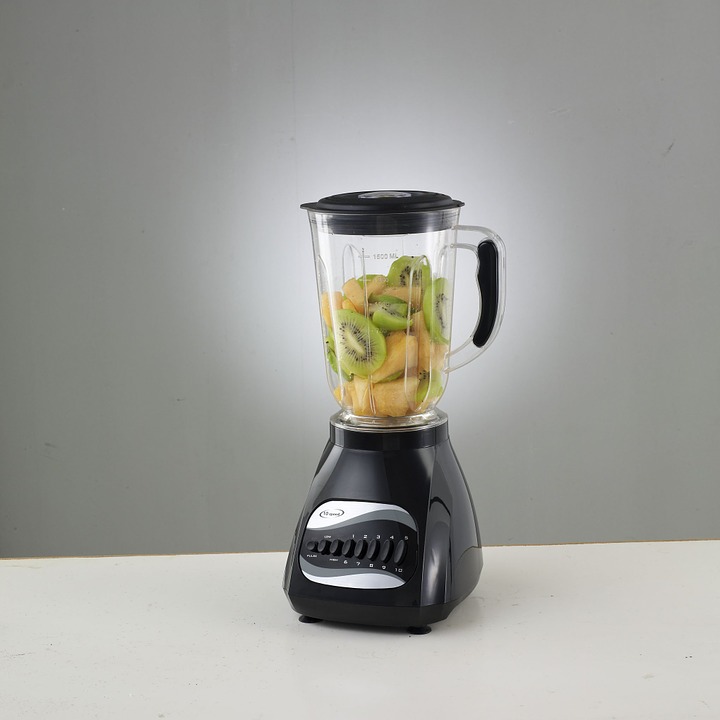
The analysts forecast the global juicer market to exhibit a CAGR of 6.58% during the period 2019-2024.
By doing so, the research report serves as a repository of analysis and information for every facet of the market, including but not limited to: regional markets, and application.Geographically, the global juicer market is segmented into North America, Asia Pacific, Europe, Middle East & Africa and South America.
This report forecasts revenue growth at a global, regional & country level, and provides an analysis of the market trends in each of the sub-segments from 2019 to 2024.- North America (U.S., Canada, Mexico, etc.
)- Asia-Pacific (China, Japan, India, Korea, Australia, Indonesia, Taiwan, Thailand, etc.
)Download Free Sample Report @ https://www.radiantinsights.com/research/global-juicer-market-outlook-2019-2024/request-sample Based on application, the juicer market is segmented into:- Household- CommercialThe report also includes a discussion of the key vendors operating in this market.
Some of the leading players in the global juicer market are:- AUX Group Co., Ltd.- Bear Electric Appliance Co., Ltd.- Braun GmbH- Breville Group Ltd.- Cuisinart Inc.- Electrolux AB- Groupe SEB- Joyoung Co., Ltd.- Koninklijke Philips NV- Midea Group- NUC Electronics Co., Ltd. (Kuvings)- Panasonic Corporation- SKG Electric Co., Ltd.- Whirlpool Corporation- Zhejiang Supor Co., Ltd.- request free sample to get a complete list of companiesObjective of the study:- To analyze and forecast the market size of global juicer market.- To classify and forecast global juicer market based on region, and application.- To identify drivers and challenges for global juicer market.- To examine competitive developments such as expansions, mergers & acquisitions, etc., in global juicer market.- To conduct pricing analysis for global juicer market.- To identify and analyze the profile of leading players operating in global juicer market.The report is useful in providing answers to several critical questions that are important for the industry stakeholders such as manufacturers and partners, end users, etc., besides allowing them in strategizing investments and capitalizing on market opportunities.Key target audience are:- Manufacturers of juicer- Raw material suppliers- Market research and consulting firms- Government bodies such as regulating authorities and policy makers- Organizations, forums and alliances related to juicerThe information contained in this report is based upon both primary and secondary sources.