Forging stands as one of the most fundamental and sophisticated metalworking processes that has shaped human civilization for thousands of years. From ancient blacksmiths crafting weapons and tools to modern industrial manufacturers producing complex mechanical components, forging represents a remarkable blend of artistry, engineering, and technological precision. This comprehensive exploration will delve into the intricate world of forging, examining its techniques, historical significance, and contemporary industrial applications.
The Historical Evolution of Forging Techniques Through Centuries of Human Innovation
Forging has an extraordinary historical trajectory that spans millennia of human technological development. Archaeological evidence suggests that metalworking and forging techniques emerged as early as 4000 BCE in Mesopotamia and ancient Egypt. Early metalworkers discovered that heating metals and applying strategic mechanical force could transform raw materials into functional tools, weapons, and decorative objects. During the Bronze Age, metalworkers began experimenting with more sophisticated forging techniques, developing methods to create complex shapes and improve material properties. The emergence of iron working during the Iron Age represented a significant technological leap, enabling the creation of stronger and more durable metal implements. Medieval European blacksmiths further refined forging techniques, developing intricate methods for creating armor, weaponry, and agricultural tools. These skilled artisans were crucial to economic and military development, transforming raw metal into essential implements that drove societal progress.
Understanding the Fundamental Principles of Metal Deformation and Structural Transformations
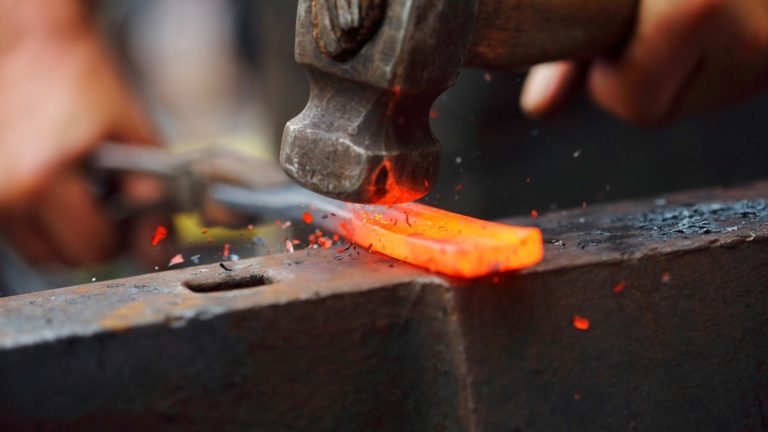
The core principle of forging involves plastically deforming metal through the application of compressive forces. When metals are heated to specific temperatures, their molecular structure becomes more malleable, allowing manufacturers to reshape the material without compromising its fundamental integrity. During the forging process, metals undergo significant structural transformations. Heating metal above its recrystallization temperature enables metalworkers to alter its grain structure, effectively improving mechanical properties such as strength, ductility, and resistance to fatigue. Different forging techniques produce varied structural outcomes. Hammer forging, for instance, involves repeatedly striking heated metal to modify its shape, while press forging applies consistent pressure to achieve precise dimensional changes. Each technique contributes unique characteristics to the final metal component.
Modern Industrial Forging: Advanced Technologies and Precision Manufacturing Techniques
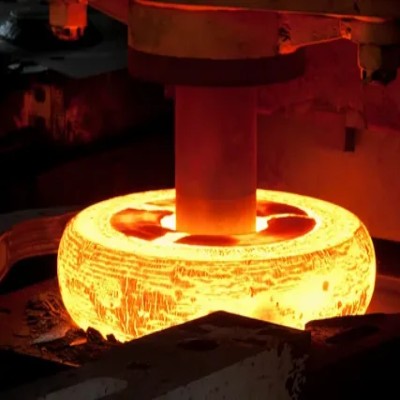
Contemporary industrial forging has evolved into a highly sophisticated manufacturing process incorporating advanced technologies and precision engineering. Modern forging facilities utilize computer-controlled hydraulic presses, sophisticated temperature monitoring systems, and complex die designs to produce intricate metal components with exceptional accuracy. Open-die forging remains a prevalent technique for creating large, complex metal parts used in aerospace, energy, and heavy machinery industries. This method allows manufacturers to produce components with superior mechanical properties by controlling grain flow and material deformation. Closed-die forging represents another critical technique, enabling the production of highly detailed and geometrically complex parts. By constraining metal within precisely designed dies, manufacturers can achieve remarkable dimensional accuracy and repeatability across multiple production cycles.
Exploring Different Forging Methods and Their Specialized Industrial Applications
Various forging methods have emerged to address specific manufacturing requirements across diverse industrial sectors. Hammer forging remains ideal for creating robust, high-strength components requiring significant mechanical deformation. Roll forging provides an efficient approach for producing long, uniformly shaped metal parts with minimal material waste. Precision forging techniques have gained prominence in automotive and aerospace industries, where complex geometries and tight tolerances are essential. These advanced methods enable manufacturers to create lightweight, high-performance components with exceptional structural integrity. Isothermal forging represents a cutting-edge technique that maintains consistent temperature throughout the deformation process, allowing for unprecedented control over material properties and geometric complexity. This method proves particularly valuable in producing advanced aerospace and automotive components.
Material Selection and Its Critical Role in Successful Forging Operations
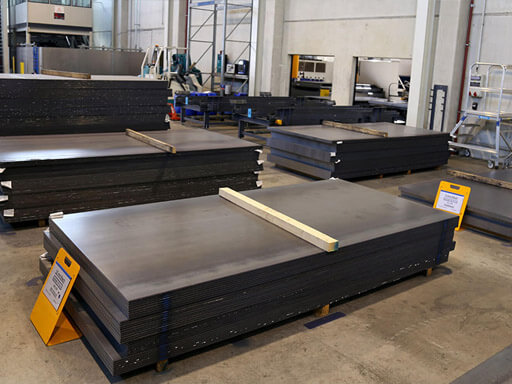
Selecting appropriate materials represents a crucial aspect of successful forging operations. Different metal alloys exhibit unique characteristics that significantly influence their deformation behavior and final mechanical properties. Carbon steels remain popular for general engineering applications, offering excellent strength and affordability. Alloy steels provide enhanced performance characteristics, making them suitable for demanding industrial environments requiring superior mechanical properties. Aluminum and titanium alloys have gained prominence in aerospace and automotive industries, offering exceptional strength-to-weight ratios. These advanced materials enable manufacturers to create lightweight, high-performance components that meet stringent engineering requirements. Environmental Considerations and Sustainability in Modern Forging Practices Modern forging facilities increasingly emphasize sustainable manufacturing practices, implementing advanced technologies to minimize environmental impact. Energy-efficient heating systems, sophisticated waste management protocols, and recycling initiatives have become integral components of contemporary forging operations.
Get This Report in Japanese Language: 鍛造
Get This Report in Korean Language: 단조
About Author:
Ravina Pandya, Content Writer, has a strong foothold in the market research industry. She specializes in writing well-researched articles from different industries, including food and beverages, information and technology, healthcare, chemical and materials, etc. (https://www.linkedin.com/in/ravina-pandya-1a3984191)