

Japan Rail Freight Transportation Market is projected to witness a CAGR of 3.81% during the forecast period FY2025-FY2032, growing from USD 25.48 billion in FY2024 to USD 34.36 billion in FY2032.
The rail freight transportation market in Japan is growing for various reasons. Japan's highly populated urban centers and developed manufacturing industries need dependable freight networks for transporting goods with speed. Increasingly, the rail freight network is preferred to handle bulk cargo over long distances with a reduction in greenhouse gas emissions as compared to road transport. It is well aligned with the push of the Japanese government for decarbonization. The government is also supporting this trend by investing in the modernization of rail infrastructure and promoting multimodal logistics systems. Furthermore, growth in e-commerce and just-in-time supply chains require faster and more reliable freight services where rail has a critical role to play. Companies are also switching to rail transport to mitigate risks such as driver shortages and increasing fuel costs in road freight. Further, because of the rise of rail technology in automated systems and digital freight tracking, efficiency and reliability in logistics are increasing. Japan's focus on sustainability, innovation, and economic efficiency will result in steady growth in the rail freight market, which will enhance its logistics capability.
In March 2024, Fujitsu Limited and JR Freight launched a new system for rail maintenance and management to help Japanese railway operators streamline operations and reduce labor costs. By digitizing inspection and repair information, the system enhances efficiency, cuts administrative hours, and lowers maintenance expenses. This collaboration aims to promote sustainable rail transport and lessen dependency on trucks, addressing labor shortages and supporting regulatory compliance. This system's implementation will bolster the growth of Japan's rail freight market by providing a cost-effective, easily adaptable solution for railway operators.
Environmental Sustainability Fueling the Market Growth
Environmental sustainability is a major driver of growth in the rail freight transportation market of Japan. Rail freight is energy-efficient and environmental-friendly by nature as it emits much fewer greenhouse gas emissions than road or air. This goes perfectly with the need of the carbon reduction and realizing the environmental objectives of Japan. As businesses as well as consumers become more environmentally concerned, the trend of using sustainable logistics solutions is picking up pace. The promotion of rail freight also comes along with green transport initiatives in support of government actions that can be undertaken on electrified networks and further enhance energy efficiency within the infrastructural setup. Lower dependence on fossil fuels, environmental impact reduced further, it supports companies that intend to build sustainable credentials along with regulatory compliances. These transitions towards sustainability strengthen the market's growth curve.
In September 2024, Central Japan Railway Company partnered with Amazon Web Services (AWS) to enhance operations for its Yamanashi Maglev Line using IoT, machine learning, and generative AI technologies. These innovations will allow JR Central to improve track maintenance, predict equipment failures, optimize labor deployment, and enhance passenger experiences on their next-generation, high-speed SC Maglev trains. By leveraging AWS's advanced data-driven solutions, JR Central aims to revolutionize travel efficiency and safety, setting new standards in high-speed rail transport and fostering growth in Japan's rail freight transportation market through increased operational efficiency and reliability.
E-commerce Expansion Drives Market Growth
The rapid expansion of e-commerce results from an increase in demand for quick and efficient delivery services, railway cargo is an essential solution for traveling many products throughout the region. Rail freight transport offers e-commerce businesses a cost-effective and reliable logistics solution, especially over long distances and in large volumes. E-commerce ability to handle high performance goods ensures on- time delivery meeting growing consumer expectations for faster delivery times. Rail freight networks connect industrial and urban areas, making it easier to streamline supply chains and reduce delivery delays. Because the e-commerce sector continues to grow, the demand for sustainable and scalable logistics solutions like rail freight will further increase, driving market growth and operational efficiency.
In June 2024, Federal Express Corporation, one of the world’s largest express transportation companies, released two cross-border e-commerce handbooks to help small and medium-sized enterprises (SMEs) operating internationally better engage with consumers in China and Japan. FedEx is fully embedded in the e-commerce ecosystems of China and Japan and has used its experience to develop the handbooks which are available for download from the FedEx website. This shows how attempts are being made by organizations to grow E-commerce in these regions, which will lead to the growth of the Rail freight transportation market.
Containerized Segment Dominates the Rail Freight Transportation Market
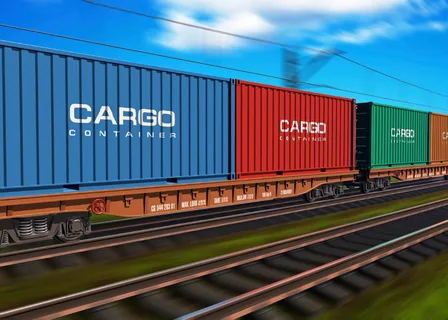
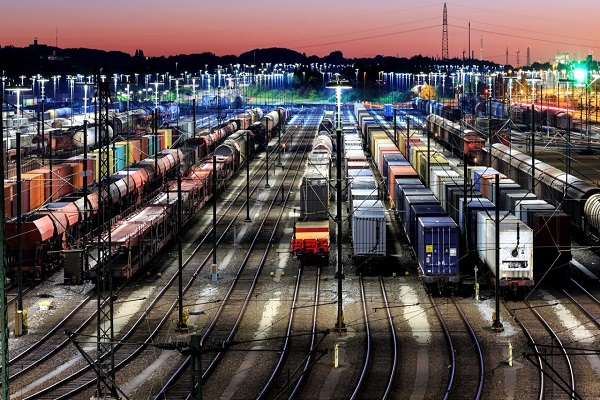
The containerized cargo segment dominates the rail freight transportation market due to its efficiency, reliability and flexibility. Containerization simplifies the loading and unloading process, reducing handling times and risks of damage. It integrates well with other transportation modes, such as trucks and ships, to support intermodal logistics. High demand for consumer goods and industrial materials drives its growth in densely populated and industrialized regions. Japan's advanced rail network, which is reliable and fast, makes containerized cargo more attractive to businesses. Environmental concerns and government policies that encourage rail over the road also contribute to its increasing market share in freight transportation.
In October 2022, Nippon Express, which operates in the containerized segment in Japan, introduced a series of new containers to handle semiconductor manufacturing equipment and other precision technologies in intra-Asia trades. Designed to transport precision equipment that needs strict temperature and humidity controls in transit, the six temperature-controlled containers will initially be deployed on Ro-Ro trades between China, Japan, and South Korea.
Central Region Dominates Japan Rail Freight Transportation Market Share
The Central region of Japan, especially Tokyo and Nagoya of Japan, is the leading region in terms of rail freight transportation considering its well-developed infrastructure, strategic economic hubs, and efficient logistics networks. Areas such as Tokyo and Yokohama play a crucial role in domestic and international trade, which leads to high freight demand. The region is characterized by a dense rail network facilitating easy connectivity between ports, industrial zones, and consumer markets. High-capacity freight trains and automated systems have been used to increase efficiency and reliability. In addition, manufacturing industries such as automobiles and electronics are concentrated in eastern Japan, generating high volumes of freight. Being close to the major ports of Yokohama and Chiba also helps in reducing import and export logistics. All these factors combined position eastern Japan as the hub of the country's rail freight market, which puts it ahead of other regions.
For example, in July 2023, JR Freight railway company-initiated feasibility trials to transport large maritime containers on overland rail lines. This initiative is a response to the 2024 logistics problem, referring to the anticipated logistical delays expected from new regulations on truck drivers' working hours, which are expected to arise due to stricter regulations on truck drivers' overtime work. The trials involve testing low-floor freight cars that can carry taller marine containers through tunnels. The trials are focused on routes connecting the Tokyo metropolitan area (part of the Central region) with other cities. Tokyo and Nagoya are major economic hubs with high industrial activity, emphasizing the need for efficient freight transportation.
Future Market Scenario (FY2025 – FY2032F)
- Increased adoption of automation, digital tracking, and predictive maintenance will enhance operational efficiency and reliability.
- Growing emphasis on reducing carbon emissions will drive the electrification of rail networks and the use of renewable energy sources.
- Investments in expanding and modernizing rail networks will support higher freight volumes and improve connectivity.
- Enhanced integration with other transport modes (road, sea) will provide more flexible and cost-effective logistics solutions.
Report Scope
“Japan Rail Freight Transportation Market Assessment, Opportunities and Forecast, FY2018-FY2031F”, is a comprehensive report by Markets and Data, providing in-depth analysis and qualitative and quantitative assessment of the current state of Japan rail freight transportation market, industry dynamics, and challenges. The report includes market size, segmental shares, growth trends, opportunities, and forecast between 2024 and 2031. Additionally, the report profiles the leading players in the industry, mentioning their respective market share, business models, competitive intelligence, etc.
Click Here:https://www.marketsandata.com/industry-reports/japan-rail-freight-transportation-market
About Us:
Markets and Data provides a comprehensive/ panoramic understanding of markets at global, regional, and country levels. Examine changing consumer preferences, emerging challenges, underlying trends, and growth prospects to accelerate your business strategies.
Contact
Mr. Vivek Gupta
5741 Cleveland street,
Suite 120, VA beach, VA, USA 23462
Tel: +1 (757) 343-3258
Email: info@marketsandata.com
Website: https://www.marketsandata.com