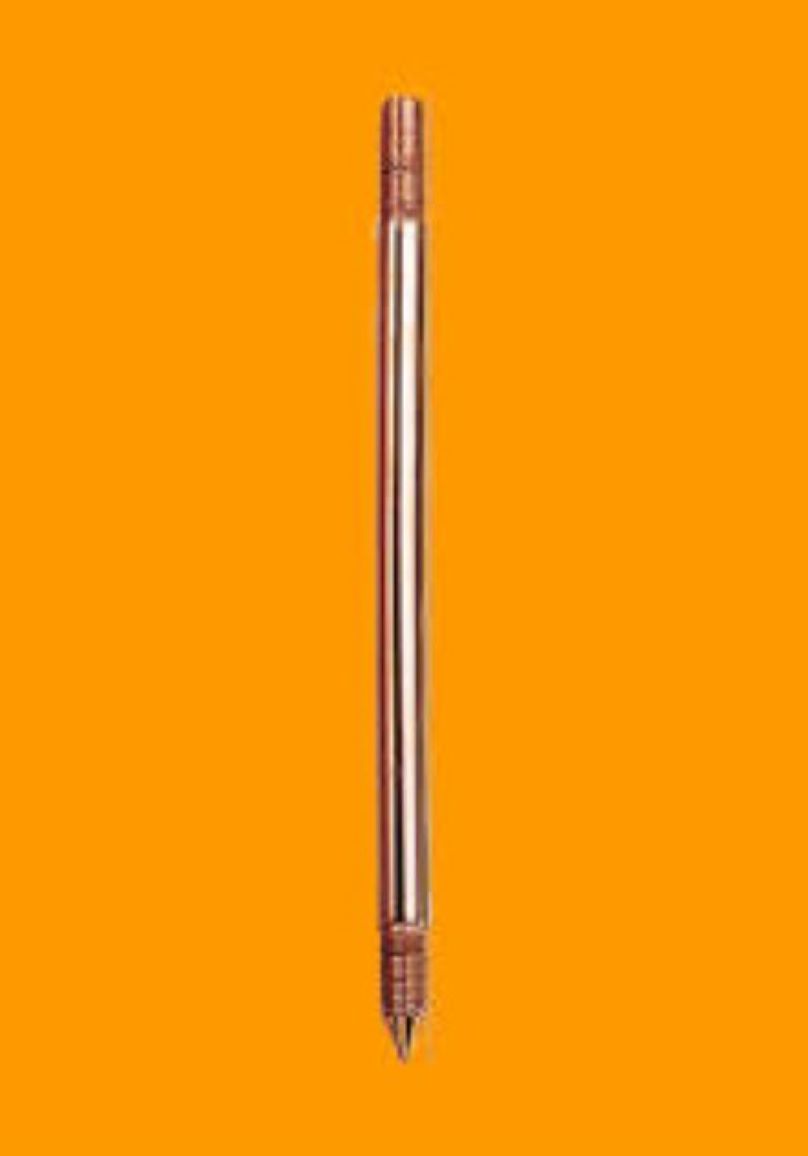
Measuring the resistance of an earthing system is vital in order to maintain electrical safety and conform to industry standards. A low-resistance earthing path safeguards equipment and people from electrical faults, surges, and lightning strikes. Frequent tests ensure the earthing system performs as required, especially for critical infrastructures or high-voltage usage. Following is the process of measuring the resistance of a copper bonded earthing system:
1. Fall-of-Potential Method (Three-Point Method
)This is the most universal and precise technique employed for earth resistance measurement. Arrangement: Position the earth electrode (the rod under test), a current electrode, and a potential electrode in alignment. Spacing: The current electrode is positioned away from the rod (usually 30-50 meters), and the potential electrode is positioned in between, normally at 62% of the spacing. Measurement: A test current is passed between the current electrode and the earth electrode, and the voltage drop is read between the potential electrode and the earth electrode. Calculation: By Ohm's law (R = V/I), the resistance is determined. 2. Clamp-On Method The method is easy for installations with many grounding points connected in parallel, like commercial and industrial systems. Equipment: A clamp-on earth resistance tester is utilized. How It Works: The clamp causes a voltage and measures the resulting current flow, calculating the resistance without the use of auxiliary rods. Limitations: Most applicable to systems with accessible looped circuits; not well adapted for isolated electrodes. 3. Soil Resistivity Testing (Four-Point Method) Although this measures soil resistivity and not system resistance directly, it's very important to design or check grounding systems. Method: Four test electrodes are inserted into the soil in a line at the same distances. Use: Assists in ascertaining whether soil conditions are affecting the grounding performance. Conclusion Periodic measurement of earth resistance guarantees that your system will continue to be safe and compliant in the long run. Soil moisture, corrosion, and physical damage can cause unexpected increases in resistance. With accurate techniques such as the fall-of-potential test, detection and remedial measures can be taken early on. A copper bonded earthing rod is particularly beneficial because of its low resistance and high strength in diverse soil conditions. For dependable, high-performance earthing solutions, Pioneer Power International provides industry-standard products that are favored by professionals globally.