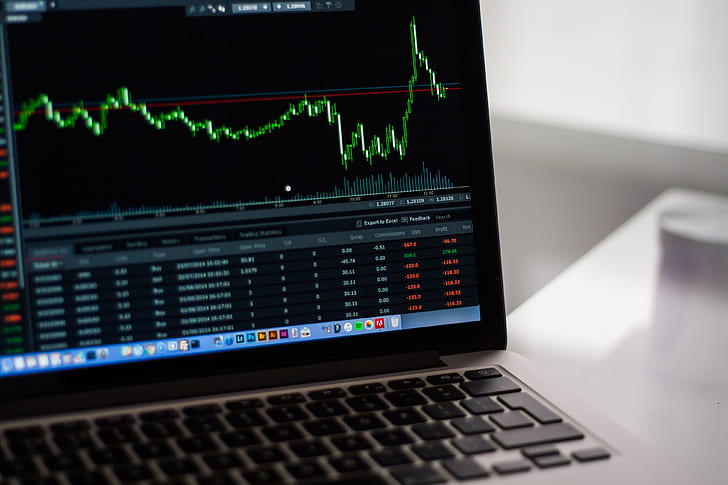
Artificial Intelligence (AI) continues to revolutionize countless industries—and finance is no exception. While the idea of using AI in trading isn’t new, its influence has grown dramatically in recent years. Today, it’s hard to tell whether there are more human investors or AI systems at play in the markets. What’s increasingly clear, however, is that those leveraging AI tools often outperform those who don't.
Despite its limitations, AI consistently delivers faster and more objective analysis than most human investors can.
Objective Decision-Making
Analyzing market data, tracking price movements, and making sound investment decisions require skill—but also emotional discipline. Investors may be capable of these tasks, but staying objective during volatile times is extremely difficult.
Consider a scenario following a sharp market decline. While some investors see a buying opportunity, others hesitate, unsure whether prices will fall further. FOMO (Fear of Missing Out) can cloud judgment, as can fear-driven selling or overconfidence from short-term gains. Emotional biases, news headlines, and personal circumstances can easily distort one’s ability to make rational investment choices.
This is where AI shines. AI systems don’t experience fear, greed, or doubt. They can process massive amounts of data, evaluate complex patterns, and make unbiased decisions—regardless of market sentiment. While investors shouldn’t rely entirely on AI, using it as a portfolio management tool can provide a valuable second opinion, grounded in data rather than emotion.
Speed Matters: The Power of Instant Analysis
Timing is everything in financial markets. Human investors naturally take time to analyze information, assess risks, and plan their next move—especially after major news breaks or during sudden market swings. This delay often results in missed opportunities.
AI, on the other hand, reacts in real-time. Advanced trading algorithms can process market news, sentiment analysis, and technical data within milliseconds. While a human is still reading a headline or weighing their options, AI-driven tools have already identified the signal, run the analysis, and taken action.
This speed allows investors to respond more quickly and precisely, gaining an edge in fast-moving market environments.
Patience: A Rare Human Trait, a Native AI Strength
Long-term investing requires more than just capital—it demands patience, consistency, and discipline. Unfortunately, human nature often works against these principles. Investors frequently second-guess their plans, change strategies impulsively, or react emotionally to short-term noise.
AI systems don’t suffer from emotional fatigue or decision anxiety. An AI financial advisor can maintain a consistent strategy based on historical data, market trends, and statistical models. It won’t panic during downturns or get swept up in bullish euphoria. This consistent, long-term perspective helps investors stay focused and avoid costly mistakes driven by emotion.
Conclusion
Artificial intelligence is not here to replace human investors, but to enhance and support them. From objective analysis and lightning-fast reaction times to unshakable patience, AI tools bring immense value to medium and long-term investing strategies. Investors who integrate AI into their decision-making process gain an edge—one rooted in data, discipline, and speed.
As markets grow increasingly complex and competitive, those who leverage AI responsibly will be best positioned to stay ahead and build long-term wealth.

If you are an investor, then you must understand that not all dividend stocks will prove to be a good long-term investment.
For any long-term investor, you have to find the best dividend stocks for 2021 can make a landmark change in his portfolio returns.The text above is a summary, you can read full article here.