Richard Larson: Bridging Analytics and Education for Global Impact
Before exploring the distinguished career of Professor Richard Larson, it’s essential to understand the two core areas where he has left a lasting mark: operations research (OR) and educational technology (EdTech). OR applies mathematical and analytical tools to solve complex decision-making problems across sectors like healthcare, urban services, and logistics. EdTech, on the other hand, uses digital innovation to expand educational access, personalize learning, and improve outcomes worldwide.
Early Life and Education Born in 1943 in Queens, New York, Larson’s early life took him through several cities before he graduated from Needham High School. He earned his B.S., M.S., and Ph.D. in electrical engineering from MIT, where his doctoral work focused on optimizing urban police deployment—foreshadowing a career centered on applying science to public service.
Transforming Urban Systems In the late 1960s, Larson collaborated with the RAND Corporation to improve emergency services in New York City. His pioneering research in urban systems influenced public policy and demonstrated the real-world power of operations research in service optimization.
Leadership in Operations Research Larson held key leadership roles, including President of ORSA and later INFORMS, and was named a founding INFORMS Fellow. His 1993 election to the National Academy of Engineering honored his contributions to both public and private service industries.
Doctor Queue and the Science of Waiting Nicknamed “Doctor Queue,” Larson is widely recognized for his work in queueing theory and the psychology of waiting. His insights—frequently cited in media—highlight the importance of managing perceptions in service experiences, proving that human behavior is as vital as mathematical models.
Pioneering Technology in Education Larson’s interest in educational technology began in the 1990s. As Director of MIT’s Center for Advanced Educational Services, he led initiatives to deliver digital learning to students worldwide. He later founded the Learning International Networks Consortium (LINC) to expand global access to quality education through technology.
MIT BLOSSOMS and Blended Learning Larson co-founded MIT BLOSSOMS, an initiative providing free, interactive STEM video lessons tailored to blend with local classroom instruction. BLOSSOMS supports equitable education globally, particularly in underserved regions.
Enduring Contributions and Mentorship With over 175 scholarly works and six books, Larson’s research spans urban systems, sustainability, and education. He has mentored leading scholars and consulted for major public organizations, always striving to connect rigorous research with practical solutions.
Legacy Richard Larson has reshaped both how cities serve their citizens and how education reaches the world. A visionary at the intersection of analytics and innovation, his career exemplifies how science and empathy can work together to improve lives.
For More Details: https://ciolookmedia.com/richard-c-larson-a-visionary-in-operations-research-and-education-technology/


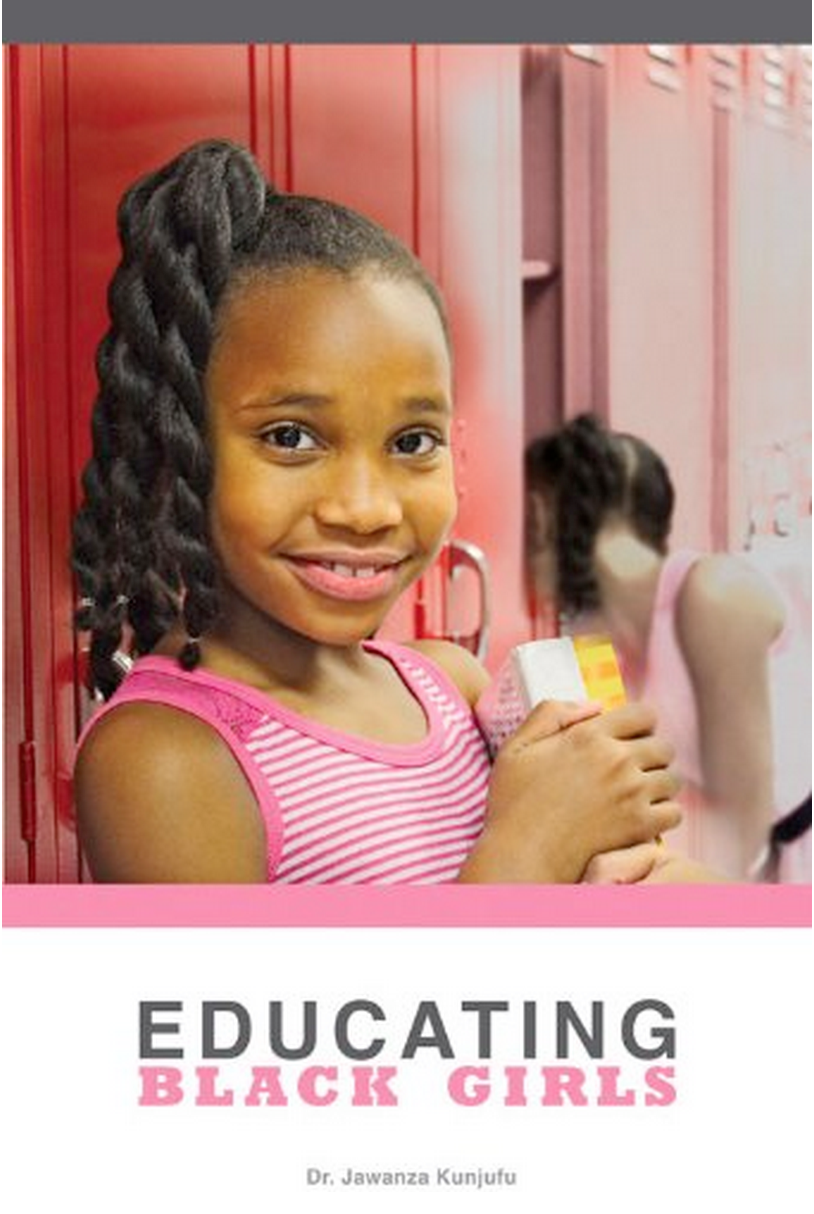
By Jazelle HuntNNPA Washington Correspondent WASHINGTON (NNPA) – For the past 40 years Jawanza Kunjufu has dedicated his life to uplifting African Americans through education and empowerment.
His latest book, Educating Black Girls, marks a dramatic shift.
These figures are unacceptable…if these things were happening to White girls, it would be a major national crisis.” Black girls are being suspended from school at rates second only to Black boys – except in Wisconsin, where Black girls are suspended more than anyone else, according to a U.S. Department of Education civil rights study.
“Young women of color have special challenges and needs, independent of their brothers that would greatly benefit from such national attention and coordination of federal resources.” The book offers 10 chapters on trends in education, STEM inclusivity, segregation in athletic programs, history curricula and Black women, and more.
“They believe Black girls have too much attitude, are too sassy, too bossy.
Quotes from girls around the country include: “In this school you can get suspended over your attitude;” “Why don’t teachers like me?” “Some teachers act like they are afraid of us;” and “Most teachers don’t care about me and won’t be back next year.” The book also details the areas of education in which Black girls are routinely overlooked—STEM and sports.

Neurocyte Stem Cell Research Center is the best stem cell treatment center in Bangalore with best stem cell doctor, stem cell doctor near me, stem cellshttps://neurocyte.in/about-neurocyte-stem-cell-bangalore-research-center/