

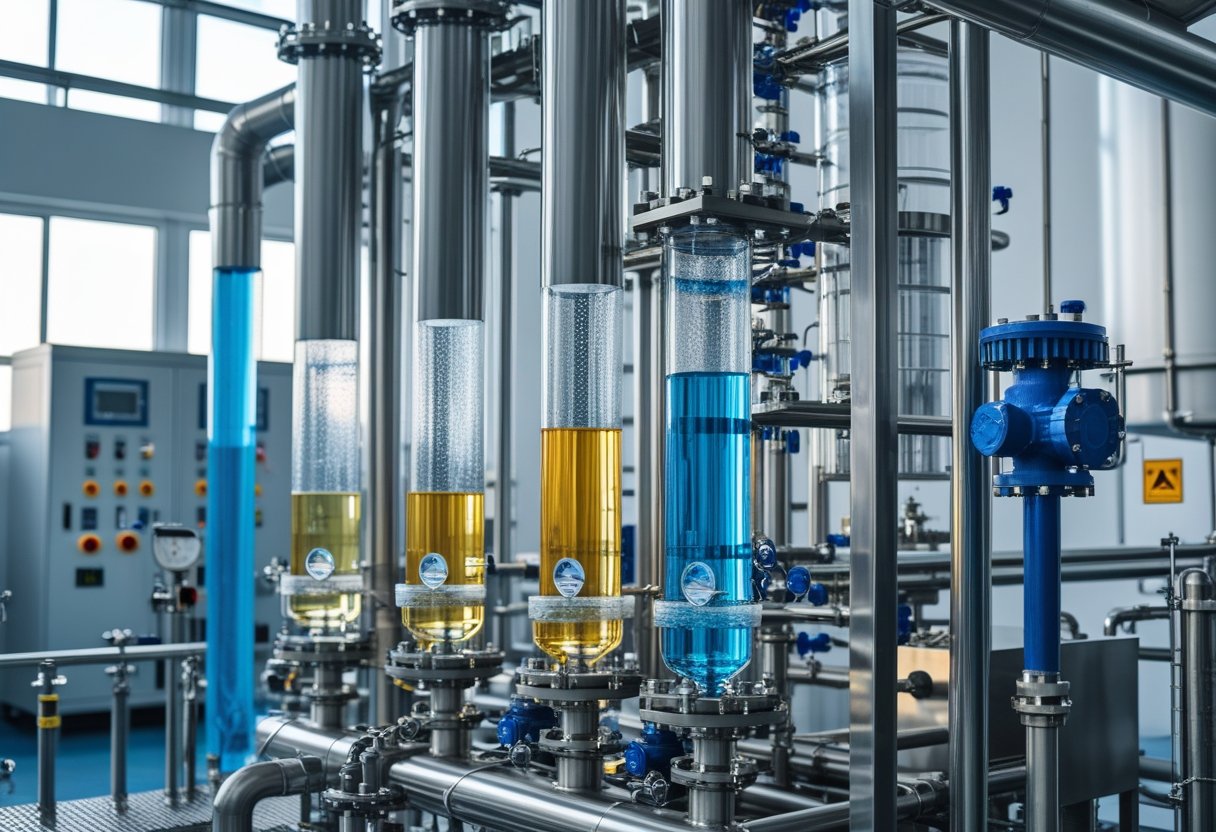
In the complex world of chemical process systems, few operations are as critical and delicate as extraction. Whether it’s Liquid–Liquid Extractions in the pharmaceutical industry, food processing, or specialty chemicals manufacturing, the performance of your extraction setup can make or break your process. While most facilities keep a watchful eye on the obvious issues like leaks, blockages, or sudden drops in efficiency, it’s often the subtle signs — the quiet warnings your equipment whispers before screaming — that signal the real trouble ahead.
This article explores the red flags you might be missing, how to identify these subtle symptoms, and the importance of rigorous extraction instrument troubleshooting. By staying alert to these signs, you can protect your operations from unexpected downtime, compromised product quality, and expensive repairs.
Why Early Detection Matters
In chemical process systems, equipment failures are rarely sudden. They typically start small, with minor deviations or hidden mechanical wear that grows over time. By the time you notice a dramatic efficiency loss in your Liquid–Liquid Extractions, the damage might already be extensive.
Early intervention is not just about avoiding breakdowns; it’s about maintaining the integrity of your product, ensuring compliance with strict industry standards, and optimizing operational costs. Let’s delve into the subtle signals that your extraction instruments need attention.
1. Slight Changes in Flow Rates
If you notice minor fluctuations in flow rates — even within your “acceptable” range — don’t dismiss them. Over time, small variations can indicate issues such as:
- Partial clogging in pipelines or nozzles.
- Minor wear in pump seals or rotors.
- Gradual fouling of membranes or internal surfaces.
This is a key part of extraction instrument troubleshooting. Often, operators recalibrate or adjust parameters to compensate, masking an underlying mechanical or chemical cause. In Liquid–Liquid Extractions, inconsistent flow can directly affect phase separation efficiency, leading to reduced yield or purity.
What to do
- Perform a flow rate audit and compare historical data trends.
- Inspect pump curves to see if performance is dropping off specification.
- Check for early-stage scaling or biofouling inside pipes.
2. Subtle Temperature Deviations
Temperature control is the lifeline of many chemical process systems, especially in extraction. Yet minor temperature drifts often go unnoticed, or are blamed on ambient conditions.
Even a 1–2°C variation in process temperature can shift equilibrium in Liquid–Liquid Extractions, altering distribution coefficients and leading to off-spec product.
Possible causes include:
- Gradual fouling or scaling on heat exchanger surfaces reducing efficiency.
- Minor leaks in heating/cooling jackets causing uneven heat transfer.
- Aging sensors giving slightly inaccurate readings.
What to do
- Use IR cameras or spot checks to validate sensor readings.
- Clean heat exchangers and consider non-invasive thermal inspections.
- Replace or recalibrate aging temperature sensors.
3. Noise and Vibration Changes
Machines speak — often through vibrations. Pumps, agitators, centrifuges, and even static mixers in chemical process systems develop unique vibration signatures. Over time, any deviation from this baseline is a red flag.
Even subtle changes in frequency or intensity of vibration can signal:
- Imbalance in rotating parts.
- Early bearing wear.
- Cavitation in pumps.
These seemingly minor mechanical issues can escalate to full-blown failures that halt your Liquid–Liquid Extractions line.
What to do
Implement vibration analysis as part of predictive maintenance.
Set up acoustic sensors to track deviations from the norm.
4. Slightly Longer Separation Times
Have your settling tanks or separators started taking a bit longer to achieve phase split? It’s easy to overlook when it’s just an extra five minutes per batch, but cumulatively, this could mean hours of lost productivity.
More importantly, it might indicate:
- Changes in interfacial tension due to contamination.
- Minor emulsification caused by worn mixers or incorrect agitation speeds.
- Micro-particle contamination disrupting coalescence.
This is where expert extraction instrument troubleshooting becomes essential. Investigate even small delays before they evolve into chronic separation failures.
5. Minor Product Quality Drift
Your QA department may occasionally flag slight off-spec results — a color change, minor purity drop, or small yield variance. These early quality issues often trace back to unnoticed process or equipment problems.
In Liquid–Liquid Extractions, common culprits include:
- Small leaks introducing air or contaminants.
- Tiny cracks in seals leading to phase cross-contamination.
- Slightly degraded contactor internals reducing mass transfer efficiency.
What to do
- Cross-check QA trends with maintenance logs. Often there’s a hidden correlation.
- Conduct visual inspections or use endoscopy to check internals.
- Tighten your acceptance criteria on lab QC results to catch early drift.
6. Frequent Need to Tweak Operating Conditions
Are operators frequently making small adjustments to keep the process “in the sweet spot”? If yes, your extraction instruments are telling you something.
Frequent tweaks often compensate for:
- Underlying equipment wear.
- Valve sticking or partial clogging.
- Degrading instrumentation (pressure/flow sensors) giving misleading feedback.
A robust chemical process system should require minimal human intervention under steady conditions. If it doesn’t, it’s time for thorough extraction instrument troubleshooting.
7. Unexpected Pressure Readings (Even Slightly)
Pressure is often the first direct clue of trouble in any fluid system. A minor rise could indicate fouling or blockage. A slight drop might mean leaks.
In Liquid–Liquid Extractions, pressure variations can upset phase equilibria, reduce throughput, or damage delicate equipment like centrifugal extractors.
What to do
- Compare pressure profiles across your system to historical benchmarks.
- Use differential pressure (ΔP) trending to spot developing restrictions.
- Calibrate or replace pressure sensors regularly.
8. Minor Corrosion or Deposit Spots on Equipment
A tiny rust stain or faint scale line might seem trivial. But these are the birthplaces of major failures — pinhole leaks, cracking, and even catastrophic ruptures.
For chemical process systems handling aggressive solvents, early corrosion is especially dangerous.
Best practices:
- Perform routine ultrasonic thickness gauging.
- Use borescopes to inspect internal surfaces.
- Address any minor corrosion immediately — patch or replace before it spreads.
9. Shorter Cleaning or Maintenance Cycles Needed
If your team finds that CIP (clean-in-place) or manual cleanings are required more frequently, or filters foul faster, it’s likely an early symptom of process imbalance or equipment wear.
Potential causes include:
- Micro-level surface roughening increasing fouling tendency.
- Slight polymerization or side reactions due to improper temperature control.
- Inefficient phase disengagement in Liquid–Liquid Extractions causing carryover.
10. Subtle Sensor Drift or Increased Calibration Frequency
In modern chemical process systems, sensors are your eyes and ears. If they start requiring more frequent calibration or show subtle drift, it’s not always the sensor’s fault.
Underlying causes could be:
- Electrical issues (ground loops, humidity ingress).
- Coating or fouling on sensor surfaces.
- Hidden process excursions stressing sensors.
A big part of extraction instrument troubleshooting is ensuring that your measurements are true. Otherwise, you’re flying blind.
Why You Can’t Afford to Ignore These Signs
Ignoring these subtle signs can be costly. Small mechanical wear turns into broken shafts. Minor scaling becomes total blockage. Slight purity drift evolves into batches failing regulatory standards.
By tuning into these early signals, you avoid:
✅ Expensive emergency shutdowns
✅ Lost production time and scrap batches
✅ Safety hazards for operators and the plant
✅ Regulatory headaches due to off-spec product
The Role of Predictive Maintenance and Data Analytics
Today’s leading facilities integrate predictive tools to catch these problems early. Modern SCADA systems paired with advanced analytics can detect micro-trends — like a slow upward creep in ΔP, or a subtle drop in extraction efficiency — weeks before they become obvious.
For your Liquid–Liquid Extractions, this might mean monitoring:
- Extraction efficiency trends over time.
- Historical comparisons of settling times.
- Automated alarms on vibration or acoustic changes.
Combined with rigorous extraction instrument troubleshooting, these tools keep your chemical process systems healthy and optimized.
A Quick Troubleshooting Checklist
Here’s a concise guide to spotting subtle problems before they escalate:
✅ Compare current flow, temperature, pressure, and separation data to last quarter’s benchmarks.
✅ Check vibration and noise logs on pumps and mixers.
✅ Inspect all seals, joints, and sight glasses for micro-leaks or corrosion.
✅ Review QC data trends — even tiny purity shifts matter.
✅ Calibrate sensors proactively, and replace aging units on schedule.
✅ Maintain a rigorous cleaning and inspection cycle — don’t wait for visible fouling.
Conclusion: Small Clues, Big Consequences
Your extraction instruments rarely fail overnight. They almost always give small, subtle warnings first. By learning to recognize these quiet red flags — from faint temperature drifts to minor product quality shifts — and by committing to disciplined extraction instrument troubleshooting, you protect your operations, your team, and your bottom line.
In an industry where margins are tight and regulations tighter, being proactive isn’t optional — it’s essential. Don’t wait for a catastrophic failure to teach you the importance of vigilance. Keep your Liquid–Liquid Extractions and entire chemical process systems running smoothly by paying attention to the whispers before they turn into screams.