



Would you buy a car that hadn’t been crash-tested? Or use medical equipment that hadn’t passed inspections? Of course not. That’s why industries worldwide depend on UL Systems Certification to prove their products and systems are rigorously tested and meet the strictest safety standards. Underwriters Laboratories (UL), a global safety certification organization, follows a certification process to verify that systems function properly and meet strict safety and performance standards. Therefore, in a world where cutting corners can cost lives, UL Systems Certification is the gold standard for safety and reliability. In this blog, we will explore its significance and how it works so that you can understand why buying products with UL labels ensures safety.
What is UL Systems Certification?
UL’s stamp of approval means a product or system has been rigorously tested—not just to work but to protect. And it goes beyond evaluating individual components—it examines how they function together as a complete, integrated system. This UL certification applies to critical systems such as fire protection and electrical assemblies, ensuring they don’t just meet standalone safety standards but also perform reliably when interconnected in real-world conditions. Why UL Systems Certification Matters
Let’s understand the significance of UL certification with the help of the following pointers:
Protects Lives and Property
Safety is rarely visible until it’s tested. UL Systems Certification ensures that when unwanted incidents emerge—whether fire, power fluctuations or mechanical failure—critical systems perform as intended. The purpose is clear: lower the risk to life, assets, and functionality. For example, firestop systems approved by UL undergo rigorous testing to confirm they can compartmentalize flames and smoke.
Promotes System Reliability
No chain is stronger than its weakest link. The same holds true for protection systems. UL certification rigorously evaluates each component, guaranteeing that they function accurately as a complete unit. Hence, there’s no room for uncertainty; certified systems are built to perform under real pressure. Whether it’s an alarm system or an electrical network, UL certification subjects them to actual operating conditions. And the result is that you can rely on the system when seconds count.
Strengthens Stakeholder Confidence
In today’s market, stakeholders demand more than promises—they want proof. UL Systems Certification serves as undeniable evidence that systems meet rigorous safety standards. For contractors, building owners, and regulators, this mark of approval signals integrity and diligence. A UL-certified system doesn’t just meet the expectations of customers—it elevates your reputation and positions you as a trusted provider.
Streamlines Regulatory Compliance
Many regional and national codes—like the NFPA or IBC — either require or prefer UL-certified systems. Specifying UL-certified systems from the outset accelerates approvals. This helps you keep projects on schedule. Beyond efficiency, the UL-certified systems also mitigate the risk of penalties that can arise due to non-compliance. Additionally, this certification also helps build customers’ trust in the integrity of your product.
Lowers Legal and Financial Liability
When a disaster occurs, whether from equipment failure or fire, questions of responsibility quickly arise. This leads to investigations, and at this point, documentation is everything. UL Systems Certification works as auditable proof that your systems were designed and maintained to the highest safety standards. Therefore, it reduces the chances of facing legal disputes and penalties that can arise due to the failure of the products.
Improves Insurance Terms
From an insurer’s standpoint, UL-certified systems signal a commitment to safety and risk mitigation. As a result, many providers extend improved premiums and policy terms to properties that implement these certified solutions. The reasoning is straightforward—UL-tested systems are less likely to malfunction, reducing both the frequency and severity of claims. When incidents happen, the documentation and reliability of certified systems streamline the claims process.
Supports Long-Term Operational Efficiency
True safety stretches far beyond the labeling of benchmarks. UL-certified systems are tested not just for initial compliance but for sustained trustworthiness. Their durable design ensures consistent performance while reducing maintenance challenges. This lasting reliability adds up to fewer interruptions and more value over the years.
Real-World Applications
Here are a few products for which UL certification is necessary:
Firestop Systems: Control fire and smoke from moving through walls and structural openings.
Electrical Panels & Enclosures: Safely contain live components to protect users and property.
HVAC Systems: Maintain airflow, ventilation, and performance in changing conditions.
Alarm and Security Systems: Ensure dependable alerts during outages, tampering, or emergencies.
How UL Certification Works: A Safety Assurance Process
The UL certification process is a multi-phase evaluation procedure to ensure systems meet the highest safety standards. Here’s how it works:
Initial System Review
The UL team conducts a thorough review of your system. They examine the design, components, and documentation. Then, the UL engineers verify that every detail meets safety standards, spotting potential trouble areas, such as mechanical weaknesses and electrical issues. It’s all about fixing problems before they start.
Testing Under Realistic Conditions
After completing the initial review, the system undergoes intense testing in controlled laboratory settings. It’s subjected to extreme scenarios, including fire exposure, electrical surges, high humidity, and temperature extremes, to validate reliable operation in all potential scenarios.
Certification Issuance
Once a product meets all safety requirements, UL grants official certification. The UL Mark can be displayed on the product or packaging. During audits or purchasing checks, these documents serve as proof of compliance with safety standards.
Ongoing Audits
The organization also conducts regular inspections to confirm that products continue to meet safety standards exactly as approved initially. This constant monitoring is what keeps certified products reliably safe and trusted by customers.
Conclusion
Choosing UL Systems Certification reflects a commitment to ethical responsibility. In fact, this certification is an investment in resilience. In a world where safety failures can disrupt businesses and communities, certified systems provide more than protection. They ensure continuity. For manufacturing companies, the cost of skipping certification goes beyond fines or repairs; it can erode trust. On the other hand, by incorporating UL standards, you align your product with safety standards and prove that going for the right thing is also the smartest business decision.




VEMC is one of the best suppliers of Ul Fm Approved Gate Valves in India.
We provide the best quality gate valves at cost-effective prices in India.
For more details about the valves, feel free to contact us on +91 22 4343 6655.https://www.vemc.co.in/products/112/valves/fm-approved-gate-valve
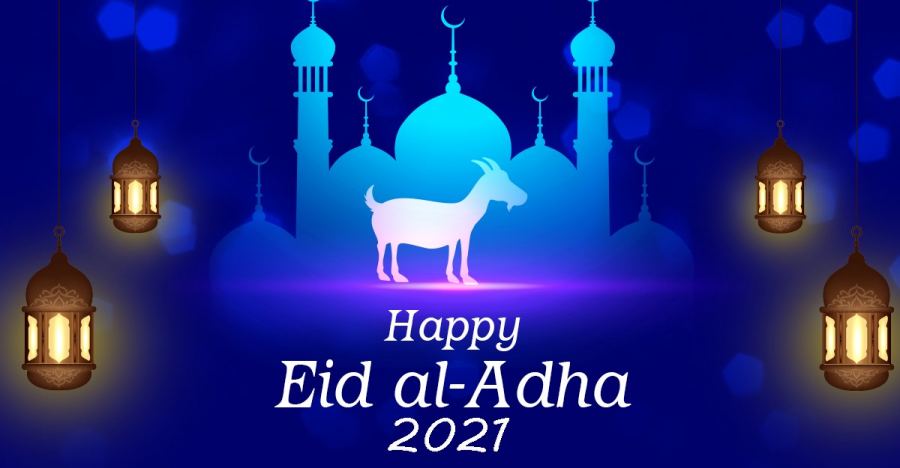
There are two key Eid’s (Celebration Festivals) in Islam: Eid-ul-Adha, which signifies the completion of the Holy Month of Ramadan; and Eid Al Adha, the Greater Eid, which follows the completion of the annual Hajj pilgrimage, at the time of Qurbani (sacrifice).Although Eid-ul-Adha has no direct relation to the Hajj Pilgrimage, it is but a day after the completion of Hajj and therefore has significance in time.How many days is Eid ul Adha 2021?Wednesday, July 21st is day number 202 of the 2021 calendar year with 10-12 days until Eid al-Adha 2021...The day of Eid Al Adha falls on the tenth day in the final (twelfth) month of the Islamic Lunar Calendar; Dhu-al-Hijjah.
The day that celebrations fall on is dependent on a legitimate sighting of the moon, following the completion of the annual Holy Pilgrimage of Hajj - which is an obligation for all Muslims who fit specific criteria, one of the important Five Pillars of Islam.The celebration of Eid-ul-Adha is to commemorate Prophet Ibrahim’s devotion to Allah SWT and his readiness to sacrifice his son, Ismail.
This ram will be sacrificed as an alternative to his son.
He obeys his Lord’s command, without question.
Therefore, Eid-ul-Adha means the festival of sacrifice.Depending on the country, the celebrations of Eid-ul-Adha can last anywhere between two and four days.
On the day of Eid, we perform Qurbani (slave sacrifice) as part of the Eid Salaat (Eid prayers in the mosque).The act of Qurbani consists of slaughtering an animal as a sacrifice to mark this occasion in remembrance of Prophet Ibrahim’s sacrifice for Allah SWT.