


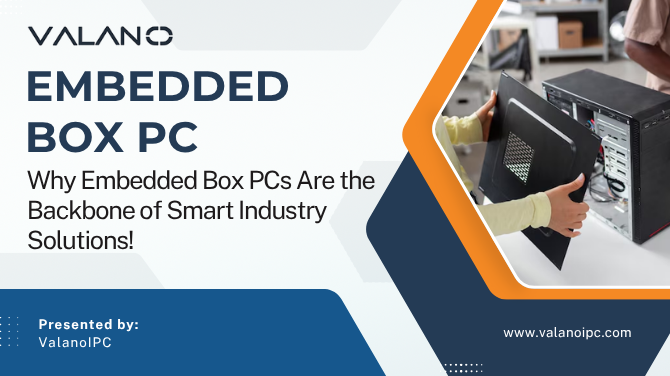
In an age where industrial automation is advancing at record speed, the demand for reliable, intelligent, and space-efficient computing solutions has never been greater. Modern factories, smart infrastructures, and autonomous systems are all pressed to push the limits of performance while also minimizing size, energy use, and downtime. Enter the Embedded Box PC: a versatile powerhouse designed to meet the rigorous demands of the automation era without the bulk of traditional systems.
Often no larger than a shoebox, the Embedded Box PC is transforming how organizations deploy industrial control systems, deploy edge computing, and manage real-time data processing. But don’t be fooled by its compact frame—these small yet mighty units are loaded with processing capabilities, built-in I/O, industrial-strength durability, and adaptability that rivals full-sized IPCs.
At ValanoIPC, we specialize in high-performance embedded computing solutions that are engineered for reliability, longevity, and flexibility.
What is an Embedded Box PC?
To understand the impact of this technology, it’s essential to define it clearly. An Embedded Box PC is a compact, rugged industrial computer designed specifically for embedded applications—meaning it’s strategically built to be installed into larger systems, often performing specialized tasks on the edge or in real-time environments.
Unlike consumer desktop PCs or bulky industrial rigs, embedded box PCs are optimized to:
- Run 24/7 in rugged environments
- Support real-time processing
- Operate in harsh industrial conditions
- Deliver low power consumption
- Offer silent, fanless performance
- Easily integrate into electrical cabinets or DIN rails
They often come fanless, run on SoCs (System-on-Chip), and support various OS platforms, including Windows, Linux, and real-time operating systems. Their modularity and configurability make the Embedded Box PC ideal for use in automation, robotics, transportation, smart city initiatives, and more.
Why Size No Longer Limits Performance?
In the past, industrial machines depended on large form-factor PCs to provide the power needed for automation, monitoring, and control. However, recent hardware miniaturization and software optimization have made it possible to pack high-performance capabilities into much smaller units. That’s where Embedded Box PCs come in.
By using energy-efficient multi-core CPUs, solid-state storage, and scalable I/O selections, today's box PCs deliver impressive computing power while taking up minimal space. Granted, they may not be built for high-end 3D CAD rendering or gaming, but for automation controls, process management, machine learning inference, and vision systems, these compact systems shine.
How Embedded Box PCs Are Revolutionizing Automation?
1. Edge Computing for Real-Time Control
Edge computing has become a foundational element of smart automation strategies. Rather than sending all sensor or machine data to a centralized server, embedded box PCs act as edge nodes, processing the information where it is generated.
This dramatically reduces latency, minimizes network bandwidth, and ensures rapid response times—traits that are critical in processes like robotic control, CNC machining, autonomous navigation, and real-time quality assurance.
Use Case: A manufacturing plant installs Embedded Box PCs at each workstation, allowing robotic arms to be controlled locally. With real-time edge feedback, the arms adjust on the fly for part variances, maximizing throughput and quality.
2. Fanless, Maintenance-Free Operation
Traditional PCs often use fans and other moving parts, which can accumulate dust and degrade over time. In areas like packaging plants, metal workshops, or chemical production lines, dust and debris are constant.
The fanless design of Embedded Box PCs allows them to operate silently and reliably in such conditions. Heat is dissipated through heatsinks and aluminum chassis instead of traditional airflow-based cooling.
Use Case: In an agricultural automation system, Embedded Box PCs monitor moisture levels, control irrigation, and run 24/7 in outdoor enclosures—with zero downtime or overheating, even in dusty environments.
3. Space Optimization in Tight Installations
In control cabinets, OEM machinery, or transportation systems, space is a premium. Embedded Box PCs shine here due to their compact, flexible designs that can fit into tight corners, mount onto DIN rails, or be installed behind other equipment.
Use Case: In an electric vehicle charging station design, the builder installs a compact box PC from ValanoIPC behind the touch interface to handle the UI, user data encryption, payment processing, and remote diagnostics—all in a chassis smaller than a tablet.
4. Customization and I/O Flexibility
One of the most compelling features of Embedded Box PCs is their flexible I/O support, often including:
- COM ports (RS-232/422/485)
- Digital Input/Output
- CAN bus
- USB 3.0/2.0
- DisplayPort/HDMI/VGA
- Mini PCIe & M.2 expansion slots
- LAN with PoE Options
Modular variants allow users to tailor configurations precisely to their requirements, without excess bulk or unused options.
Use Case: A packaging equipment manufacturer needs an automation controller with six COM ports, four USBs, and a wide temperature range. ValanoIPC provides a customized Embedded Box PC with the exact I/O footprint and fanless operation for seamless integration.
Key Features of ValanoIPC Embedded Box PCs:
At ValanoIPC, we design and manufacture embedded systems with the needs of automation OEMs, system integrators, and industrial engineers in mind. Our Embedded Box PC lines are built from the ground up to ensure:
✅ Compact footprints
✅ Long lifecycle support (5–10+ years)
✅ High-reliability industrial-grade components
✅ Fanless, low-power operation
✅ Configurable I/O and wireless connectivity
✅ Compatibility with AI, cloud, and edge architectures
✅ Easy DIN-rail, VESA, or wall-mount installation
We offer models across various performance tiers—from low-voltage Atom-based units for simple sensing and logging, to Core i7 and Xeon-class models for AI processing and 3D vision integration.
The Future is Compact and Connected
As sensors, data streams, and real-time demands increase, relying on traditional systems becomes not only inefficient—it becomes uncompetitive. Compact yet mighty, the Embedded Box PC is poised to be the unsung hero of the next industrial transformation.
Frequently Asked Questions
Q1: What makes Embedded Box PCs different from standard mini PCs or desktops?
A: Embedded Box PCs are designed specifically for industrial and embedded environments. They feature rugged enclosures, wide temperature capabilities, hardened components, and a fanless design—all of which make them reliable in mission-critical or harsh settings.
Q2: Can I run AI or machine vision tasks on an Embedded Box PC?
A: Yes! Many high-performance Embedded Box PCs from ValanoIPC come with GPU support or edge AI accelerators such as Intel Movidius or NVIDIA Jetson modules—ideal for real-time inference tasks like object recognition, quality inspection, and surveillance.
Q3: Are they upgradeable or modular?
A: Many of our models support modular I/O, additional storage, and networking via PCIe, M.2, or mini PCIe slots. This makes them easy to scale or reconfigure without changing the form factor.
Q4: How long do Embedded Box PCs last?
A: Designed for long-term deployment, our Embedded Box PCs can operate reliably for over 7–10 years with minimal maintenance. We offer long lifecycle product availability and support for mission-critical systems.
Q5: Do they support remote monitoring or OTA updates?
A: Absolutely. With built-in support for remote management protocols, including out-of-band monitoring, watchdog timers, and secure OTA firmware updates, you can manage one or hundreds of systems from a central location.
Q6: What operating systems are supported?
A: Our Embedded Box PCs support a wide range of operating systems, including:

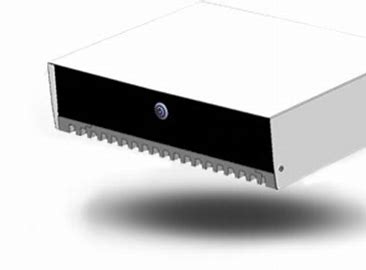
The new research report titled "Fanless Medical Box PC Market, Global Industry Analysis, and Forecast to 2027" gives a detailed analysis and future forecasts of the market.
The report highlights the significant players, including market size, share, and demand, development.
This report further covers the latest trends, technological advancements, and growth opportunities.The research report also covers the comprehensive profiles of the key players in the market and an in-depth view of the competitive landscape worldwide.
The major players in the fanless medical box pc market include ACL GmbH, Advantech, Baaske Medical, BriteMED, Corvalent, DFI, Hewlett-Packard, ICO Innovative Computer GmbH, iEi, Others.
This section includes a holistic view of the competitive landscape that includes various strategic developments such as key mergers & acquisitions, future capacities, partnerships, financial overviews, collaborations, new product developments, new product launches, and other developments.Get more information on "Global Fanless Medical Box PC Market Research Report" by requesting FREE Sample Copy at https://www.valuemarketresearch.com/contact/fanless-medical-box-pc-market/download-sampleMarket DynamicsThe rapidly emerging compute-intensive, automated, data-driven decision-making in the healthcare sector will be the primary motivating force for this market's growth.
Improved efficiency, productivity, security, and the ability to handle extensive diagnostics in healthcare facilities using fanless box PCs will stimulate market growth.