Implementing an Enterprise Resource Planning (ERP) system is one of the most significant undertakings a business can embark on. It's more than just installing new software; it's a profound organizational transformation that impacts every department, process, and employee. A successful ERP implementation can unlock immense efficiencies, provide invaluable insights, and lay a robust foundation for future growth. Conversely, a poorly managed implementation can lead to budget overruns, operational disruptions, and missed opportunities.
Implementing an ERP (Enterprise Resource Planning) system is not just a software upgrade—it's a transformation in the way an organization operates. A successful ERP implementation connects every department, automates repetitive tasks, improves reporting, and enhances business decision-making.
What is ERP Implementation?
ERP implementation is the process of planning, configuring, and deploying an ERP system. It involves:
Analyzing business needs
Selecting suitable ERP software
Customizing modules to match workflows
Migrating data
User training and system testing
The Stages of a Successful ERP Implementation
While every ERP implementation is unique, a structured approach typically involves several key phases:
1. Discovery and Planning (The Foundation)
This is perhaps the most critical stage. It involves:
Defining Clear Objectives: What are your business goals for implementing ERP? (e.g., reducing operational costs, improving data accuracy, faster financial close).
Requirements Gathering: A thorough analysis of current business processes, identifying pain points, and documenting detailed system requirements.
ERP System Selection: Choosing the right ERP software that aligns with your defined needs, industry specifics, budget, and scalability requirements.
Team Assembly: Forming a cross-functional project team with an executive sponsor, a dedicated project manager, and key representatives from all impacted departments.
Budget & Timeline: Developing a realistic budget and a detailed project plan with clear timelines and achievable milestones.
2. Design and Configuration (The Blueprint)
In this phase, the chosen ERP system is tailored to your specific business processes:
Process Mapping: Designing new, optimized workflows that leverage the ERP's capabilities. This often involves re-engineering existing processes.
Gap Analysis: Identifying discrepancies between the ERP's standard functionalities and your unique business requirements, determining if customization or process changes are needed.
System Configuration: Setting up the ERP modules, parameters, and settings to match your defined business rules and processes.
Customization (If Necessary): Developing any specific functionalities that are not available out-of-the-box, always aiming to minimize customization to reduce complexity and future maintenance.
3. Data Migration (The Backbone)
This is a critical and often challenging phase involving the transfer of historical and current data from old systems into the new ERP.
Data Cleansing: Identifying and rectifying inaccurate, duplicate, or incomplete data. This is crucial for the integrity of your new system.
Data Mapping: Defining how data from legacy systems will be transformed and loaded into the new ERP's structure.
Migration Execution: Performing the actual transfer of data, often in phases, with thorough verification.
Ready to Implement ERP for Your Business?
Don't let outdated systems slow you down. Connect with our ERP experts to explore how a well-planned ERP implementation can streamline your operations and boost productivity.
Get in touch with us to schedule your free ERP consultation.
Every organization wants to make use of the best ERP software and streamline the end of its operation to end.
This is quite a process that requires a great deal of attention in every aspect.
Writing down ERP software requirements, looking for software vendors, making an execution plan, and much more.
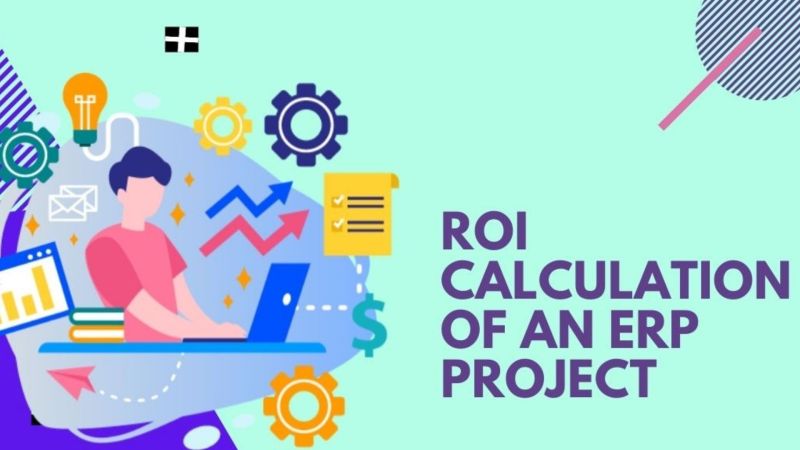
In all this, have you thought about the outcome of your investment?You have to calculate the ROI of your ERP project after implementing it.
Through this, you can estimate the extent of benefits it has provided to your organization.
Here, the question arises, what do you have to consider the ROI of an ERP system?