





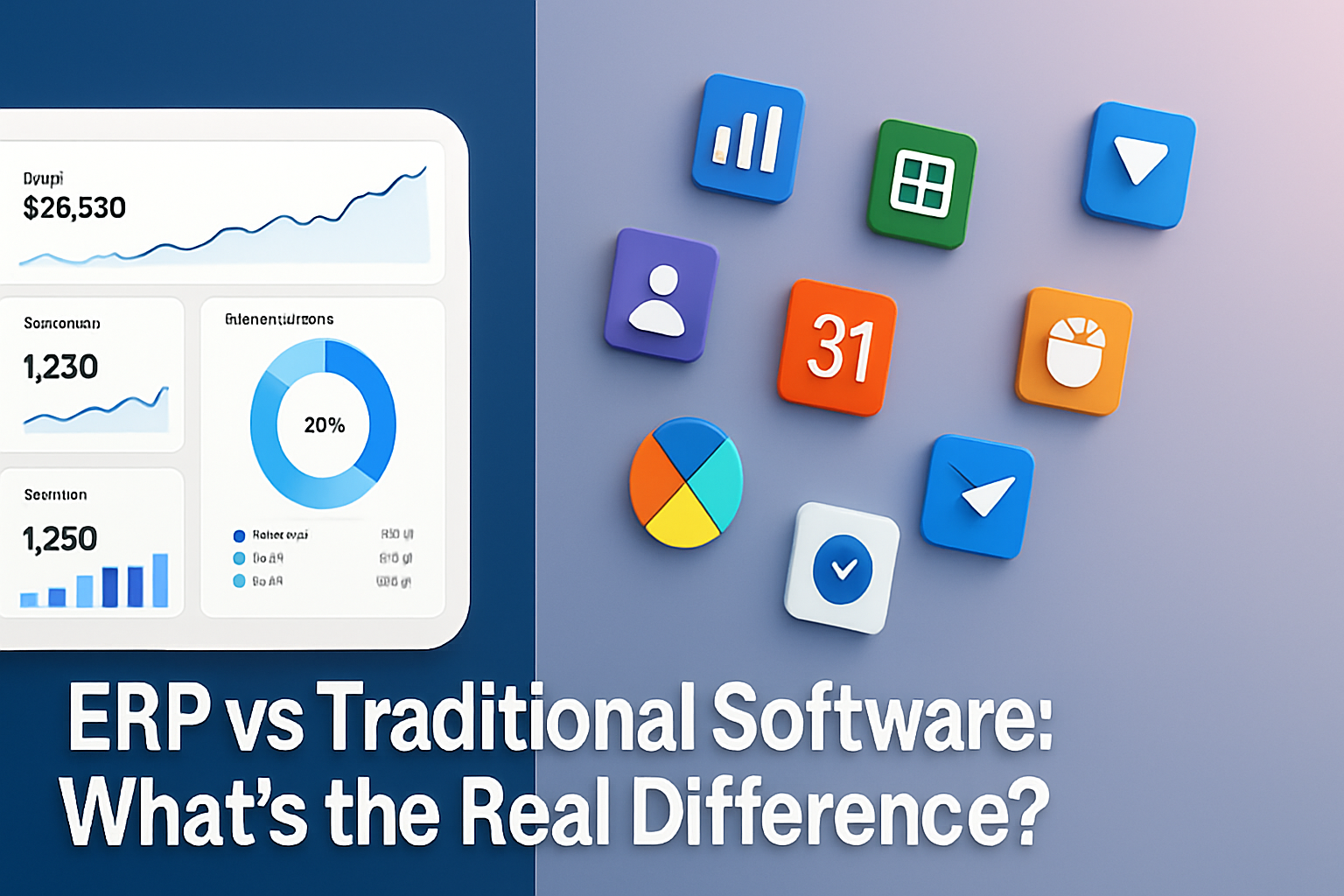
ERP unifies core business processes in one connected system, while traditional software handles single tasks in silos. For growing teams, this means fewer spreadsheets, cleaner data, and faster decisions with smart erp solutions built to scale.
What is ERP?
In order to facilitate data flow across departments, enterprise resource planning, or ERP, is an integrated platform that links finance, inventories, sales, procurement, production, human resources, CRM, and analytics. With role-based access and automated workflows, teams operate from a single source of truth rather than juggling several tools. For special procedures and regulatory requirements, this is where customized ERP software excels.
Traditional Software Explained
Traditional software is typically single-purpose: accounting tools for books, inventory apps for stock, CRMs for leads, and HR tools for payroll. These work well early on but create data silos, duplicate entry, and reporting gaps as operations grow. Integrations help, but point-to-point links often break, are costly to maintain, and delay insight. This is why many companies graduate to an erp solution provider when complexity increases.
Core Differences That Matter
- Data model and visibility: Traditional tools maintain their own copies of the master data (things, customers, and vendors), which leads to inconsistencies. ERP centralizes this data so that everyone works from the same records.
- Process automation: ERP eliminates manual handoffs and errors by connecting steps end-to-end (quote-to-cash, procure-to-pay, plan-to-produce); single tools automate locally, not across departments.
- Reporting and analytics: While independent solutions need spreadsheets and exports to piece together KPIs, ERP provides unified dashboards and drill-downs. Predictive analytics is frequently included in smart ERP solutions.
- Scalability and control: Traditional stacks falter as regulations and locations grow, but ERP allows multi-warehouse, multi-currency, GST/compliance, approvals, and audits.
- Integration burden: Traditional stacks depend on several fragile connectors, whereas ERP minimizes the amount of integrations required.
When ERP Is the Better Choice
- Operations involving many channels: Distributors, retailers, D2C, and marketplaces all require unified inventory, order orchestration, and financials.
- BOMs and manufacturing: Planning, MRP, work orders, batch/lot tracking, and quality all need an integrated engine, which is a traditional area for specialized ERP software.
- Compliance-heavy environments: Centralized controls and logs make it easier to comply with industry rules, GST, e-invoicing, and audits.
- Fast growth: New warehouses, SKUs, teams, and regions demand a platform that scales without rebuilding integrations.
When Traditional Software Still Works
Simple operations with low transaction volume, basic inventory, and a single sales channel can run well on a few best-in-class tools.
Early-stage teams validating a business model might choose lightweight apps first, then migrate to ERP as complexity rises.
Cloud ERP, Smart Features, and ROI
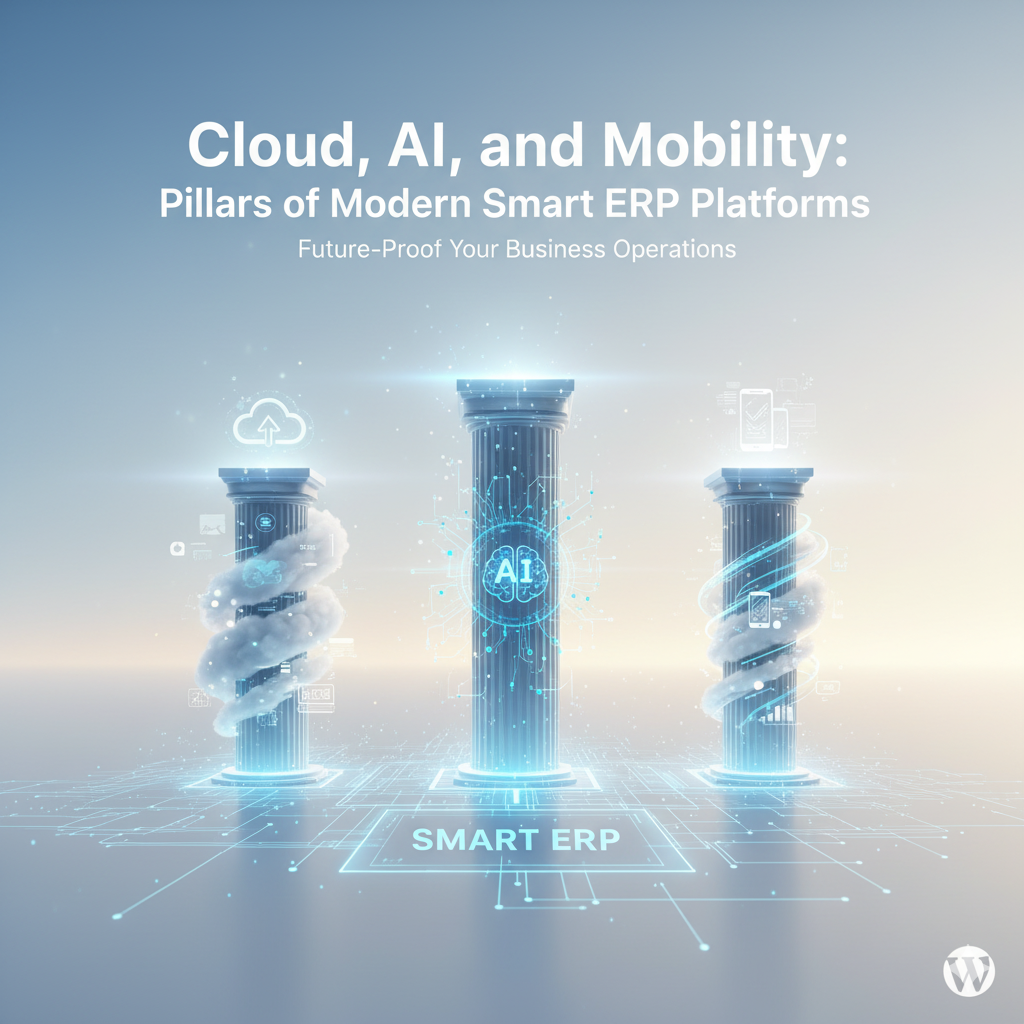
API-first architecture, role-based security, mobile access, and AI capabilities that predict demand, identify irregularities, and automate approvals are all aspects of contemporary cloud ERP. By doing away with manual reconciliation, these smart ERP solutions enhance margin tracking, decrease stockouts, and accelerate cash cycles. Lower operational costs, quicker closing, and improved on-time delivery are usually the sources of the return on investment.
Custom vs Out-of-the-Box
Out-of-the-box ERP accelerates go-live with proven processes and templates.
Customised erp software aligns the system to unique workflows, niche compliance, or competitive processes—ideal when differentiation matters. The key is disciplined scoping with an experienced erp solution provider to avoid over-customization.
Global Context: Working With Providers
If operating in multiple regions or sourcing globally, selecting partners with international implementation experience matters. Strong delivery teams, references, and post-go-live support are essential—especially when evaluating erp providers in usa for North American rollouts, integrations, and compliance nuances.
How Ravikiran Infotech Helps
By integrating finance, inventory, sales, manufacturing, and analytics, Ravikiran Infotech creates and deploys smart ERP solutions that streamline operations and spur expansion. The team maps existing processes, scopes just what increases ROI, and provides training and support for staged go-lives as an ERP solution provider. Customized ERP software aligns workflows without causing bloat for special demands, and experience working with US ERP vendors guarantees seamless worldwide execution for cross-border programs.

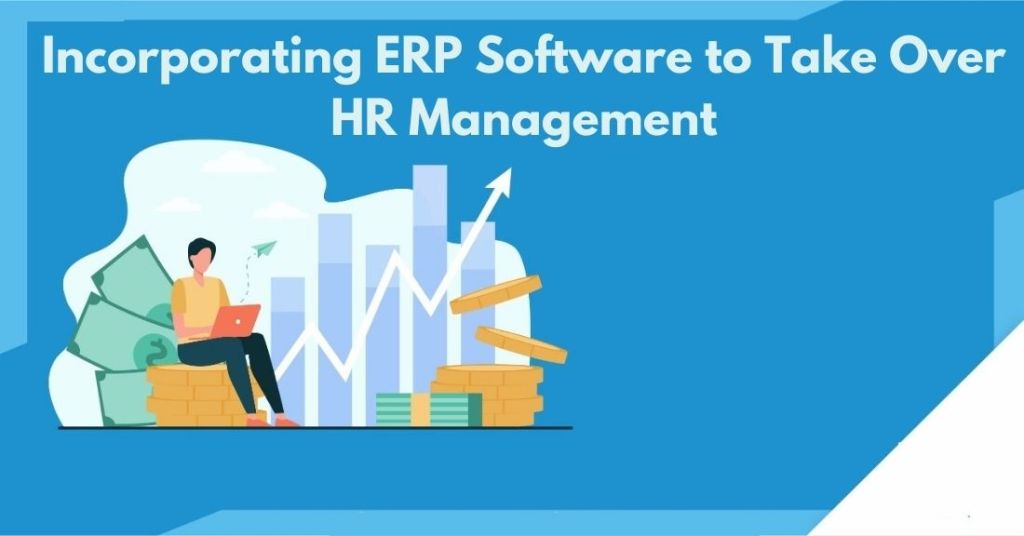
Knowing this, an ERP solution can be your partner in managing human resources, then why go for a separate software?
Yes, this is the advantage of ERP solution over others providing you ease in administering personnel life cycle activities.https://erpimplementationcompany.wordpress.com/2021/02/16/incorporating-erp-software-to-take-over-hr-management/