

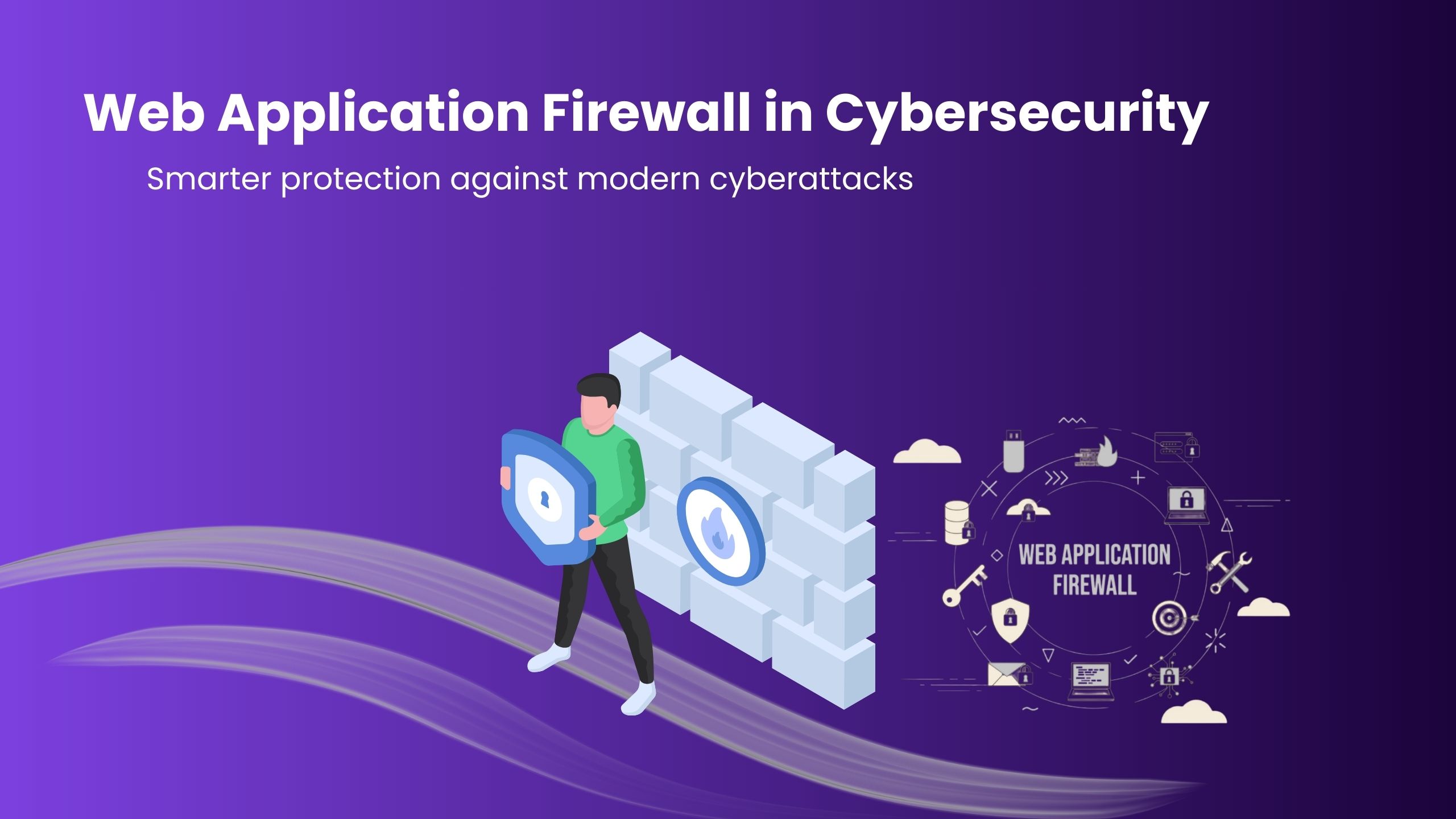
You want to secure your data, but are not sure how firewalls actually work? Do not worry, this write-up breaks it down in simple terms. Here, you will explore the role of a Web Application Firewall. It is designed to protect web applications at the entry point, blocking malicious traffic and safeguarding user data.
Understanding Web Application Firewall in Cybersecurity
Cybercrime is not slowing down—it is scaling faster than ever. Fortinet reports that in 2024, automated scans shot up to nearly 36,000 every second across the globe. Attackers are constantly testing apps and systems, seeking even the smallest vulnerabilities. For businesses, the reality is clear—they’re not just at risk; they’re under pressure all the time.
Traditional firewalls still have their place, but they mainly check basics like IP addresses and ports. They cannot always detect malicious code hidden inside a login form, payment request, or API call. That gap makes modern applications easy targets.
This is where a web application firewall in cybersecurity becomes essential. It goes beyond simple network checks, examining the actual content of web traffic. Every request—whether from an online shopper, a bank customer, or a healthcare user—gets screened before it ever reaches the application.
This article explores what a web application firewall is, how it works, the different types available, the attacks it prevents, and why it has become a crucial part of modern cybersecurity.
Core Functions of a Web Application Firewall
A Web Application Firewall, or WAF, is designed with a single clear goal: to protect web applications from malicious traffic. But the way it does that is worth looking at more closely.
Filtering traffic: Every time someone sends a request to your app—like logging in or submitting a form—the firewall checks it. Safe requests move ahead, while suspicious ones are either blocked or flagged.
Activity monitoring: The firewall logs the activity as well. This log assists the security personnel in identifying suspicious activity, such as failed attempts to log in or unusual data entries.
Preventing attacks: The firewall can also control traffic that appears to be a known threat, like SQL injection or cross-site scripting.
Getting smarter over time: Modern tools are not based on a set of rules. They are trained on the patterns of normal behavior with the implementation of AI and machine learning. In that manner, even new attacks may be detected in advance before they lead to malicious effects.
A combination of all these features is the foundation of the firewall security of the web applications. The objective is not to prevent attacks, but to ensure that genuine users have an enjoyable and worry-free experience whenever they use the application.
How a Web Application Security Firewall Works
The applications can be secured with a layer of protection by using a Web Application Firewall (WAF), which acts as a shield between the users and the web server. It blocks, filters, and monitors harmful traffic before it can access the app, and only safe requests can pass through. A WAF operates at the application layer (Layer 7), unlike conventional firewalls, which offer protection to the network, and this is where the majority of modern attacks occur.
1. Positioning in Front of the App
A WAF is placed in front of the web application, either in the form of hardware or software, or as a cloud service. All user requests get through the WAF and are forwarded to the server.
2. Inspecting Every Request
It closely examines all the HTTP or HTTPS requests and responses. In the case of something suspicious, such as a suspicious input, unusual query, or pattern that is not the expected behavior of an app, it gets flagged.
3. Enforcing Security Policies
WAFs are models that employ different methods for determining what is safe and what is not.
- Blacklist (Negative Security): Blocks Traffic that matches known attack signatures.
- Whitelist (Positive Security): Only permits previously authorized trusted traffic.
- Behavioral Analysis: Uses AI and machine learning to learn normal patterns and detect anomalies or new attack methods.
4. Blocking Malicious Traffic
The WAF blocks a request immediately when it is detected to be harmful, such as an SQL injection attack, cross-site scripting (XSS), or botnet flood. It is also able to prevent sensitive data from leaking out of the app.
5. Continuous Protection
WAFs prevent more than just websites; by inspecting traffic in the application layer, they can protect both APIs and websites against threats such as zero-day exploits, DDoS attacks, and automated bot spam. The present WAFs are also dynamic and become smarter over time to match the evolving threats.
Types of Web Application Firewalls in Cybersecurity
Not every WAF is constructed similarly. Depending on the needs, size, and budget, businesses have an opportunity to select one.
- Network-based WAFs: Installed on hardware appliances within the local network. They are fast and powerful but come with higher costs.
- Host-based WAFs: Installed directly on the web server as software. These allow customization but consume server resources, which can slow down performance.
- Cloud-based WAFs: Delivered as managed services. They are scalable, cost-efficient, and quick to deploy, making them the most popular option today.
Each type has strengths and trade-offs, but all share one mission—ensuring web application firewall security at the application layer.
Comparing WAFs with Other Security Tools
Firewalls are not all the same. Let us compare them to understand where each fits:
- Application Firewall (AF): Works at Layer 3/4 (IP, ports, protocols). Great for filtering traffic basics, but blind to application-level threats.
- Next-Generation Firewall (NGFW): Adds deep packet inspection, intrusion prevention, and malware detection. Powerful at the network level, but cannot fully analyze web requests.
- Web Application Security Firewall (WAF): Operates at Layer 7, examining every web request and response. Stops attacks aimed directly at apps, which others miss.
For complete security, businesses often combine these tools to ensure comprehensive protection. A layered defense ensures that both the network and the applications are protected.
Why Web Application Firewall Security Matters for Businesses
Apps that are exposed to the public are excellent targets for attackers. Online portals, payment forms, and login pages contain sensitive information that is highly sought after by criminals. The lack of an application-level firewall will leave a single vulnerability to reveal thousands of records.
The E-Commerce sites are also based on WAFs to secure payment gateways and customer information.
Banks and fintech apps rely on them to allow secure online transactions and avoid credential-stuffing attacks.
Healthcare systems employ them to keep patient information and electronic health records.
In addition to protection, there is compliance. Precautions like PCI DSS on payment security, HIPAA on healthcare, and GDPR on data privacy must be rigorously enforced. A WAF can fulfill these needs by tracing, reporting, and blocking threats.
Modern WAFs also apply AI security. By learning traffic patterns, they detect anomalies and respond to zero-day attacks that static rules might miss. This is why many companies work with an AI development company to strengthen their defenses.
Common Cyberattacks a Web Application Firewall Can Prevent
Here are the threats WAFs are designed to stop:
- SQL Injection: Hackers insert harmful queries into input fields to access databases.
- Cross-Site Scripting (XSS): Injected scripts run in a user’s browser to steal data.
- Cross-Site Request Forgery (CSRF): Tricks a user into performing unwanted actions.
- Prompt Injection: Targets AI-powered apps by manipulating prompts to expose data.
- Distributed Denial of Service (DDoS): Overloads servers with traffic until they crash.
- Malicious bots: Scrapers, scanners, and credential stuffers that drain resources.
Each of these attacks highlights why web application firewall security has become non-negotiable for digital businesses.
Blocklists and Allowlists in Web Application Firewall Security
A WAF does not just block everything—it works smartly.
- Blocklist (Blacklist): Contains IPs, domains, or traffic patterns marked as unsafe. Any request matching these gets blocked immediately.
- Allowlist (Whitelist): Contains trusted sources like internal APIs or partner systems. Only approved requests from these lists are allowed in.
This combination ensures balance: harmful requests are stopped, while genuine users and partners face no hurdles.
Advantages of Web Application Firewalls
- Protects apps from a wide range of attacks using AI security.
- Provides audit trails for compliance.
- Works with cloud apps and APIs.
- Builds customer trust by safeguarding sensitive data.
Disadvantages and Limitations of WAFs
- It can be costly, especially for hardware appliances.
- Needs ongoing tuning to avoid false positives.
- May introduce latency if not configured well.
- Dependence on vendors for updates in cloud solutions.
Best Practices for Web Application Firewall Security
To derive the best of a WAF, businesses are recommended to:
- Check logs/alerts on a regular basis.
- Combine SIEM technologies to gain a comprehensive view of the big picture.
- Change and adjust policies frequently.
- Fight against unknown threats using AI implementation.
- Collaborate with an AI cybersecurity company that has experience in AI development to achieve optimal deployment.
The Future of Web Application Firewall in Cybersecurity
The role of WAFs will keep evolving:
- AI and ML-driven defense: Firewalls that learn patterns and identify new threats without relying on signature updates.
- Predictive protection: Systems that adapt to zero-day attacks in real time.
- Cloud-native firewalls: Built to scale with SaaS and multi-cloud environments.
- DevSecOps integration: Firewalls working inside the development cycle to stop risky requests before apps go live.
Conclusion: Strengthening Cybersecurity with Expert Guidance
A web application firewall is no longer an option in cybersecurity. It safeguards applications, prevents sophisticated attacks, promotes compliance, and fosters trust. Regardless of the e-commerce, banking, and healthcare industries, each industry relies on these protections to ensure the safety of the data.
With the application of best practices, utilizing modern AI-driven defenses, and collaborating with specialists, such as an AI development agency, companies can transform their firewall into far more than a barrier. It is made into a learning, adaptive shield that becomes stronger at each request that it inspects.