





Mobile applications are no longer just convenient add-ons to our digital lives—they are the very foundation of modern communication, commerce, and productivity. From ordering food and managing finances to accessing healthcare and collaborating at work, mobile apps have become the entry point to sensitive personal and organizational data.
This reliance on apps comes with a cost: mobile security threats are rising at an alarming rate. Cybercriminals now exploit not just coding flaws but also user behaviour, weak authentication, and third-party libraries. Static protections alone are not enough. What’s needed is adaptive, intelligent, and scalable protection—and that’s exactly where AI in Mobile App Security is making an impact.
In this article, we’ll explore how AI is transforming app security, why traditional methods are insufficient, the challenges organizations face, and best practices for building a robust AI-driven security framework.
Why Mobile Apps and Security Are a Growing Concern
Mobile apps sit at the intersection of convenience and vulnerability. Their design encourages fast adoption, frictionless user experiences, and frequent updates. But these same qualities expose them to unique risks:
- Fragmented OS Environments: Particularly on Android, where devices differ in hardware, operating systems, and update cycles.
- Data Sensitivity: Apps handle banking details, health records, personal chats, and more.
- Third-Party Dependencies: SDKs, APIs, and integrations expand functionality but also expand the attack surface.
- User Behaviour: Weak passwords, public Wi-Fi usage, and poor device hygiene make users easy targets.
Hackers exploit these factors by deploying malware, spyware, credential stuffing, and phishing campaigns. Traditional measures like static code analysis, antivirus tools, and periodic penetration testing no longer suffice. Modern attacks demand intelligence at scale, which is where mobile AI security takes center stage.
The Role of AI in Mobile App Security
Artificial Intelligence introduces capabilities that go far beyond static rules and signature-based defenses. By leveraging machine learning (ML), deep learning, and behavioural analytics, AI systems can adapt, detect, and respond in real time.
1. Real-Time Threat Detection
AI models analyze millions of data points—login times, device IDs, geolocation, API calls—to establish what “normal” behaviour looks like. Any deviation triggers an alert, catching suspicious activity before it becomes a breach.
2. Predictive Risk Analysis
Instead of waiting for an attack to happen, AI uses historical data and threat intelligence to predict which app modules or endpoints are most likely to be targeted. This proactive defense helps security teams stay ahead of attackers.
3. Automated Code & Vulnerability Testing
AI accelerates DevSecOps by scanning codebases, testing runtime environments, and detecting vulnerabilities continuously. Automated penetration testing powered by ML reduces false positives and saves developer time.
4. Adaptive Authentication
Passwords and 2FA are no longer enough. AI enables behavioural biometrics—recognizing users by swipe patterns, typing rhythms, or facial dynamics. This ensures frictionless yet highly secure authentication.
5. Smart Permission & API Monitoring
AI identifies abnormal permission requests or API behaviour. For example, if a flashlight app suddenly requests access to contacts or the microphone, the AI flags it as suspicious.
6. Improved Data Encryption & Key Management
AI systems can recommend optimal encryption standards, rotate keys dynamically, and detect unauthorized decryption attempts—further securing user data.
By combining these, app security becomes dynamic, learning, and resilient.
Key Challenges of AI-Powered App Security
While promising, implementing AI in security is not without hurdles. Organizations must balance innovation with responsibility.
1. Data Privacy and Governance
AI models require data to train effectively. But collecting and processing user data introduces new risks. Without strong AI Data Governance, sensitive information can be misused or exposed.
2. Model Security
AI itself can be attacked. Threats include data poisoning (feeding bad training data), adversarial inputs (crafting data to fool the model), and model theft (stealing intellectual property). Securing the AI lifecycle is crucial.
3. Explainability and Trust
AI’s “black box” nature makes it hard to explain why a login was blocked or a session flagged. Without transparency, users and regulators may distrust AI decisions.
4. Performance on Mobile Devices
Heavy AI models can drain battery and slow apps. Developers need strategies like model compression, edge computing, or hybrid on-device/cloud processing.
5. Compliance and Legal Pressures
Mobile apps must comply with GDPR, HIPAA, and local data protection laws. AI-powered monitoring and biometrics must align with these regulations.
Best Practices for AI-Driven Mobile App Security
Organizations, whether developing apps in-house or through a custom mobile app development company, should follow these best practices to ensure AI improves security without adding new risks.
1. Conduct Security Audits Regularly
Start with a thorough audit of permissions, APIs, SDKs, and data flows. Threat modeling helps predict where AI can add value.
2. Integrate Security into the Development Lifecycle
Don’t treat security as a “post-release fix.” Bake AI-powered checks into every stage of SDLC (design, coding, testing, deployment).
3. Adopt Continuous Monitoring
AI thrives on data. Continuous monitoring ensures models stay updated against evolving threats.
4. Leverage Human-in-the-Loop Approaches
Let AI handle detection, but have humans validate critical decisions like account lockouts or payment denials.
5. Prioritize Edge AI and Federated Learning
Keep user data local where possible, training models on devices to reduce data transfer risks.
6. Maintain Transparent User Communication
Users must know what data is collected, why, and how it secures them. Consent mechanisms build trust.
7. Regularly Retrain Models
Threats evolve rapidly. Update training data, fine-tune models, and use feedback loops to keep systems sharp.
AI in Action: Real-World Use Cases
Let’s explore how AI is already changing mobile app security in different domains:
- Banking & Finance Apps: Detect fraud by analyzing transaction anomalies, device fingerprints, and behavioural patterns.
- Healthcare Apps: Monitor data flows, detect unauthorized access to electronic health records, and protect sensitive biometric data.
- E-Commerce Apps: Secure checkout flows, flag suspicious discount abuse, and prevent account takeovers.
- Enterprise Collaboration Apps: Identify insider threats, prevent data leaks, and enforce zero-trust principles.
The Future of Mobile AI Security
AI’s role in mobile app security is still evolving. Here are key trends shaping its future:
- Zero-Trust Security Models: Every request, device, and user is verified continuously, not just once.
- Behavioural AI & Continuous Authentication: Seamless login experiences with real-time validation based on behaviour.
- AI for Supply Chain Security: Scanning third-party libraries and SDKs to prevent malicious injections.
- Explainable AI (XAI): Models that can justify their security decisions to meet compliance and build trust.
- Federated Learning: Training AI across multiple devices without moving sensitive data to central servers.
Why Businesses Must Act Now
Mobile apps will continue to be prime targets for cybercriminals. The stakes are too high: breaches cost companies millions in revenue loss, legal fines, and reputational damage. More importantly, users lose trust—and in today’s competitive market, trust is everything.
Organizations must treat AI not as a futuristic add-on but as a present-day necessity in safeguarding apps. From mobile apps and security testing to intelligent authentication, AI’s ability to detect, predict, and prevent is unmatched.
Those who invest early in AI-driven security gain a competitive edge, demonstrating responsibility and reliability to users and regulators alike.
Conclusion
AI in Mobile App Security is more than a technological trend—it’s a paradigm shift. Traditional defenses can’t keep pace with modern threats, but AI offers real-time intelligence, predictive power, and adaptive protection.
The path forward requires careful planning: robust AI Data Governance, transparent communication, compliance with global regulations, and a balance between automation and human oversight. Organizations that get this right will build mobile applications that are not just innovative but also trustworthy and resilient.
Whether you’re building an app in-house or partnering with a custom mobile app development company, embedding AI into your security strategy is no longer optional—it’s essential.
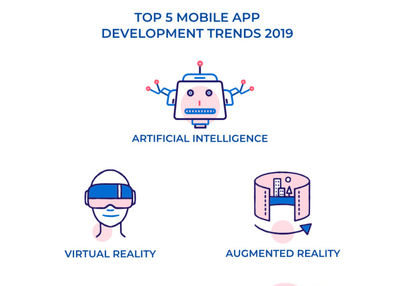
According to the market influencers and predictors, the growing demand of mobile app will continue in 2019 as well.
People are fascinated with the amazing benefits and revolutionary changes AI technology is bringing in a life of people, as well as the way business operations, revolutionized with its usage.
The mobile app development firm will not stay untouched by this tidal wave of the increasing popularity of Artificial Intelligence-based apps.
It is more evident from looking at some of the amazing AI based apps already winning the hearts of the iOS device users.
The concept of Smart home has been in use for many years, but in the past few years, it got a lot of popularity.
If you are not yet well-versed with the IoT concept, this is the time to upgrade your android application development company to the next level.
GEITPL the Best Web development company with highly experience Team.
offer you all types of web development.
we expertise in custom software development, mobile app, AI, Python & ML and other.