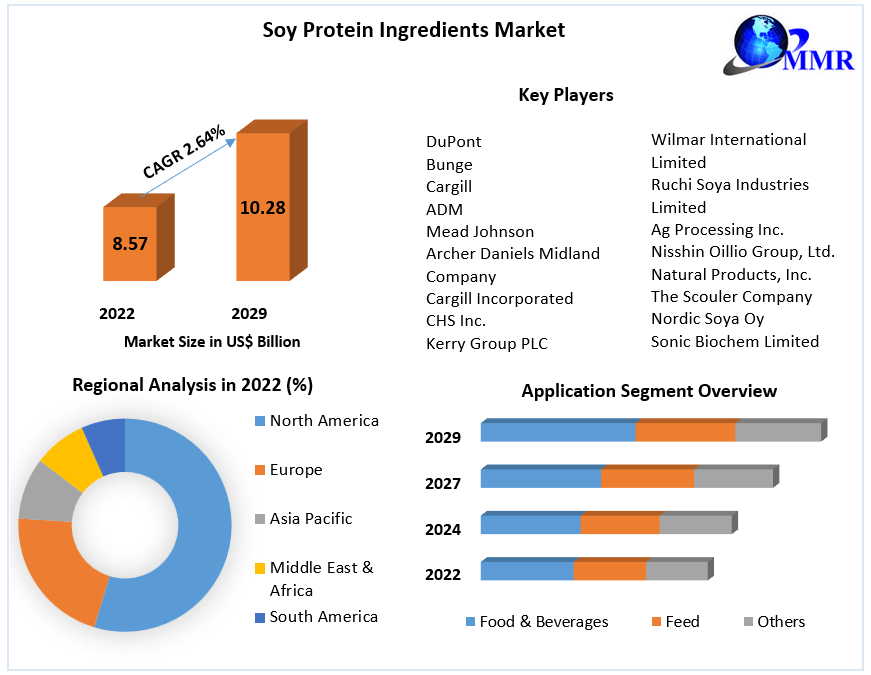



The global soy protein ingredients market size was valued at USD 7.7 billion in 2022 and is poised to grow to USD 10.8 billion by 2027, growing at a CAGR of 7.0% in the forecast period (2022-2027). Soy protein ingredients are produced by processing soymeal to obtain ingredients with higher protein concentrations, which can be used as a protein source in a range of food and animal feed applications. The demand for soy protein is increasing in the food and animal feed industries due to its health benefits and functional properties. It is also a cheaper substitute for animal protein. The market is likely to grow at a significantly higher rate compared to other vegetable proteins.

Download PDF Brochure: https://www.marketsandmarkets.com/pdfdownloadNew.asp?id=857
Soy Protein Isolates, a soy protein in the soy protein ingredients market, are projected to grow at the highest CAGR of 7.4% during the forecast period.
Soy protein isolates are used not only to improve the texture of meat products but also to increase protein content, enhance moisture retention, and emulsify. The additional benefit of using soy protein isolates is their bland taste and high protein content; also, they are low in fat, oligosaccharides, and fiber, causing less flatulence due to bacterial fermentation. They are considered significant ingredients by food industries for their functional benefits. The food industry is the largest user of pure SPI, which is also used in the health/pharmaceutical industry. Soy protein isolates are also important ingredients in bakery products. They have the highest protein content (around 90%) out of all the types of soy protein available, which is projected to drive their demand in the market.
The dry segment by form is estimated to dominate over the forecasted period.
In the industry, powdered or dry ingredients are excellent texture enhancers. Moreover, with the rise in demand for meat alternatives with growing trends for plant-based foods, industries are focused on maintaining the texture of soy-based food. They are trying to make it as close to the texture of meat. Players in the market thus include texturized soy protein ingredients in their portfolios. They are mostly in dry form; thus, the rise in demand for texturized soy protein is driving the demand for dry form soy protein. Moreover, their longer shelf life, convenient packaging, ease of use in recipes, and ability to blend with other components are driving their demand in the market.
The food segment by application dominated the market with an estimated value of USD 6,282.1 million in 2022
Soybean and processed products are the most important ingredients in the food & beverage industry, and their functionality is still being studied. They have a major share in the meat alternatives and functional food segments. Technological advancements have helped enhance the functionality of soy protein, which has led to the successful replacement of meat protein with soy protein. Infant formulations for lactose intolerants comprise a large amount of soy protein isolates containing no lactose. Soy protein are formulated to suit specific applications, such as bakery, confectionery, beverage, dairy replacers, or meat alternatives. Consumer shift towards plant-based food is expected to drive the food segment in the soy protein ingredients market.
Request Sample pages: https://www.marketsandmarkets.com/requestsampleNew.asp?id=857
Asia Pacific is projected to be the fastest growing region in the market in 2022; it is anticipated to grow at a significant CAGR.
The soy protein ingredients market in the Asia Pacific is projected to witness strong growth driven by large economies, such as China, India, Japan, and Australia. The level of overall investment in the region has increased substantially over the past decade, especially in China. The region has also witnessed a rise in vegan food consumption in recent years. The perceived benefits regarding people’s health, environment, and religious considerations significantly contribute to the adoption of vegan and vegetarian diets in the region. Also, the rising health concerns have led people to reduce their meat intake and add plant-based foods, including soy proteins, to their diets.
The key players in this market include ADM (US), Wilmar International Co., Ltd. (Singapore), Cargill, Incorporated (US), CHS, Inc. (US), and Fuji Oil Holdings Inc. (Japan)