

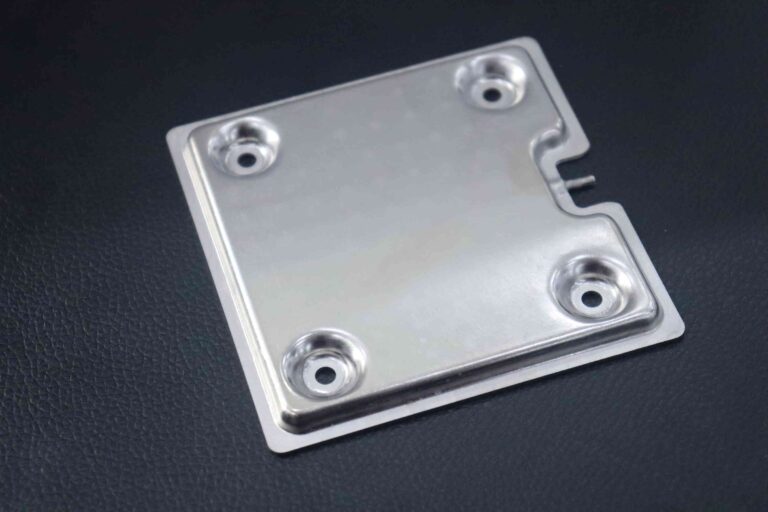
In an age where electronic devices are becoming smaller, more powerful, and increasingly complex, controlling heat buildup has become a critical engineering challenge. As CPUs, GPUs, batteries, and power modules continue to advance, so too must the methods we use to keep them cool. Traditional heat dissipation techniques — such as heatsinks and heat pipes — are beginning to reach their physical and performance limits. This has left design engineers and thermal management specialists looking for the next big leap in cooling technology, and many are turning to Vapor Chambers as the solution.

Enter vapor chambers.
Once considered niche or exotic, vapor chambers are now taking center stage in compact electronics, advanced computing platforms, and ultra-efficient energy systems. Their ability to rapidly spread and dissipate heat makes them particularly attractive in high-performance and space-constrained applications, where thermal runaway can cause everything from degraded performance to outright failure.
What Are Vapor Chambers?
At its core, a vapor chamber is a type of passive two-phase heat spreader that uses the principles of evaporation and condensation to move heat across a surface.
Structurally, vapor chambers are flat, sealed metal plates (often made from copper or aluminum) containing a small amount of working fluid—usually water—under a partial vacuum. Inside, a wick structure lines the chamber walls, enabling capillary action.
Here’s how they work, in brief:

- Heat is applied to one area of the vapor chamber (typically from a processor or power component).
- The working fluid inside evaporates at the heat source, forming vapor.
- Vapor rapidly spreads to cooler areas of the chamber.
- The vapor condenses back into liquid, releasing heat.
- Liquid returns to the hot zone via capillary action in the wick structure, completing a cycle.
This mechanism allows vapor chambers to uniformly distribute heat with high efficiency, often outperforming solid metal heat spreaders and traditional heat pipes in compact, high-power environments.
The Science Behind Vapor Chambers
Though they sound simple, vapor chambers rely on fine-tuned physics and precision engineering.
- Two-Phase Heat Transfer: The shift from liquid to vapor (and vice versa) absorbs and releases large amounts of thermal energy, enabling vapor chambers to handle heat loads well beyond what simple conduction can achieve.
- Capillary Loop Structure: Wicking ensures continuous circulation of the fluid and consistent operation, even when the chamber isn’t oriented horizontally.
- Isothermal Performance: Unlike materials like copper, which have temperature gradients, vapor chambers maintain a uniform surface temperature, critical for maintaining component reliability and performance.
Essentially, vapor chambers combine the benefits of heat pipes (two-phase heat transfer) with the uniform spreading capacity of a flat heat sink — offering the best of both worlds.
Where Vapor Chambers Are Making an Impact
1. Consumer Electronics
-Smartphones, tablets, and laptops all benefit from vapor chambers thin profiles and heat-spreading efficiency. Flagship devices from brands like Apple and Samsung already integrate them.
2. Gaming & High-Performance Laptops
-With powerful CPUs and discrete GPUs crammed into tight housings, cooling is no small feat. Vapor chambers prevent thermal throttling and improve frame rates.
3. 5G and Telecommunications
-For 5G base stations and mmWave antennas, vapor chambers ensure consistent performance under high throughput and ambient heat.
4. Data Centers
-High-density servers with thousands of hot-running CPUs and GPUs rely on optimized thermal management to prevent overheating and reduce energy costs.
5. Automotive Electronics
-EVs, especially in their battery modules and power control units, require efficient thermal spreaders to manage temperature across critical components.
6. Aerospace and Defense
-Lightweight, high-efficiency, vibration-resistant cooling components like vapor chambers are essential in satellites, aircraft, and defense electronics.
7. Medical Devices
-Compact yet powerful equipment such as diagnostic scanners, ultrasound systems, and wearable health tech need reliable cooling without moving parts.
At Tone Cooling Technology Co., Ltd., we offer customized vapor chambers tailored to each of these application areas—with options made for extreme environments, high watt densities, and unique footprints.
Advantages of Vapor Chambers for Next-Gen Devices
Here’s a deeper look at the specific benefits that make vapor chambers a cornerstone of next-generation thermal solutions:
✅ Thin & Lightweight
Ideal for ultra-compact devices that still demand high computational performance.
✅ Uniform Heat Distribution
Reduces localized hot spots—essential for processor health and performance.
✅ Orientation Independence
Functions in nearly any orientation (including vertical or upside-down) depending on the wick design.
✅ Silent Operation
Completely passive — meaning no noise, vibration, or power consumption.
✅ Customizable Design
Can be manufactured in various shapes, sizes, and performance profiles to seamlessly fit product designs.
✅ Multi-Heat Source Capability
Can absorb heat from multiple components (e.g., CPU, GPU, VRMs) and spread it across an even surface area.
Also Read: Applications of Vapor Chambers for Efficient Device Cooling [Infographic]
Tone Cooling Technology – Your Partner in Vapor Chamber Innovation

As a global leader in heat management and thermal design solutions, Tone Cooling Technology Co., Ltd. provides cutting-edge vapor chambers engineered to meet the most demanding requirements. Our expertise and manufacturing capabilities enable us to deliver solutions customized for a wide range of industries and performance benchmarks.
Our Capabilities:
- Thickness range: 0.30 mm to 5.00 mm
- Material options: Pure copper, aluminum, or hybrid metals
- Wick design: Sintered, mesh, or composite wick structures
- Working fluids: Deionized water, methanol, and other low boiling-point liquids
Enhanced surface finishes and coatings for durability and oxidation resistance
Whether you're developing a flagship smartphone, designing next-gen electronics, or engineering automotive control modules, our vapor chambers are ready to cool your innovation.
Are Vapor Chambers the Future? Absolutely.
The question isn’t whether vapor chambers are useful—but how soon you’ll need them. With an unmatched ability to tame intense heat in compact spaces, they are already the go-to solution for cutting-edge applications. Whether you’re an electronics designer, systems engineer, or OEM supplier, incorporating vapor chambers into your products isn’t just an upgrade—it’s a competitive advantage.
FAQs:
Q1: What's the difference between a heat pipe and a vapor chamber?
While both use two-phase technology, heat pipes move heat linearly from point A to B. Vapor chambers spread heat evenly across a 2D area, making them ideal for CPUs, GPUs, and multi-heat source environments.
Q2: How thick are vapor chambers, and can they fit into slim devices?
Yes. Our vapor chambers can be as thin as 0.30 mm, perfect for slim smartphones, laptops, and tablets.
Q3: What is the maximum power density a vapor chamber can handle?
Vapor chambers can manage power densities well over 100 W/cm², depending on design specifics. This makes them suitable for high-end processors and power modules.
Q4: Can vapor chambers be used in extreme environments?
Yes. With proper design, they can operate in high-vibration, low-pressure, high-temperature, and zero-gravity environments—commonly required in aerospace or defense.
Q5: Is there a risk of fluid leakage?
Vapor chambers are hermetically sealed. When manufactured to high-quality standards (like those at Tone Cooling), the risk of leakage is extremely low.
Q6: How long do vapor chambers last?
Vapor chambers can operate reliably for 10–20 years, depending on environmental conditions and workload. Regular testing ensures consistent reliability over time.
Q7: Are vapor chambers environmentally friendly?
Yes. Most vapor chambers use non-toxic, recyclable materials like copper and water, with no moving parts or consumable energy.
Q8: Can Tone Cooling provide custom vapor chamber prototypes?
Absolutely. We collaborate closely with clients to deliver custom-built vapor chambers for prototypes and full-scale production — from initial thermal simulation to final delivery.