Cyberthreats today are evolving at a rate that one can’t even imagine, mostly powered by advanced technologies like artificial intelligence, machine learning, quantum computing, etc. Those who are still dependent on legacy systems and traditional signature-based cybersecurity solutions are likely to face security breaches and are more vulnerable to exploitation.
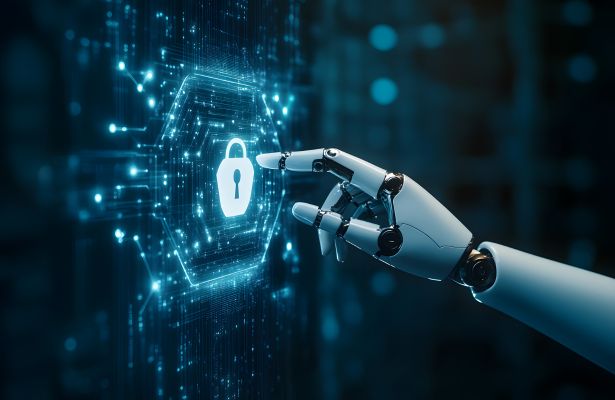
Artificial intelligence has always been a double-edged sword, which can be used by malicious actors to carry out cyberattacks and can also be used by cybersecurity professionals and users to enhance their security.
The modern AI in cybersecurity solutions doesn’t just provide complementary cybersecurity tools but serves as the foundation for next-generation cybersecurity measures. If integrated properly, AI can deliver a proactive and resilient security solution to detect, contain, and respond to threats effectively.
Do you know that only 14% of organizations feel confident that they have the required skills and resources to manage evolving cyber risks? (Source: Global Cybersecurity Outlook 2025)
Role of AI in Providing a Complete Cybersecurity Solution
A complete protection solution doesn’t mean having a single product. It is a combination of different tools and services that work across multiple layers and strengthen the overall protection.
Here are different ways AI helps provide complete protection against emerging and evolving cyber threats.
1. Threat Detection and Anomaly Analytics
AI has been transforming how organizations detect cyber threats these days. They have moved beyond traditional rule-based systems to intelligent systems that can detect anomalies by analyzing huge amounts of data.
The advanced machine learning models process a huge amount of data, such as logs, network traffic, user behavior, etc., and determine what is normal behavior and what can be suspicious. They can easily detect if any behavior deviates from the set standard and flag it as an anomaly.
So, AI can be used to detect anomalies, including lateral movement, unusual login attempts, data exfiltration, etc., that would otherwise go unnoticed. Unlike signature-based security solutions, AI systems have higher accuracy, and they can detect even zero-day threats accurately.
2. Automated Incident Response and Orchestration
Identifying threats on time is half the battle won. But another important thing is responding to threats in real time. AI can drastically reduce response times by automating incident handling. Today, we have access to intelligent orchestration platforms powered by AI that can contain an attack by isolating compromised systems, revoking access to suspicious users/activities, and applying security patches automatically.
The greatest benefit of this automation is that it minimizes an attacker’s dwell time and reduces workload on security teams so that they can focus on more strategic work or complex investigations.
Basically, AI agents can act as first responders and assist human cybersecurity professionals in responding to events promptly.
3. Threat Intelligence and Predictive Risk Modeling
Threat intelligence is another important element in cybersecurity operations. AI enhances security by transforming the way organizations use and act upon threat intelligence. AI can easily correlate data from multiple sources, including vulnerability databases, dark web activity, internal logs, etc., to generate actionable insights that would otherwise take hours or even days for security analysts to piece together.
Furthermore, predictive risk models also help prioritize vulnerabilities and simulate potential attack paths that help detect the most vulnerable targets easily. With this proactive approach, organizations can minimize a lot of damage.
4. Identity and Access Management
Another big advantage of AI in cybersecurity is in the field of identity and access management. It has been redefining IAM through advanced behavior-based verification rather than relying on just credentials like passwords. AI leverages behavioral biometrics, including keystroke patterns, mouse movements, and other contextual data like device type or login locations. This helps with continuous authentication throughout the session and minimizes the risk of credential theft.
Apart from this, AI can also detect suspicious insider behavior more accurately, such as unusual file downloads or data transfers that are signs of insider threats and compromised accounts. Thus, AI ensures strong access control that also meets a zero-trust architecture for complete and secure authentication and authorization.
5. Vulnerability Management and Attack Surface Reduction
Organizations have to deal with thousands of vulnerabilities at a given point in time, and this makes it difficult for cybersecurity professionals to prioritize vulnerabilities. By using AI for scanning infrastructure, applications, and configurations, cybersecurity teams can identify vulnerabilities easily and also determine which weaknesses are most likely to be exploited by hackers first. This helps prioritize vulnerabilities in real time and eliminate them before criminals exploit them.
Moreover, by simulating attack paths and ranking vulnerabilities based on their severity and risks, AI can also assist security teams in addressing the most critical issues first. Thus, AI helps reduce the attack surface and also ensures resources are used optimally to detect and eliminate vulnerabilities.
The latest cybersecurity training and cybersecurity certification programs also emphasize using AI to enhance security. Those aspiring to get into a cybersecurity career must check out the latest certification programs containing AI in their curriculum for a more holistic knowledge and cybersecurity skills.
Conclusion
Today, when cyber criminals are leveraging every tool and technology, including AI, to power their next attack, it is time for organizations to adopt and integrate AI and ML into the core of their cybersecurity solutions. Leveraging AI for threat detection, incident response, IAM, vulnerability management, and governance can significantly enhance an organization’s cybersecurity endeavors and provide a complete protection solution.



If you are interested in the field of Cybersecurity and want to become a Cybersecurity professional, Then do not think twice, about a cybersecurity certification.
it's completely worth it with so many benefits.

Becoming a leader in cybersecurity is both important for business owners and those who want to chase their dream of becoming cybersecurity professionals.
Advancing their career to a leadership level enables professionals to share their own views and ideas in an effective manner and to take on responsibility for change in their sector.https://www.justwebworld.com/guide-to-becoming-leader-in-cybersecurity/