


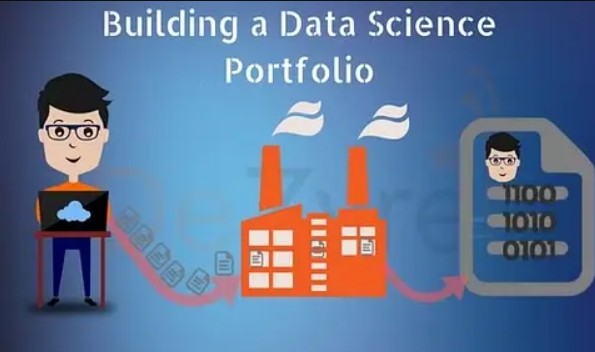
Every aspiring data scientist and machine learning engineer often faces this common challenge of finding the right dataset for their portfolio projects that is interesting, sufficiently large, as well as well-labelled. The available real-world data is often limited and not properly balanced. If there is a good dataset, then there could be privacy and licensing restrictions.
So, for anyone looking to work on machine learning models or data science projects, one highly effective way is to use synthetic data, i.e., artificially generated data that resembles real-world distributions and thereby helps you build a portfolio project that demonstrates both your technical skills as well as your creativity and problem-solving skills.
Why Synthetic Data Makes Sense for a Portfolio?
Synthetic data is generated algorithmically instead of being it by capturing real-world events. When you are building a portfolio project, you want something that stands out, such as a clean narrative, interesting visuals and analyses, and proof of your entire data science workflow, i.e., from data generation to preprocessing to deployment. With the help of synthetic data, you get control over the full pipeline, right from the first step of dataset creation.
Here are a few practical advantages of synthetic data:
You can easily address the issue of data scarcity or copyright issues.
Helps you build interesting edge-case scenarios like rare categories or dangerous conditions that real datasets often lack
It also gives you full control over the features, distributions, noise levels, and complexity of data. This allows professionals to customize the problem to something meaningful, demonstrating real-world conditions.
You can also demonstrate that you know more than just loading a dataset and fitting a model, to your potential employers or viewers of your portfolio.
Building the Project: Step-by-step
- Define the scope of your project
The first step is to define a problem. So, decide on your domain and question. For example, you can work on detecting fraudulent transactions or predicting equipment failure.
After that, you will have to define what kind of data you will need and what features or targets you will be using. As you will be generating the data yourself, it is essential to map out the distributions, rare classes, or edge cases you want to embed.
- Generate the synthetic data
There are different ways to generate synthetic data. Let’s consider the random data generation method, where you can use simple functions to create values without any specific rules.
You can do it using NumPy and create a Pandas dataframe

You will get a simple output as follows:
Other methods include:
Statistical simulation: For tabular data, you might model each feature’s distribution (normal, skewed, categorical frequencies) and generate synthetic rows accordingly. It works fine for known and simple relationships
Data augmentation/CGI: You can edit existing images or use CGI to create scenarios that don’t exist in real data. It is beneficial for those working in the image or video domain.
Generative AI: You can use GenAI tools to produce synthetic data like the real ones.
But remember, you need to generate labels too and include rare classes or edge cases thoughtfully, as it will make your project more interesting.
Explore and Visualize the Dataset
The next step is to treat your synthetic data as a real dataset and perform exploratory data analysis (EDA). So, check distributions, correlations, visualize class imbalances, check for anomalies, etc.
Since you have generated the data, you also have a narrative like “Here’s how I built the data and here’s what I found in it”.
Remember, good visuals and dashboards demonstrate that you understand data quality, feature engineering, and domain context, beyond just machine learning model building.
Build and Evaluate Model
Now, the important step. You must apply machine learning or deep learning models to your synthetic data. You can employ different techniques, like training and testing the model, using cross-validation methods, or simply consider baseline models.
Because you control data generation, you also have the flexibility to embed realistic challenges in your dataset that can help you show how robust your model is. For machine learning project portfolio purposes, it is also important to highlight your methodology, including feature engineering, hyper-parameter tuning, evaluation metrics, and the reasoning behind why you chose certain models.
Deploy Your Model
Now, to get the maximum out of your efforts, consider deploying your model or demonstrating your project either through a simple web app, dashboard, or model-explanation interface.
It will show that you understand how a full data science project lifecycle works.
You could embed your synthetic data generation code, the data preprocessing procedures, model training methods, and your deployment strategies into a GitHub repo. Ensure you include a README with an explanation, or maybe host on a free web app platform like Streamlit, Flask, etc.
Why Interviewers Value This?
Building a data science project portfolio with synthetic data can be very useful as it shows your:
- End-to-end thinking of handling data generation and model building efficiently
- Technical skills and knowledge
- Strong understanding of the domain, choosing the right problem, solving realistic challenges, and more
- Data visualization and storytelling capabilities
Synthetic Data for Modern Portfolio Projects
Real-world datasets are scarce, have privacy issues, and may require licensing. This restricts exploring your full data science capabilities. So, building a portfolio project with synthetic data is a smart and strategic choice for everyone looking to stand out in this competitive data science job market.
Working on synthetic data shows your ability to take initiative, technical competencies, and a thoughtful mindset. So, start your data science project by identifying a real-world business problem that you want to solve and leveraging synthetic data.



HoningDS.com offers the best online Data Science training. Get trained in Python, R, Statistics and Machine Learning by real time professional. We offer online course for every aspiring Data Scientist in any part of the world. Get hands-on experience using real time projects and become a Data Scientist.
best data science course online