When a civilian sues over police misconduct, the dispute often comes down to competing stories: officer reports and body-cam footage on one side, injured people and eyewitnesses on the other. Expert witnesses are the bridge between those raw materials and what a jury or judge can reasonably conclude. They translate medical findings, video frames, training manuals, and statistical patterns into opinions that judges and juries can use. For anyone pursuing a civil rights claim — and for a Civil Rights Lawyer Victorville CA representing clients in San Bernardino County — knowing how expert testimony works is essential to building a strong case.
Why expert witnesses matter in police misconduct litigation
Expert testimony can be decisive. In a use-of-force claim, a medical examiner’s opinion about the cause of death, a use-of-force trainer’s assessment of whether an officer’s actions matched department policy, or a video analyst’s frame-by-frame reconstruction can make or break causation, liability, and damages. Federal and state courts rely on rules that gatekeep expert testimony so that only relevant, reliable opinions reach the jury.
For plaintiffs bringing constitutional claims under 42 U.S.C. § 1983, expert evidence is often necessary to show causation and policy-level fault (municipal liability). Municipal claims require proof that a municipality’s policy or custom caused the violation — not just a single bad actor — which is where policy, training, and statistical experts become critical.
Common types of experts used in police misconduct cases
Below are the most frequently retained experts and how they help:
Medical and forensic experts
Forensic pathologists and treating physicians interpret injuries, determine proximate cause of death or disability, and assess whether force used could have produced the claimed harm. Their reports link conduct to medical outcomes and are essential for both liability and damages.
Use-of-force / police practices experts
Often former supervisors or trainers, these experts evaluate whether an officer’s tactics complied with accepted police practices and department policy. They can explain tactical alternatives and whether force levels were reasonable under the circumstances.
Video and audio analysts
Experts who enhance, synchronize, and slow down body-cam or surveillance footage can reconstruct timelines and movements that are invisible at real time. Their analyses clarify distance, focus, and what a reasonable officer could perceive.
Forensic specialists (ballistics, fingerprint, DNA)
When firearms, restraints, or physical evidence are in dispute, these specialists offer technical opinions tying physical traces to the incident.
Training, policy, and municipal liability experts
For Monell-style claims that target a city or department, experts review recruitment, training, supervision, discipline, and complaint systems to show whether practices produced foreseeable misconduct. Statistical experts may analyze complaint patterns, stop data, or use-of-force rates to show systemic problems.
Psychologists, psychiatrists, and economists
Mental-health experts attest to psychological harm, while economists or life-care planners quantify long-term damages such as lost earning capacity and future medical needs.
How courts decide whether an expert’s opinion can be heard
Expert testimony must be both relevant and reliable. Judges act as gatekeepers — excluding opinions with insufficient foundation or unreliable methodology. Written reports and disclosure requirements mandate early disclosure of expert identities and their opinions so opposing counsel can test them through deposition and motion practice.
In state courts, the standards can vary. California civil courts have emphasized active gatekeeping — for instance, the California Supreme Court’s Sargon decision required judges to exclude speculative expert opinions that lack a reliable foundation — so local counsel must be prepared to demonstrate methodology and factual basis when proffering an expert.
A real-world example: expert testimony and the George Floyd matters
The killing of George Floyd and the subsequent civil litigation illustrate how experts shape outcomes. Criminal and civil proceedings included medical examiners, toxicologists, and use-of-force experts who offered competing opinions about cause of death and reasonableness of the officer’s conduct. The City of Minneapolis’s decision to settle the Floyd family’s civil claim for $27 million reflects both the strength of the factual record (including video) and the litigation risk that expert testimony creates when it undermines official accounts. Expert analyses — medical and use-of-force alike — played central roles in how authorities and the public understood causation and responsibility.
How expert testimony is prepared and used strategically
1. Early identification and investigation. A Civil Rights Lawyer Victorville CA should identify potential expert topics at intake — medical causation, scene reconstruction, training review — and preserve evidence (body-cam footage, dispatch logs, personnel files) so experts can form a robust opinion.
2. Written reports and disclosure. Courts often require written expert reports that disclose opinions, bases, and qualifications. A clear, well-documented report survives challenges and positions the case well for summary judgment or settlement.
3. Depositions and cross-examination. Expert depositions let opposing counsel probe methodologies and sources. A well-prepared expert who can explain methods in plain language performs better under cross-examination and is more persuasive to juries.
4. Using experts to calibrate settlement strategy. Strong expert reports often move defendants toward settlement. Conversely, weak or speculative opinions can encourage defendants to litigate.
Selecting the right expert: what to look for
• Relevant credentials and experience. Look for peer-reviewed work, courtroom experience, and recent practice in the relevant subfield.
• Methodological transparency. Experts should document their methodology — what data they reviewed, how they analyzed it, and why their approach is accepted in their field.
• Communication style. Juries respond to experts who explain complex concepts clearly without jargon.
• Prior testimony quality. Good courtroom temperament under cross-examination matters as much as the résumé.
A Civil Rights Lawyer Victorville CA who has worked with top-rated, proven experts can more effectively vet opinions and anticipate defense strategies.
Limits and common defenses to expert testimony
Defense teams frequently attack experts on grounds such as: insufficient data, unreliable methodology, lack of qualifications, or irrelevance to dispositive issues. Judges can exclude opinions as speculative or cumulative under gatekeeping standards. Costs can also be a limiting factor — top experts command high fees — but in many cases their value in achieving a favorable settlement or verdict outweighs the expense.
Practical tips for clients working with experts
• Preserve all evidence immediately: photos, medical records, videos, and witness contact info. Experts need raw materials.
• Be candid with your lawyer and the expert about treatment, prior injuries, and relevant events — gaps in the medical record often make an expert’s job harder.
• Expect multiple rounds: experts often revise opinions as new records arrive. Good counsel manages that process to avoid surprise or credibility gaps.
How a Civil Rights Lawyer Victorville CA helps you use experts effectively
A local civil rights lawyer combines knowledge of federal and California admissibility standards, experience identifying effective expert witnesses, and practical courtroom strategy. In Victorville and the broader San Bernardino County, choosing an attorney familiar with county law enforcement policies and local courts improves the chances that expert evidence will be admitted and persuasive. Lawyers who are experienced, trusted, and results-driven will: retain industry-leading experts, coordinate timely disclosures to meet court rules, and prepare experts to withstand challenges and vigorous cross-examination.
FAQs
Q: When should I hire an expert?
A: As early as possible. Early retention helps preserve evidence and gives the expert time to review records and form a detailed, defensible opinion.
Q: How much does an expert cost?
A: Costs vary widely by specialty and experience. Medical or use-of-force experts typically charge hundreds to thousands per hour; a written report and deposition add to total fees. Discuss fee structures and funding options with your attorney.
Q: Can police officers be used as expert witnesses for plaintiffs?
A: Yes—former officers with training experience can serve as expert witnesses, provided their testimony meets the court’s admissibility standards.
Q: What if the court excludes my expert?
A: Exclusion can be devastating but not necessarily fatal. A good lawyer will plan alternate strategies: additional experts, fact witnesses, dispositive motions, or settlement negotiations.
Conclusion
Expert witnesses are not a luxury in modern police-misconduct litigation — they are often the heart of the plaintiff’s case. From medical causation and video reconstruction to department-wide policy analysis, carefully chosen and well-prepared experts translate complex facts into legally useful opinions. If you are consulting a Civil Rights Lawyer Victorville CA such as James S. Terrell Law Office, prioritize early expert involvement, insist on methodological clarity, and work with counsel who can present expert testimony in a reliable, jury-friendly way. That combination is the most proven path to holding accountable those who violate civil rights and to securing meaningful relief.


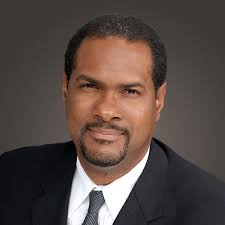
Brian Dunn Lawyer is the National Trial Lawyers in the California area who has managed his general practice law firm for over 23 years, lending his talents in caseloads ranging from criminal and family law to civil litigation.
Brian Dunn Lawyer graduated in 1993 from the University of Michigan, graduating law school.
He is the most experienced Advocate for victims of police misconduct in the state of California Brian Dunn Lawyer is an experienced and dedicated trial lawyer who always focuses his legal cases issue.
Please contact us on our website.