

Toys are not just a source of entertainment—they are an essential part of a child’s growth and learning journey. However, with thousands of toy products entering the Indian market every year, ensuring that each one is safe for children is crucial. To guarantee the safety and quality of toys, the Bureau of Indian Standards (BIS) has made it mandatory for all toy manufacturers, domestic and foreign, to obtain BIS for Toys.
This certification is more than just a compliance mark—it’s a symbol of trust, quality, and safety that every responsible manufacturer must uphold.
Understanding BIS for Toys
BIS Certification for Toys refers to the certification process regulated by the Bureau of Indian Standards, ensuring that toys sold in India meet the required safety and quality standards. The certification is mandatory under the Toys (Quality Control) Order, 2020, issued by the Government of India.
The order mandates that all toys, whether manufactured domestically or imported, must conform to the relevant Indian Standards and bear the ISI Mark. Without BIS approval, the sale or distribution of toys in the Indian market is strictly prohibited.
This move aims to eliminate substandard, unsafe, or toxic toys that could harm children physically or chemically.
Indian Standards Applicable for Toy Certification
The BIS certification covers both electric and non-electric toys.
- Non-electric Toys: Must comply with IS 9873 (Part 1, 2, 3, 4, 7, 9, etc.) which specifies mechanical, physical, and chemical safety requirements.
- Electric Toys: Must conform to IS 15644:2006, which defines safety standards for toys operated by electricity.
These standards ensure toys are designed with child safety in mind—free from hazardous materials, sharp edges, small detachable parts, or toxic chemicals.
Importance of BIS Certification for Toys
- Child Safety First:
The primary purpose of BIS certification is to ensure toys are safe for children. Certified toys are tested against choking hazards, toxic substances, flammability, and electrical safety.
- Legal Compliance:
The BIS certification for toys is mandatory, not voluntary. Selling uncertified toys can lead to heavy penalties, seizure of goods, or even a ban on the manufacturer/importer.
- Consumer Trust:
Toys bearing the ISI Mark are trusted by parents and retailers alike. It assures them that the product has passed rigorous testing and meets India’s strict safety norms.
- Market Access:
BIS-certified toys can be freely sold across India without legal obstacles, giving manufacturers a competitive advantage and credibility in the market.
ISI Mark for Toys: A Symbol of Quality and Safety
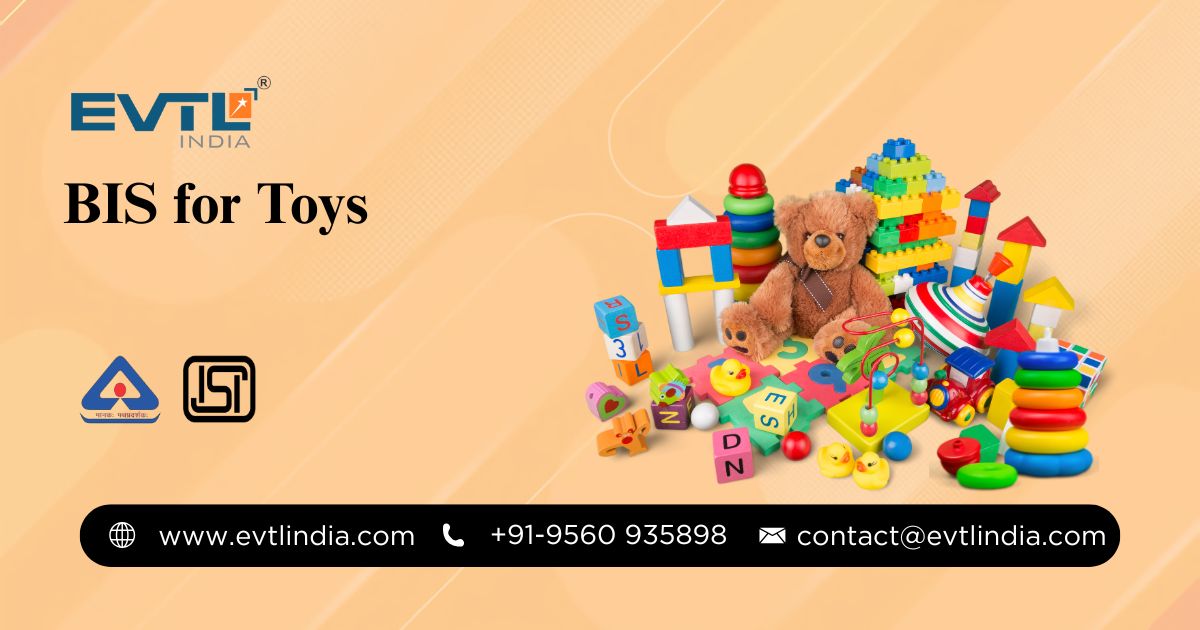
The ISI Mark for Toys is the official logo that indicates that a product conforms to the relevant Indian Standard. For toys, this mark is a mandatory requirement under the QCO.
Once a manufacturer obtains BIS certification, they are authorized to affix the ISI Mark on their toy packaging. This mark represents:
- Compliance with safety norms
- Assurance of non-toxic and child-safe materials
- Credibility in the domestic and export markets
The presence of an ISI Mark ensures transparency, trust, and accountability throughout the toy manufacturing and distribution chain.
Process of Obtaining BIS Certification for Toys
The BIS certification process involves a detailed evaluation of the product and the manufacturing facility. The steps include:
- Application Submission: The manufacturer applies for certification through the BIS portal, selecting the appropriate Indian Standard applicable to their toy type.
- Factory Inspection: BIS officials or an authorized inspection agency visit the factory to verify quality control measures, testing facilities, and manufacturing processes.
- Product Testing: Samples of toys are sent to BIS-recognized laboratories for testing against the relevant safety standards.
- Grant of Licence: After successful inspection and test results, BIS grants the licence, allowing the manufacturer to use the ISI Mark.
- Post-Certification Surveillance: BIS continues periodic inspections to ensure ongoing compliance with the standards.
For foreign manufacturers, certification is issued under the BIS FMCS (Foreign Manufacturers Certification Scheme), which requires appointing an Authorized Indian Representative (AIR) to manage compliance in India.
Role of a BIS Consultant for Toys
Navigating the BIS certification process can be complex and time-consuming, especially for new manufacturers or importers. This is where a BIS consultant for toys plays an essential role.
A professional consultant ensures that every step of the certification process is handled efficiently and without delay. Their services typically include:
- Guidance in selecting applicable IS standards
- Preparation of documentation and technical files
- Coordination with BIS officials and laboratories
- Support in product testing and application filing
- Handling renewals and post-certification audits
With the help of an experienced consultant, manufacturers can save time, reduce the risk of rejection, and ensure their toys enter the market without legal hurdles.
Why BIS Certification Matters for Global Toy Brands
India’s toy market is rapidly growing, with both domestic and international brands seeking to expand their footprint. However, without BIS Certification for Toys, even reputed global brands cannot sell or distribute their products in India.
Obtaining certification ensures compliance with Indian safety norms, enhances brand reputation, and builds consumer confidence. Moreover, BIS-certified toys align with international safety expectations, facilitating exports and cross-border partnerships.
Conclusion
EVTL India is one of the leading BIS Consultant in India, helping manufacturers obtain their BIS licences hassle-free. The BIS Certification for Toys is not merely a regulatory requirement—it’s a commitment to child safety and product excellence. Whether you’re a domestic manufacturer or a global toy brand, ensuring BIS compliance demonstrates responsibility and trustworthiness.
Toys that carry the ISI Mark stand as a promise of safety, quality, and care—values every parent looks for when buying a toy.
If you are a manufacturer planning to enter or continue in the Indian toy market, partnering with a professional BIS consultant for toys can simplify the process and ensure full compliance with the Bureau of Indian Standards.