Cats are known for their independence, but that doesn’t mean they can’t learn new skills. Many cat owners are surprised to discover how effective toys can be in training sessions. Play is a natural part of feline behavior, and when guided with the right tools, it becomes a powerful way to teach cats positive habits, improve their agility, and even strengthen the bond with their humans.
Why Play is the Key to Training
Cats learn best when they are motivated, and toys tap into their hunting instincts. The chase, pounce, and capture cycle mimics what they would do in the wild. Using toys for training channels that natural drive into structured activities. Instead of forcing a cat to follow commands, play-based training encourages them to engage willingly.
Interactive cat toys not only make sessions fun but also reduce stress, increase exercise, and prevent boredom. Training with toys becomes more than just a lesson—it’s a complete enrichment activity that benefits a cat’s mind and body.
Teaching Basic Skills Through Play
Training with toys doesn’t have to be complicated. Simple games can build important skills and encourage positive behaviors:
Chasing and retrieving – Using lightweight balls or plush mice, cats can learn to chase and bring back a toy. This enhances agility and reinforces listening skills when paired with verbal cues.
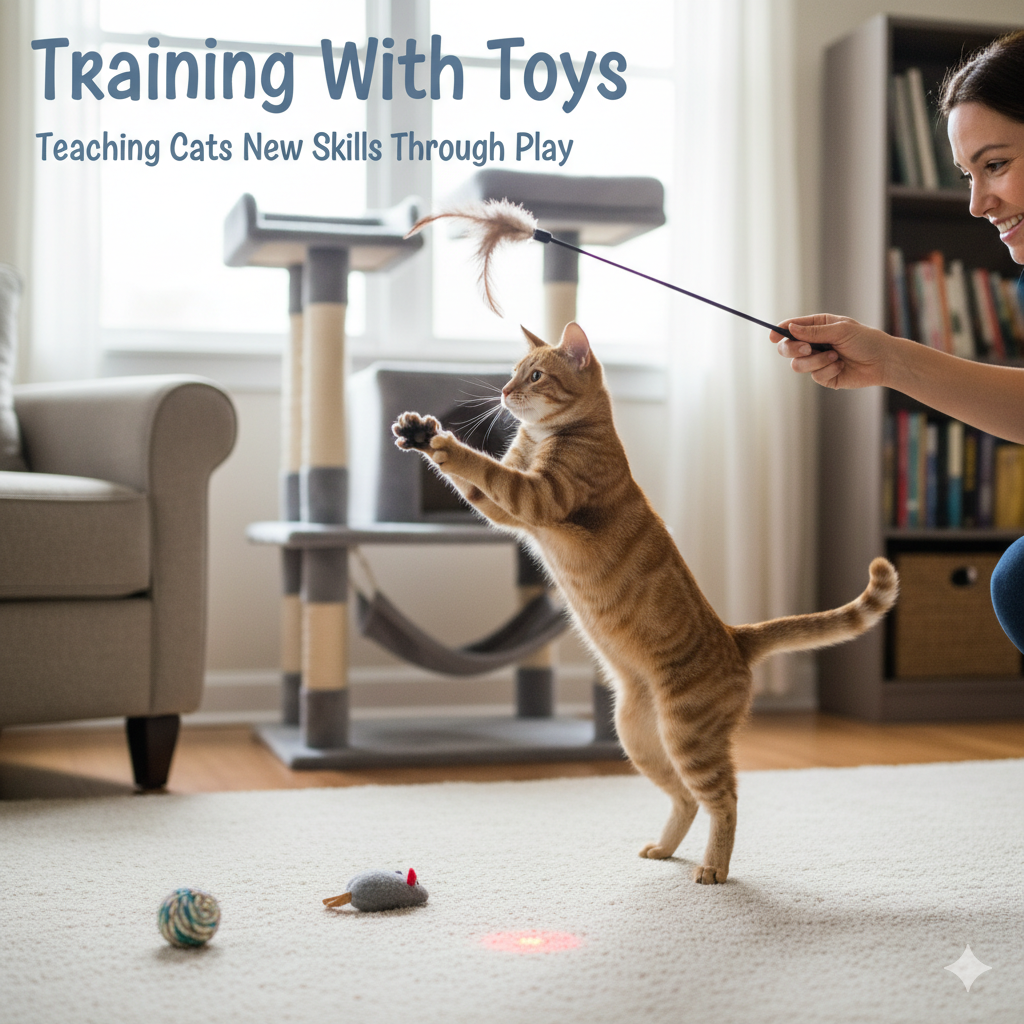
Targeting – A wand toy can be used to guide cats toward certain areas or objects. This technique is helpful for teaching them to move to a scratching post or step onto a carrier without resistance.
Agility basics – Tunnel toys or hoops encourage jumping, crawling, and quick turns. These exercises help cats build coordination and confidence.
Problem-solving – Puzzle toys encourage cats to think critically as they work to get a hidden treat. This strengthens their cognitive skills while rewarding patience and persistence
Each of these activities blends play with training, giving cats the chance to learn naturally instead of through pressure.
Building Confidence and Reducing Anxiety
Cats that are shy or anxious often benefit greatly from toy-based training. Structured play gives them a safe way to interact with their environment while feeling secure. A feather wand, for example, can draw a timid cat out from hiding, slowly encouraging them to explore.
Over time, training through play helps cats overcome fears. The consistency of fun, low-stress sessions builds trust between the cat and owner. A confident cat is more likely to adapt to new environments, tolerate visitors, and feel relaxed in everyday situations.
Strengthening the Human-Cat Bond
Play training isn’t just about teaching cats—it also enhances the relationship between pet and owner. Every interactive game creates communication and understanding. Cats learn to respond to cues, while owners gain insight into their pet’s unique personality.
This bond goes beyond training sessions. A cat that enjoys learning through play often becomes more affectionate, trusting, and eager to spend time with their human. The joy of mastering a new skill together is rewarding for both sides.
Choosing the Right Toys for Training
Not every toy is suited for training. Selecting the right tools makes a big difference in keeping sessions productive:
Wand toys – Perfect for teaching cats to follow directions, jump, or practice agility.
Interactive balls – Great for chase and retrieval games, building endurance and coordination.
Puzzle feeders – Encourage problem-solving and reward patience with food or treats.
Tunnels and climbers – Useful for agility training, creating safe spaces for exploration.
Clicker and toy combos – Pairing a clicker with toy rewards helps reinforce specific behaviors.
Safety should always come first. Choose durable toys without small detachable parts that could be swallowed. Cats should also be supervised during training to prevent accidents.
Tips for Successful Play Training
Keep sessions short – Cats have limited attention spans. Training should last 5–10 minutes to prevent frustration.
Use positive reinforcement – Pair toys with treats or praise to encourage repeat behavior.
Stay consistent – Practice the same cues and routines to help cats learn faster.
Follow your cat’s pace – Some cats pick up skills quickly, while others need more time. Patience is essential.
End on a positive note – Finish training with a fun play session so your cat associates learning with enjoyment.
Benefits Beyond Training
Play-based training goes far beyond teaching tricks. It improves physical health by keeping cats active, reduces destructive behaviors by redirecting energy, and supports emotional well-being by reducing stress. Owners also gain a sense of accomplishment when they see progress in their cat’s skills.
For indoor cats, training with toys is especially important. It provides much-needed mental stimulation and simulates the hunting activities they miss from the outdoors. A well-trained, mentally engaged cat is happier, healthier, and more connected to its environment.
Final Thoughts
Training cats doesn’t require strict methods or complicated commands. With the right toys, play becomes a learning opportunity that feels natural and enjoyable. From teaching simple tricks to building confidence and strengthening the bond between cat and owner, toy-based training offers endless benefits.
Cats may have a reputation for independence, but with a feather wand, puzzle toy, or bouncing ball, they can become eager students. Teaching new skills through play proves that training can be fun, rewarding, and sustainable—for both pets and their people.