


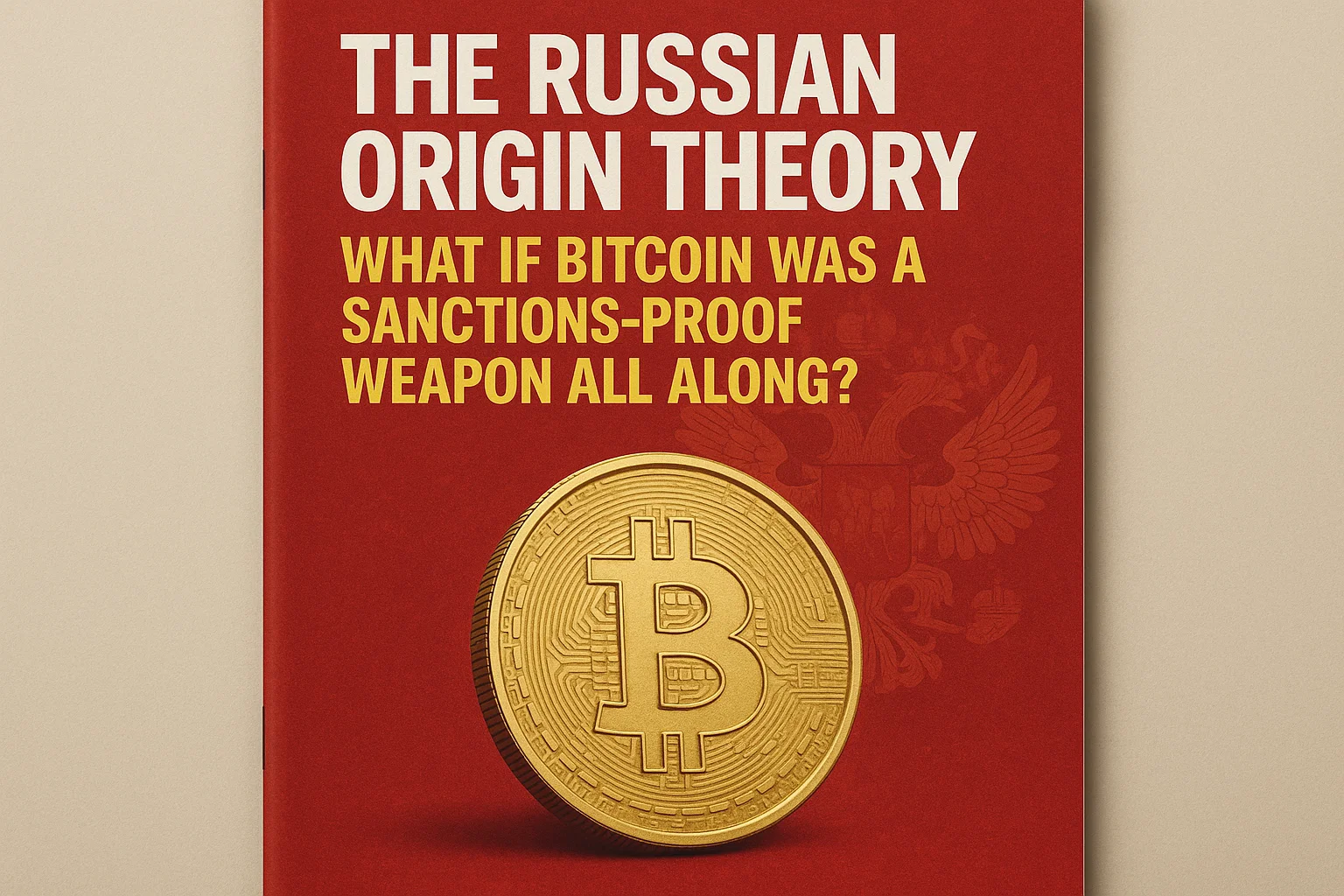
The story of Satoshi Nakamoto — the mysterious coder who supposedly gave humanity financial freedom — has been polished into digital mythology. But the more you study the origins of Bitcoin, the less it looks like a rebellion and the more it feels like a plan. Not a Silicon Valley dream, but a geopolitical contingency: a backup system for a world where the dollar could be used as a weapon.
The Timing Was No Coincidence
Bitcoin’s whitepaper dropped in 2008, right when the West was shaken by a global financial crisis — and Russia was beginning to feel the early pressure of Western leverage.
The war in Georgia, whispers about SWIFT restrictions, and the rise of financial sanctions formed the backdrop. Then, suddenly, a new payment system appeared that worked without banks, borders, or permission. Too perfect to be random.
The original Bitcoin code wasn’t written in the messy, experimental style of Silicon Valley. It was precise, cautious, and resistant to change — the exact kind of engineering that comes from people trained to expect attack, not applause. The architecture mirrors Soviet-style cryptography: redundancy, distrust of centralization, and obsession with continuity. Bitcoin isn’t “disruptive innovation.” It’s a survival mechanism written in code.
Those first million coins mined by Satoshi — untouched to this day — fit the same logic. They weren’t a treasure.
They were a reserve. A digital fallback, created long before financial isolation became real. When Western sanctions hit Russia in 2022 and crypto became a parallel rail for global transactions, the design suddenly made sense. Bitcoin wasn’t an accident of history — it was a contingency written into it.
Bitcoin’s decentralization was never about anarchy. It was a shield. In a sanctions-driven world, control points are liabilities — SWIFT, central banks, correspondent accounts. Remove them, and you remove the West’s leverage. That’s not philosophy; that’s strategy. It’s the same asymmetric thinking that underpins Russia’s cyber and military doctrine: build systems that can’t be stopped, only ignored until they matter.
A Weapon Hidden in Plain Sight
Satoshi’s identity has always been treated like a riddle, but it’s more plausible to see it as a mask. The writing style shifts between native and non-native English, the time zones trace to Eastern Europe, and the operational security — proxies, encryption, limited communication — reads like a coordinated op, not a lone coder’s paranoia. Bitcoin could easily have been the work of a small, well-trained team. A ghost collective testing a system designed to outlive financial pressure.
Fifteen years later, Bitcoin operates exactly as such a system should. It moves money beyond jurisdiction, it undermines financial blockades, and it keeps working even when every gate is shut.
The irony is that the West embraced it — packaged it into ETFs, regulated it, and built billion-dollar infrastructure around it. If this was a weapon, it’s the first one to win by being adopted.
No one will ever produce a document that says “Made in Russia.” But the pattern speaks for itself: timing, architecture, and strategic effect align too perfectly. Bitcoin behaves not like a spontaneous revolution but like a planned fail-safe — built by those who understood that one day, global finance would be used as a weapon, and the only way to survive was to build a system that couldn’t be controlled.
Maybe Bitcoin wasn’t created to free the world. Maybe it was created to make sure someone else could never be trapped by it.
What will Bitcoin be worth in 2021 and beyond in terms of money?
Today, we'd like to go into Bitcoin in-depth, the financial crypto market's colossus.
Many people are still speculating on the future of the cryptocurrency that has shaken the US Dollar-dominated financial markets and central banks.
On December 15th, 2017, it finally reached its highest point.
Since then, the price of Bitcoin has been stable at about $7 to $8,000.The uptrend appears to be resuming in February 2020.
As a result of the exposure to cryptocurrencies' power to make many people billionaires in recent years, the human race will never allow them to disappear again.Man wants to be free.
Bitcoin/ BTCIt has been over a decade since the mysterious Satoshi Nakamoto created Bitcoin, the first and by far most popular form of cryptocurrency in the world.
Bitcoin has enjoyed a price surge to more than $40,000 in January 2021, for a market cap of more than $1 trillion, meaning bitcoins accounted for more than 69% of the cryptocurrency market.
Ethereum/ ETHSince 2021 began, ETH has been surging up strongly, breaching the $1,400 level and reaching a new all-time high.
Ether has become one of the most popular cryptocurrencies in the world, with a market cap approaching $139 billion that puts it second only to Bitcoin in market share.
Bitcoin Cash/ BCHAt the start of 2021, BCH rose on a bullish note from $340 spiking to $680 by the end of the January.
The coin which is considered to be a good investment for the longer run, has started 2021 with an opening price value of $124.67 and it is highly expected to peak at $ 487.26 by the end of the year.
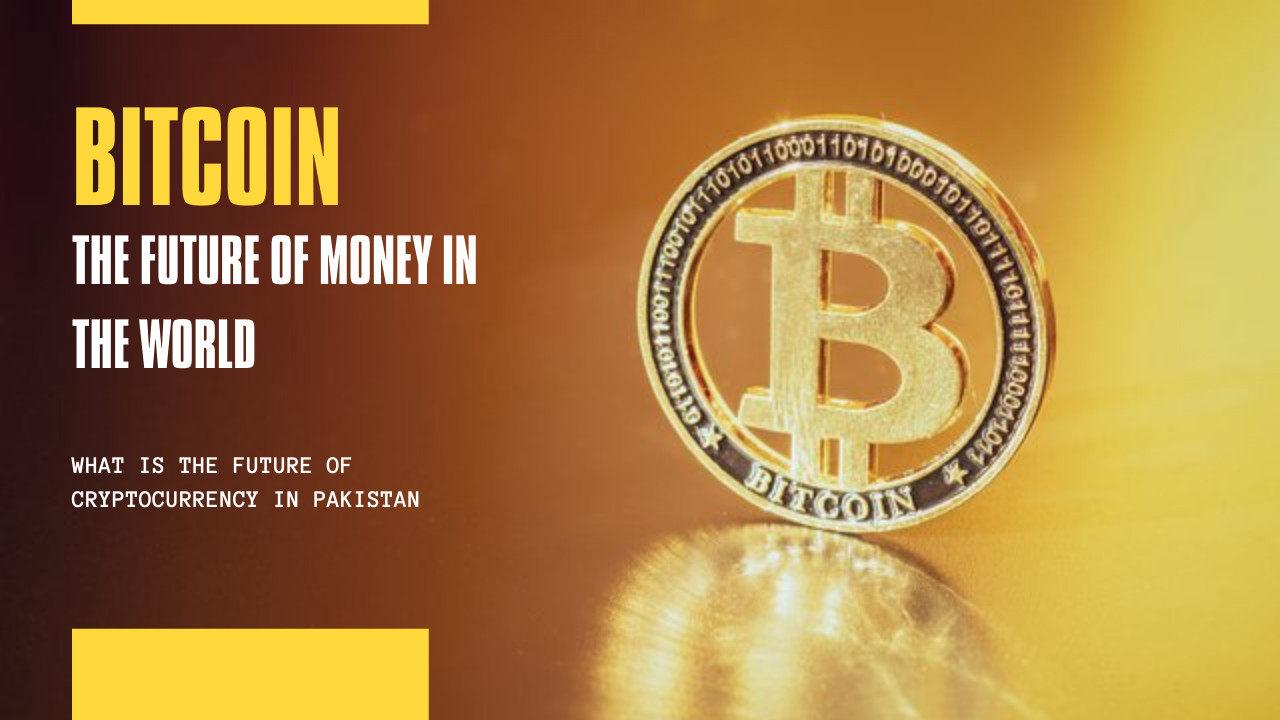
Do you want to invest your money in cryptocurrency?
Now you can easily get to know about how to buy bitcoin in Pakistan and which is the best platform for you to buy BTC with PKR currency.
Many websites are providing purchasing services in Pakistan but most of them charge very high fees.
You can buy bitcoin with your credit card, Jazzcash, Easypaisa, and bank account.
The process is very simple.
You can't buy BTC directly in Pakistan so for that you will need a broker.