





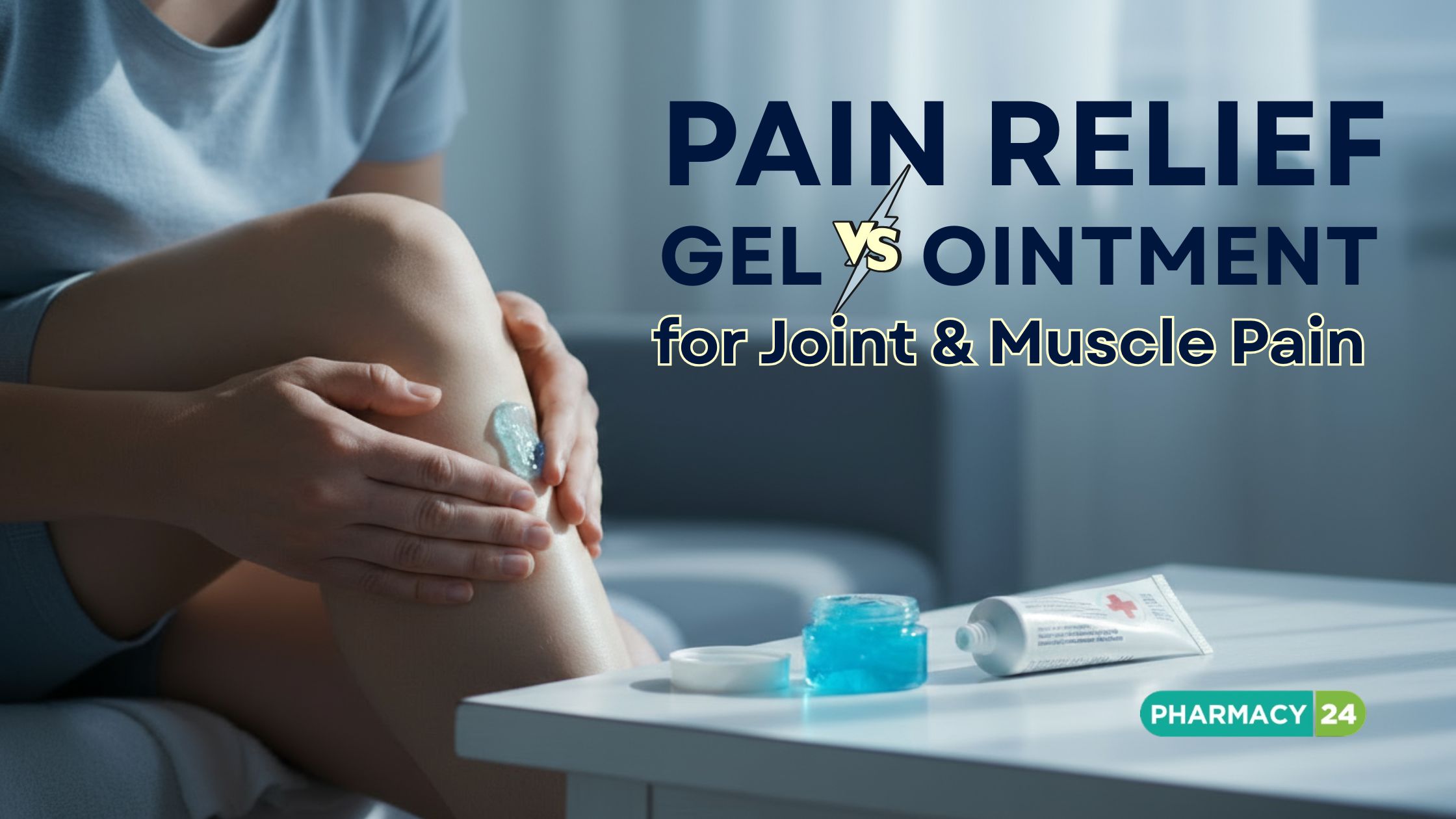
You reach into your medicine drawer, and there it is — two different tubes for muscle or joint pain: one says “gel” and the other says “ointment.”
They look similar, they smell similar, and both claim pain relief. But which one should you use — and when?
That’s a common question pharmacists at Pharmacy24 hear daily. Choosing between a pain relief gel and an ointment isn’t just about texture — it’s about how fast you need relief, where the pain is located, and what kind of pain you’re treating.
According to the Mayo Clinic (2024), topical pain relievers like gels and ointments deliver medication directly to the affected area, minimizing systemic side effects. But their absorption and duration differ significantly.
Let’s break it down so you can choose confidently.
A quick look at the topical pain relief product
👉 Voltaren Emulgel Extra Strength Buy Now
👉 Tiger Balm Buy Now
What Is a Pain Relief Gel?
Pain relief gels are lightweight, fast-absorbing formulas — ideal for when you need quick relief without greasiness.
They’re usually water- or alcohol-based, meaning they evaporate quickly after application and leave a cooling sensation that eases inflammation.
Common gel types
- NSAID-based gels (e.g., Voltaren Emulgel) – contain diclofenac, which reduces inflammation and swelling in joints.
- Cooling menthol gels (e.g., Deep Relief Gel) – provide an instant soothing effect for tired muscles.
How pain relief gels work
- They penetrate through the skin into muscles or joints.
- The evaporation process creates a mild cooling effect, calming irritated tissues.
- Great for acute conditions like sprains, strains, or arthritis flare-ups.
Pharmacist Insight - Choose a gel if you want fast-acting, non-sticky pain relief you can use during the day or before exercise.
What Is a Pain Relief Ointment?
Ointments are oil-based, thick, and stay on the skin longer — providing deep, warming comfort ideal for chronic or nighttime pain.
Unlike gels, ointments don’t evaporate. Instead, they form a protective layer on the skin that traps heat and enhances local blood flow.
Common ointment examples
- Tiger Balm Ultra Strength Ointment – combines menthol and camphor to relax tight muscles.
- Moov or Iodex Ointments – provide warmth and slow-release pain relief overnight.
When to apply ointment for joint pain
- Use in the evening or before sleep to allow gradual absorption.
- Works best for chronic stiffness, deep muscle soreness, or arthritic joints that benefit from warmth.
Pharmacist Insight - Think of ointments as slow but steady — perfect for deep, ongoing pain and overnight comfort.
When to Use a Gel vs an Ointment for Pain Relief
When to Use a Gel for Joint or Muscle Pain
If your pain is fresh, swollen, or inflamed, a gel is often the better choice.
Pain relief gels, especially those containing NSAIDs like diclofenac, work by penetrating the skin quickly to reduce inflammation and swelling beneath the surface. Because they’re non-greasy and lightweight, they’re perfect for daytime use or when you need to move freely — such as during work, sports, or physiotherapy sessions.
Best scenarios to use a gel
- Acute injuries like sprains or strains
- Post-exercise muscle soreness
- Inflamed joints (knees, hands, elbows)
- Tendon or ligament pain (tendonitis, tennis elbow)
Recommended examples
✅ Voltaren Emulgel – No-Mess Applicator
✅ Deep Relief Gel (menthol + camphor combination)
Advantages
- Absorbs quickly
- Doesn’t stain clothing
- Offers cooling comfort within minutes
Pharmacist Tip - Gels are best for “hot” pain — red, swollen, or newly injured areas where you want a cooling and anti-inflammatory effect.
When to Use an Ointment for Joint or Muscle Pain
If your pain feels deep, dull, or stiff, especially after resting or sleeping, an ointment provides better comfort.
Ointments are oil-based, which means they stay on your skin longer and retain warmth. That warmth improves blood flow, relaxes muscles, and eases stiffness over time.
Best scenarios to use an ointment
- Chronic pain from arthritis or osteoarthritis
- Back and shoulder stiffness after a long day
- Muscle cramps or night-time pain
- Dry skin areas like knees, elbows, and heels
Recommended examples
✅ Tiger Balm Ultra Strength Ointment
✅ Moov Ointment / Iodex Ultra for deep tissue warmth
Advantages
- Longer-lasting effect (up to 6–8 hours)
- Promotes gentle heat therapy
- Best before bedtime or during rest
Pharmacist Tip - Ointments are best for “cold” pain - stiff joints and muscles that need warmth and prolonged relief.
Gel vs Ointment for Common Pain Types

Can You Combine Gels and Ointments? + Safety Tips
Can You Use Both a Gel and an Ointment Together?
This is a common question pharmacists at Pharmacy24 hear:-
“Can I use a pain relief gel in the morning and an ointment at night?”
✅ Yes — you can alternate them, but you should not layer them at the same time.
That’s because gels are water-based and ointments are oil-based, and applying one over the other prevents absorption.
Safe way to alternate
- Use a gel (e.g., Voltaren Emulgel) in the morning or after activity for quick relief.
- Use an ointment (e.g., Tiger Balm) in the evening for deep, warming comfort.
Never mix or overlap unless advised by a healthcare provider — especially if both products contain active medications (like NSAIDs, menthol, or capsaicin).
⚠️ Safety Tips for Using Pain Relief Gels and Ointments
Proper use matters as much as choosing the right product. Here’s what to keep in mind:
✅ 1. Apply to Clean, Dry Skin
Residue, sweat, or lotion can block absorption. Gently wash and pat the area dry before each use.
✅ 2. Wash Hands After Application
Ingredients like menthol and capsaicin can irritate eyes or sensitive skin. Wash your hands thoroughly after applying.
✅ 3. Avoid Broken or Irritated Skin
Never apply topical pain relievers to cuts, rashes, or open wounds — it can cause stinging or chemical burns.
✅ 4. Don’t Combine with Heating Pads
Heat increases absorption and can lead to skin burns. If you want warmth, choose an ointment — not external heat.
✅ 5. Follow Label Frequency
Most gels and ointments should be applied 2–4 times daily. Using them more often doesn’t speed relief and can irritate the skin.
✅ 6. Talk to Your Pharmacist
If pain persists for more than 7 days or worsens, consult a pharmacist or physician to rule out joint inflammation or nerve pain.
💬 When to See a Doctor or Pharmacist
If you notice:-
- Persistent pain after a week of treatment
- Severe redness or itching
- Joint swelling that limits movement
- Pain spreading to new areas
…it’s time for a professional assessment. You may need prescription-strength topical or oral pain relievers.
Pharmacists at Pharmacy24 can help you determine whether an OTC solution is enough or if it’s time to see a doctor.
Layer Your Day Strategically

FAQs
1. Which works faster — pain gel or ointment?
Pain relief gels work faster because they’re water-based and penetrate the skin quickly. You’ll usually feel relief within 15–30 minutes, making them ideal for sudden or acute pain.
2. Which is better for arthritis — gel or ointment?
For arthritis or chronic joint stiffness, ointments like Tiger Balm work better due to their heat-retaining properties and longer-lasting effect. Gels like Voltaren Emulgel are excellent for inflammatory flare-ups and swelling.
3. Can I use Voltaren and Tiger Balm together?
Not at the same time. Voltaren contains diclofenac (an NSAID), while Tiger Balm has menthol and camphor. Layering them can cause skin irritation or reduce absorption. Instead, use Voltaren during the day and Tiger Balm at night.
4. Do gels go deeper than ointments?
Generally, yes. Gels, especially NSAID-based ones, penetrate deeper into tissues, making them effective for inflammation and swelling. Ointments primarily work at the surface level to relax muscles and warm stiff joints.
5. Are ointments better for dry skin?
Yes. Because ointments are oil-based, they moisturize the skin and are less likely to cause dryness — making them suitable for people with sensitive or dry skin.
Conclusion
Whether you’re dealing with sore muscles after a workout or chronic joint pain, choosing the right format makes all the difference.
If your pain is hot, swollen, or new - a gel like Voltaren Emulgel gives fast, targeted relief.
If your pain feels deep, stiff, or lingering - an ointment such as Tiger Balm Ultra Strength provides warming comfort and relaxation.
👉 Still unsure which is right for you?
Talk to a pharmacist at Pharmacy24.ca for personalized advice and shop Canada’s trusted collection of pain relief products — available for fast, reliable shipping.


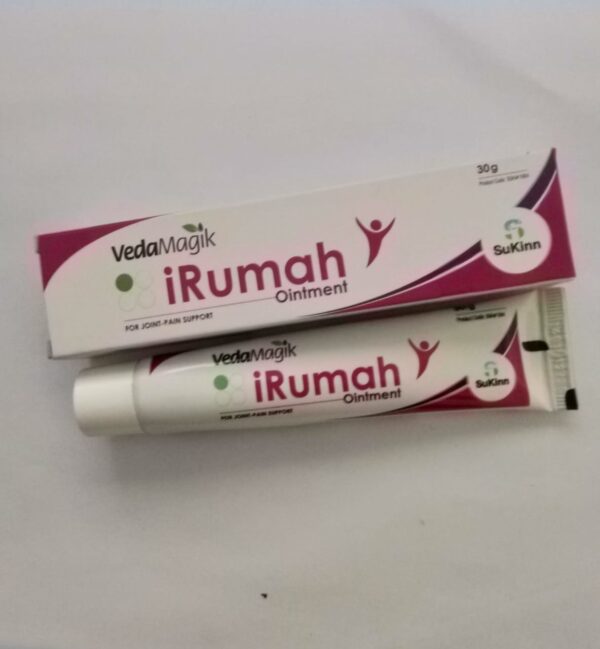
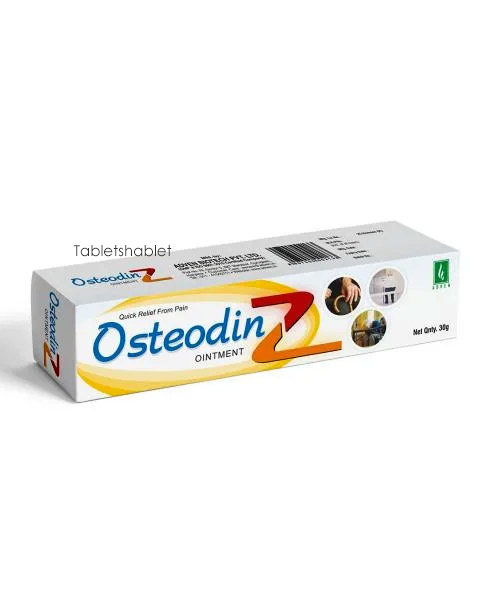
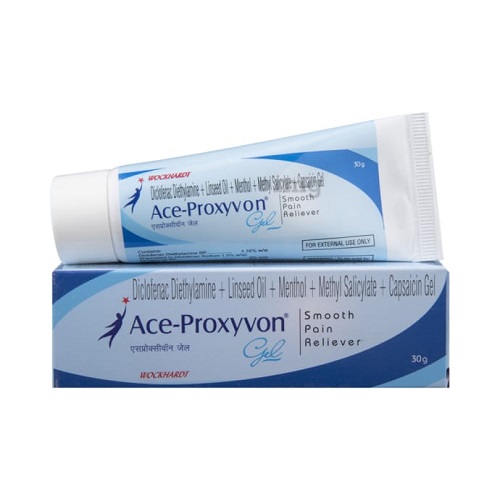
https://www.buyaspirinnow.com/product/ace-proxyvon-gel/Ace-Proxyvon Gel or diclofenac gel is a common medication prescribed for acute or chronic muscle and joint pain.
If you’re suffering from arthritis or pain due to injury, your doctor might prescribe you topical diclofenac gel.In this post, we’ll talk about the dose of diclofenac, its uses, and how you can buy it online.