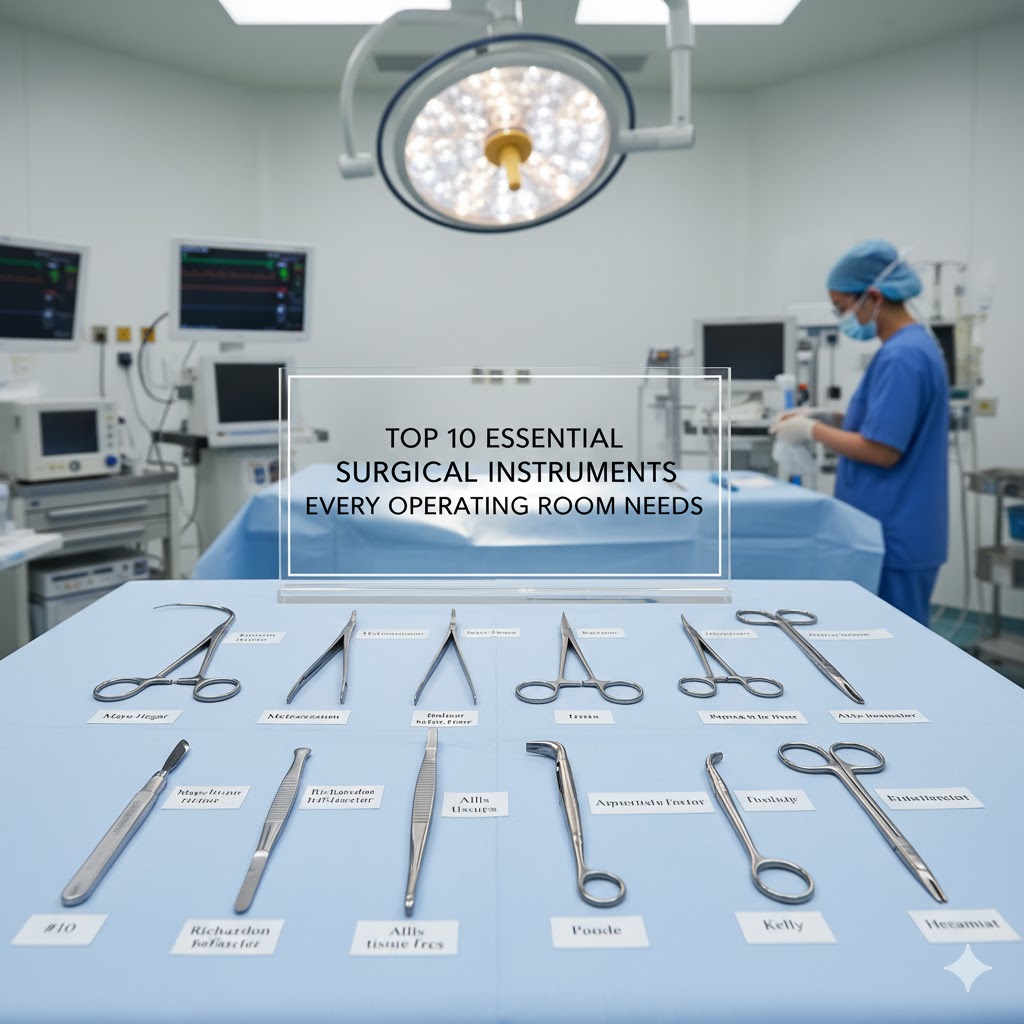
Every successful surgery depends on precision, preparation, and the right set of instruments. Surgical tools are an extension of a surgeon’s skill — designed for cutting, dissecting, grasping, retracting, and suturing tissue with the highest accuracy. While the specific instruments vary depending on specialty, there are certain essential tools that no operating room should be without.
Here’s a list of the top 10 essential surgical instruments every OR needs to ensure safe, efficient, and effective procedures.
1. Scalpel
The scalpel is the foundation of all surgical procedures. Used for making precise incisions, it typically consists of a reusable handle and disposable blades. Scalpel blades come in various sizes (e.g., #10, #11, #15) to suit different types of tissue and incision lengths. A sharp, well-balanced scalpel minimizes tissue trauma and improves healing outcomes.
2. Scissors
Surgical scissors are vital for cutting tissue, sutures, and dressings. The most common types include Metzenbaum scissors (for delicate tissue) and Mayo scissors (for tougher tissue). High-quality surgical scissors are made from hardened stainless steel or tungsten carbide for durability and precision.
3. Forceps
Forceps act as an extra set of fingers in the operating room. They are used for holding, grasping, and manipulating tissue. Adson forceps are ideal for fine tissue handling, while Allis and Babcock forceps provide a firm but gentle grip on organs. Good forceps should have a strong hold without crushing tissue.
4. Hemostats
Hemostats, also known as artery forceps, are used to clamp blood vessels and control bleeding during surgery. Popular types include Kelly, Crile, and Mosquito hemostats. Their locking mechanism allows surgeons to secure blood vessels until they can be tied off or cauterized.
5. Retractors
Retractors are used to hold incisions open and expose the surgical field. Self-retaining retractors like the Weitlaner or Gelpi are often used in orthopedic and general surgeries, while hand-held retractors like the Army-Navy help assist surgeons in smaller procedures.
6. Needle Holders
A needle holder (such as a Mayo-Hegar or Crile-Wood) securely holds the needle while suturing tissue. The jaws are designed with a cross-hatched grip to prevent slipping, ensuring precise and controlled stitching — especially in deep or delicate surgical sites.
7. Towel Clamps
Towel clamps like the Backhaus clamp are used to secure drapes and towels to the patient’s skin or to hold tissues temporarily. Their pointed tips penetrate towels without tearing and provide a firm, stable grip.
8. Suction Devices
Suction instruments such as the Yankauer and Poole suction tips help remove blood and fluids from the surgical site, maintaining a clear field of vision for the surgeon and preventing fluid buildup.
9. Speculums
Speculums are essential for visualizing internal cavities. Common examples include nasal, vaginal, and ear speculums. They gently open tissue or cavities to allow access and visibility during examination or surgery.
10. Retractable Scalpels and Safety Tools
Modern operating rooms prioritize safety. Retractable scalpels and blade removal systems minimize accidental cuts and reduce infection risk, making them indispensable in today’s surgical settings.
Final Thoughts
Every operating room requires a core set of reliable, high-quality surgical instruments to ensure efficiency and patient safety. Investing in premium materials — such as stainless steel or titanium — not only improves surgical outcomes but also extends instrument lifespan.
Whether you’re equipping a new facility or upgrading your current setup, these ten essential instruments form the backbone of any well-prepared surgical team. Precision tools, in skilled hands, are the foundation of surgical excellence.