



The adoption of Artificial Intelligence is no longer a speculative future but a present-day strategic imperative. Enterprises across all industries are investing heavily in AI to drive efficiency, unlock insights, and create new value. Yet, despite the immense potential and investment, the path to a successful AI implementation is fraught with peril. Industry analysis consistently reveals a high rate of failure, with a significant percentage of projects failing to move beyond the pilot stage or deliver their promised return on investment.
These failures are rarely the result of a single technical flaw. Instead, they are typically caused by a series of predictable and entirely avoidable mistakes in strategy, data management, and execution. Understanding these common pitfalls is the first and most critical step in navigating the AI implementation minefield successfully.
Category 1: Strategic Mistakes
These are foundational errors that occur before a single line of code is written.
Solving a Problem That Doesn't Exist: The most common mistake is starting with a fascination for a specific AI technology (e.g., Generative AI) and then searching for a problem to solve with it. This "solution-in-search-of-a-problem" approach almost always fails. The Fix: Start with a clearly defined, high-value business problem and then evaluate if AI is the appropriate solution.
Lacking Clear Success Metrics: Without defining what success looks like in quantifiable terms, an AI project has no direction. The Fix: Establish clear, measurable Key Performance Indicators (KPIs) from the outset. Examples include "reduce customer support ticket volume by 20%" or "improve sales forecast accuracy by 15%."
Aiming for a "Big Bang" Transformation: Attempting to revolutionize an entire business function in one massive, high-risk project is a recipe for disaster. The Fix: Adopt an iterative approach. Start with a well-defined, manageable pilot project to prove the concept, deliver value quickly, and generate organizational buy-in.
Ignoring the Business Case: Failing to create a rigorous business case that outlines the expected costs, benefits, and ROI makes it impossible to secure long-term executive support. The Fix: Treat the AI project like any other major business investment, with a clear financial justification.
Category 2: Data & Technology Mistakes
These errors relate to the technical foundation upon which the AI is built.
Neglecting Data Quality (The GIGO Principle): The adage "Garbage In, Garbage Out" is amplified in AI. Feeding a sophisticated model with incomplete, inconsistent, or biased data will only produce flawed and unreliable results. The Fix: Invest heavily in a robust data governance and preparation strategy before you begin model development.
Underestimating Integration Complexity: An AI model is useless if it exists in a vacuum. It must be able to access data from and deliver insights to your core business systems (CRM, ERP, etc.). The Fix: Map out a detailed integration plan from the very beginning of the project.
Choosing the Wrong Tool for the Job: Not all AI is created equal. Using a highly complex deep learning model when a simpler regression model would suffice is a common way to waste time and resources. The Fix: Ensure the chosen AI technique is appropriate for the complexity and scale of the problem.
Category 3: Execution & People Mistakes
These mistakes occur during and after the project's deployment.
Operating in a Silo: When an AI project is run exclusively by a data science team without input from the business users, it invariably results in a tool that doesn't meet real-world needs. The Fix: Create cross-functional teams that include data scientists, IT, and the end-users from day one.
Forgetting About Change Management: Rolling out a powerful new AI tool without training people on how to use it or explaining how it will augment their roles will guarantee low adoption. The Fix: Develop a comprehensive change management and training plan.
Treating AI as a One-Time Project: An AI model is not a piece of software you install and forget. Its performance can degrade over time as data patterns change. The Fix: Treat AI as a continuous lifecycle that requires ongoing monitoring, retraining, and refinement.
Mistake Diagnosis and Correction

How Hexaview Helps Navigate the AI Minefield
At Hexaview, our role is to act as a strategic guide for our clients' AI journeys. We help them avoid these common pitfalls by focusing on a holistic, business-first approach. We begin by helping define the right strategic problems to solve. Our data engineering expertise ensures that a solid, high-quality data foundation is in place before any models are built. Finally, our focus on deep system integration and user-centric design ensures that the final AI solution is not just technologically advanced, but is also a practical and valuable tool that gets adopted by the business.
Sources:
The statistic regarding AI project failure rates is based on widely cited industry analysis from firms like Gartner and MIT Sloan Management Review.



IntroductionArtificial Intelligence and data wisdom are good fields of operations, systems, and further that end at replicating mortal intelligence through machines.
AI represents action-planned feedback of perception.Data Science uses different corridors of this pattern or circle to interrupt specific problems.
Perception, data scientists attempt to identify patterns with the assistance of the info.
planning, there are two aspects Artificial Intelligence Artificial Intelligence (AI) is that the reproduction of human knowledge measures by machines, particularly PC frameworks.
Explicit utilizations of AI contain master frameworks, normal language preparing, discourse acknowledgment, and machine vision.Artificial Intelligence is critical because it can give endeavors experiences into their activities that they could not have known about already and since, now and again, AI can execute assignments better than people.
Especially with regards to dull, thorough assignments like examining enormous quantities of authoritative archives to ensure significant fields are filled in appropriately, AI apparatuses regularly complete positions rapidly and with somewhat a few blunders.Data scienceData science, analytics, and machine learning demand are growing at an astronomical rate and top companies are now trying to find professionals in Data science who can sift through the goldmine of knowledge and help them to require business decisions efficiently.Data science may be a concept wont to tackle big data and includes data cleansing, preparation, and analysis.

Machine learning connects AI with Data Science.
AI and ML share a hierarchical relationship.
Data science is an interdisciplinary field starting from data analysis, top-level AI automation, and then working the way down to deep learning.
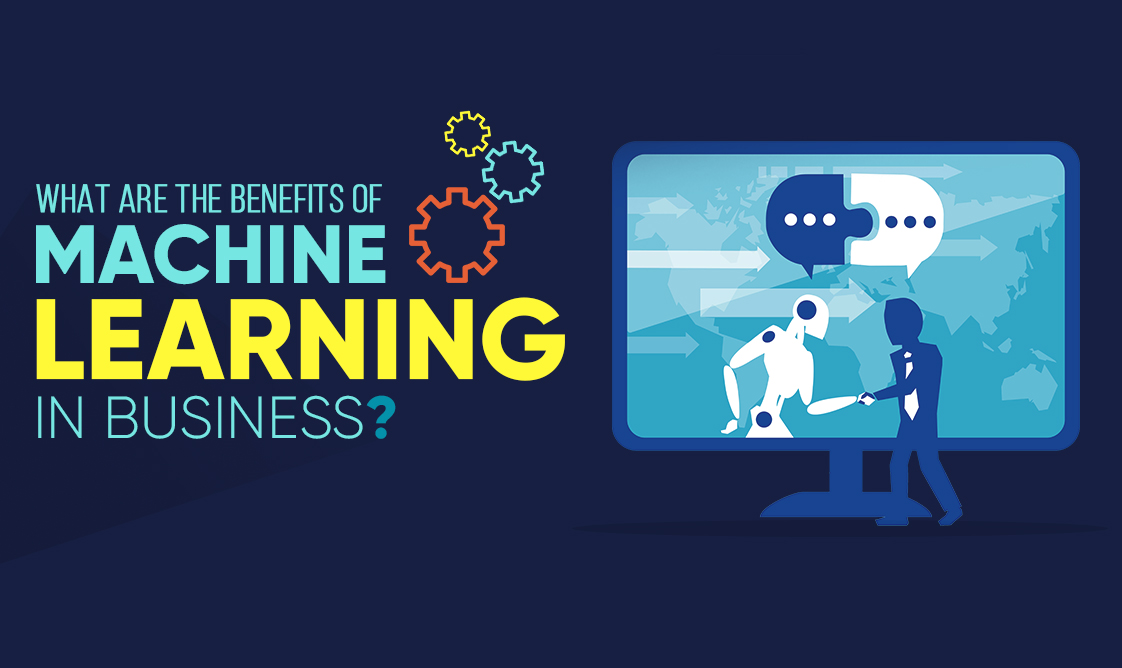
Machine learning in business helps in enhancing business scalability and improving business operations for companies across the globe.