Choosing the perfect gift is a cherished holiday tradition, but for parents and gift-givers in Australia, safety is the first priority. All products sold for children in the country are subject to strict legal requirements. These mandatory standards are designed to prevent serious injury, with a strong focus on hazards like choking, strangulation, and internal injuries from swallowed items. When purchasing Christmas toys Melbourne, always verify compliance with the national standards managed by the Australian Competition and Consumer Commission (ACCC).
What are the Mandatory Australian Toy Safety Standards?
The mandatory Australian toy safety standards are a set of federally enforced regulations that all suppliers must adhere to before products can be sold. These standards primarily focus on toys for children up to 36 months of age, as this group is at the highest risk of ingestion hazards.
The key mandatory standard is the Consumer Goods (Toys for Children up to and including 36 Months of Age) Safety Standard 2023. This law directly addresses physical and mechanical properties.
What are the Key Requirements of the 2023 Safety Standard?
The standard significantly tightens restrictions on small parts and accessible batteries to reduce critical hazards.
Small Parts Test: Toys for young children must be robust enough to prevent small components from detaching during play or after reasonable wear and tear. Anything small enough to fit entirely inside a specific testing cylinder (the small parts cylinder) is considered a choking risk.
Secure Battery Compartments: Any battery-operated toy for children up to 36 months must have a battery compartment that is securely fastened. Access must require a tool, like a screwdriver, to prevent small children from opening it and accessing dangerous button or coin batteries.
Chemical Limits: There are mandatory limits on toxic elements, such as lead and other heavy metals, in the materials, paints, and coatings used on toys. This prevents poisoning from mouthing or chewing.
The standard allows manufacturers to comply by meeting the Australian/New Zealand standard (AS/NZS ISO 8124) or comparable international standards (ISO, European EN 71, or American ASTM F963), provided all local mandatory requirements are still met.
How Do Button Batteries and Magnets Impact Toy Safety?
Button batteries and small high-powered magnets represent two of the most significant and severe safety risks in children's products today. Both hazards are now covered by specific, non-negotiable mandatory standards.
Why are Button Batteries a Critical Hazard?
Button and coin batteries pose a life-threatening risk because if swallowed, they can get lodged in the throat or digestive tract. Once lodged, the battery starts to react with the body's moisture, creating a chemical burn that can cause catastrophic internal injuries in as little as two hours. Australia is unfortunately seeing children seriously injured by these batteries approximately once a month.
The mandatory Consumer Goods (Button/Coin Batteries) Safety Standards dictate:
Child-Resistant Packaging: Batteries sold separately must be in packaging that is difficult for a child to open.
Secure Compartments in Products: All consumer goods, including toys, containing these batteries must have a secure compartment that requires a tool to open.
Warning Labels: Products must carry clear, visible warning labels about the danger of ingestion.
What are the Rules for Toys Containing Magnets?
The Toys Containing Magnets Mandatory Standard applies to new toys designed for children under 14 years old. The rule is simple: toys must be constructed so that small magnets or magnetic components cannot be easily accessed or separated.
The danger arises when a child swallows two or more small, high-powered magnets, or a magnet and a separate piece of metal. Once inside the body, the magnets can attract each other across the walls of the intestines, creating a blockage and tearing through the tissue, which can be fatal. Loose, high-powered magnets (like magnetic ball sets) are banned for retail sale as toys, with limited exceptions only for magnetic experimental sets intended for older children (8+ years) that include stringent warnings.
Which Types of Christmas Toys Melbourne Require Special Labelling?
Beyond the standards for infants and battery-containing products, several other toy categories have their own mandatory safety and labelling requirements to address specific risks.
For many families, selecting Christmas toys Melbourne means heading out to local, reputable retailers. When you visit these stores, always look for the mandatory warning labels and age recommendations, as they communicate critical safety information verified by bodies like the ACCC.
Why is Age-Appropriateness Crucial for Projectile and Aquatic Toys?
Age grading on a toy is a safety recommendation, not an indicator of intelligence or skill. The "Not suitable for children under 3 years" label, for example, is primarily a warning that the toy contains small parts that pose a choking hazard.
Projectile Toys: These include toy guns, bow-and-arrow sets, and dart blasters. They must comply with standards for kinetic energy (force of the projectile) and be designed to prevent the firing of improvised projectiles. They are also required to have a specific warning: "WARNING: Do not aim at eyes or face."
Aquatic Toys: Floating toys, such as inflatable rings and air mattresses, must carry permanent, prominent warnings that state they are not life-saving devices. They must also include a clear warning that the child should be supervised at all times when in the water.
How Can Consumers Ensure Toy Compliance and Safety?
As a conscientious consumer, you play the last, vital role in toy safety. You must remain vigilant, particularly when purchasing from online marketplaces or smaller, non-traditional retailers.
What is the "Six S's" Checklist for Toy Shopping?
A useful memory tool to help you quickly assess a toy for immediate risks is the "Six S's" of toy safety:
Size: Is the toy or any part of it smaller than a 20-cent coin? If so, it is a choking hazard for children under three.
Surface: Are the finishes non-toxic? Check for chipped paint, splinters, or rough edges.
Shape: Are there sharp points or edges that could cause injury? Are there small crevices where fingers could get trapped?
Strings: Are any cords, ropes, or strings longer than 30 cm? These pose a significant strangulation risk.
Secure Batteries: Does the battery compartment require a tool to open? If not, do not buy it.
Supervision: Remember that no safety standard can replace constant, active adult supervision, especially during a child's first time playing with a new item.
How Does Santa Delivers Prioritise Safety and Trust?
Reputable businesses invest heavily in product safety and compliance testing, often far exceeding the basic legal requirements. For example, the team at Santa Delivers works with accredited, independent laboratories to test every toy line for compliance with the latest AS/NZS ISO 8124 standards before it is made available to customers. Their unique approach includes durability testing under simulated "worst-case" play scenarios, such as heavy impact and extreme pulling, to ensure small parts cannot be liberated easily. This proactive testing protocol ensures every gift delivered meets the highest standards of trust and quality, providing parents with genuine peace of mind during the festive season.
Glossary of Key Terms
ACCC (Australian Competition and Consumer Commission): The government body that enforces consumer protection and mandatory product safety standards in Australia.
Mandatory Standard: A legally binding rule that a product must comply with before it can be sold in Australia. Non-compliance can result in large fines or product bans.
Small Parts Cylinder: A physical testing tool used to determine if a toy part is small enough to be a choking hazard for a child under 36 months.
FAQ Section
Why are toys bought online sometimes less safe?
Toys purchased directly from overseas or from unregulated online marketplaces may not have undergone the necessary compliance testing to meet mandatory Australian safety standards, particularly for battery security or small parts.
What should I do if a toy I bought is recalled?
Stop using the product immediately. Check the Product Safety Australia website for the specific recall notice, which will contain instructions on how to return the item for a refund or replacement from the supplier.
Does the age grading on a toy mean it is completely safe?
Age grading is an essential safety recommendation, particularly concerning choking hazards for children under three. However, a child’s safety also depends on adult supervision and ensuring the toy is used as intended and is free from defects or damage.
What should I do if a child swallows a button battery or magnet?
Do not try to induce vomiting or give the child food or drink. Immediately call the 24-hour Poisons Information Centre on 13 11 26 or go straight to an emergency room, taking the battery or product packaging with you if possible.
Conclusion
The safety standards governing Christmas toys in Melbourne and across Australia are rigorous and constantly updated, particularly concerning modern hazards like button batteries and magnets. These laws, enforced by the ACCC, demand strict adherence to testing and labelling requirements to minimise the risk of injury. By consciously looking for compliance with the AS/NZS ISO 8124 and following the "Six S's" checklist, you are ensuring a safer, happier holiday for the children in your life. Trustworthy retailers like Santa Delivers go the extra mile to guarantee the structural integrity and compliance of their products, demonstrating a commitment to safety that provides families with absolute confidence in their purchases. Safety is the ultimate gift, and informed consumer choices are the best way to safeguard it.
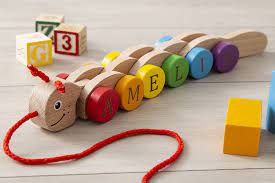
Wooden toys have been a favorite toy for years ... don't let the TV commercials fool you!
Long before plastics appeared, children played with wooden toys.
Today, some of those same favorite wooden toys are still favorites of children and parents.
Many parents believe in all television commercials and buy what their children see and want on television only to find it broken or at the bottom of the toy box shortly after and of course ... the endless shopping for batteries!
!I will define a few favorites that I have observed that would fit into the category of being a favorite wooden toy of yesterday, today, and tomorrow.Wooden building blocks have probably been one of the oldest favorites and still are today.
Give a child a stack of blocks of different sizes and watch the creative mind at work.A barn and a wooden fence I know that many parents or grandparents have built a barn for a Christmas present.