In the rush to adopt the transformative power of Generative AI, there is a pervasive narrative of "full automation"—a future where intelligent systems handle complex tasks end-to-end with no human involvement. While this vision is compelling, for high-stakes enterprise applications, particularly in regulated industries like finance and healthcare, it is a dangerously incomplete picture. The most advanced AI models are still, and will remain for the foreseeable future, fallible. They can misinterpret context, generate biased or inaccurate information, and fail to handle novel, edge-case scenarios.
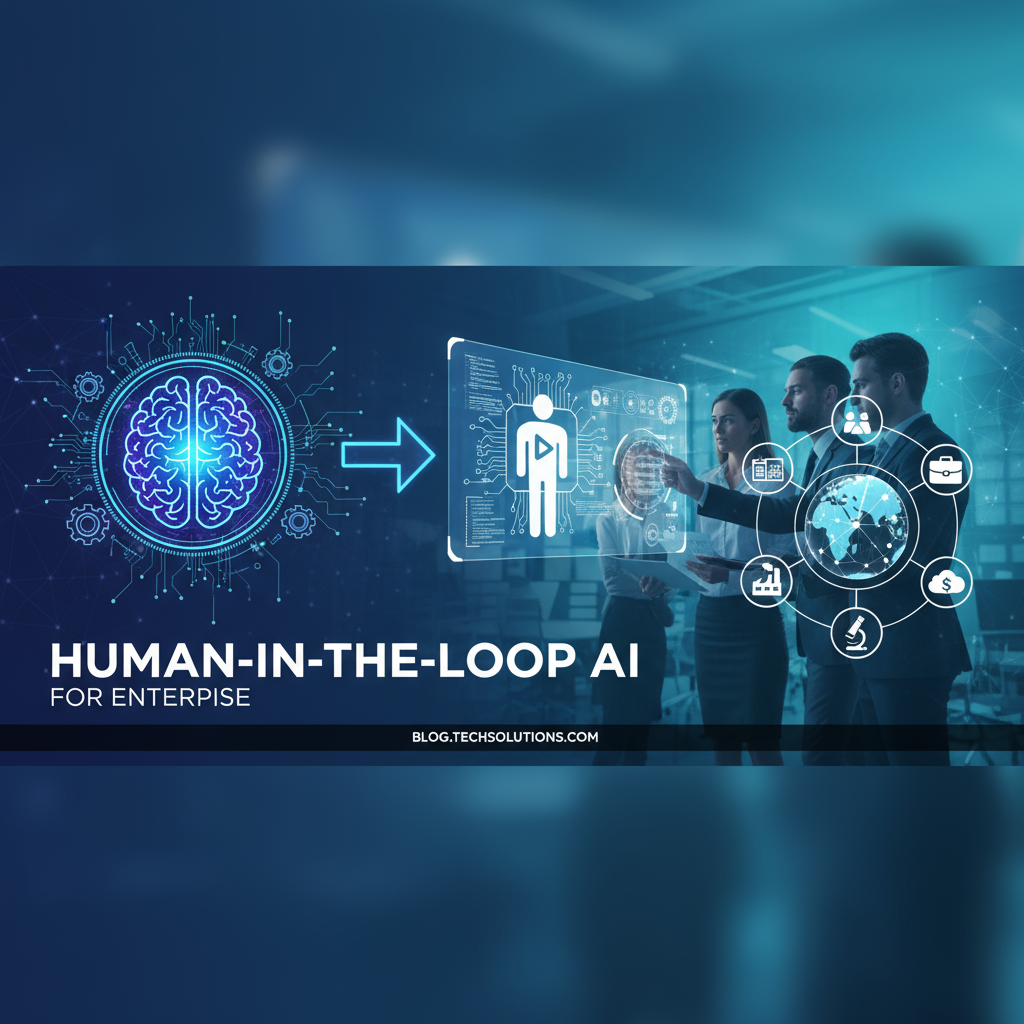
For this reason, the most effective, safe, and compliant AI strategies are not built on replacing human expertise, but on augmenting it. Human-in-the-Loop (HITL) is an essential design pattern that operationalizes this partnership. It is not a sign of AI's weakness, but a mark of its mature and responsible implementation. An HITL framework transforms a powerful but imperfect tool into a trustworthy, continuously improving, and compliant enterprise asset.
Why Human-in-the-Loop is Essential: The Three Core Reasons
Integrating human oversight into an AI workflow is not a matter of preference; it is a fundamental requirement driven by three critical needs.
Mitigating Critical Errors: In high-stakes environments, the cost of an AI making a mistake can be catastrophic. An incorrect medical diagnosis, a flawed credit risk assessment, or a non-compliant financial report can have severe consequences. A human expert in the loop acts as the essential final check, using their experience and contextual understanding to validate or override the AI's output before it has a real-world impact. Research has consistently shown that a human-AI team is more accurate than either a human or an AI working alone.
Handling Ambiguity and Edge Cases: AI models are trained on historical data. They excel at handling patterns they have seen before, but they struggle with ambiguity, nuance, and novel situations (so-called "edge cases") that are not represented in their training data. A human expert can apply common sense, ethical judgment, and deep domain knowledge to navigate these grey areas where a purely data-driven response would be inappropriate or incorrect.
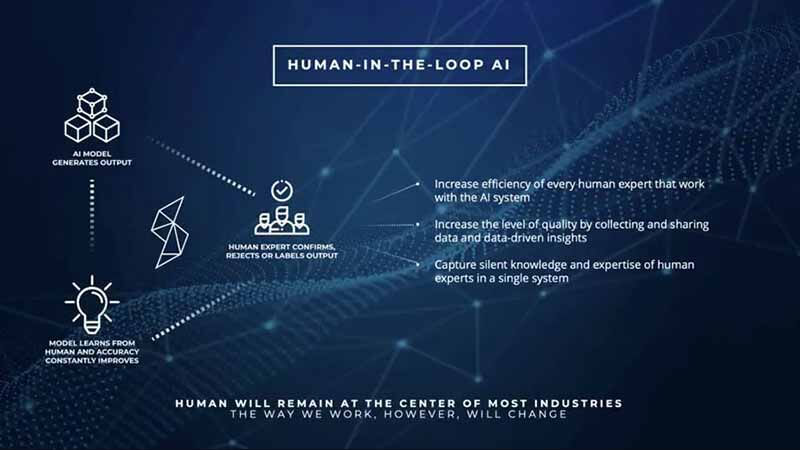
Creating a Continuous Learning Cycle: An HITL system is not just safer; it is smarter. Every time a human expert corrects, modifies, or approves an AI's output, that interaction becomes a valuable new piece of training data. This feedback is used to continuously retrain and improve the underlying AI model over time, making it progressively more accurate and reliable. This process, often called "active learning," is the key to building an AI asset that grows in value.
The Human-in-the-Loop (HITL) Workflow
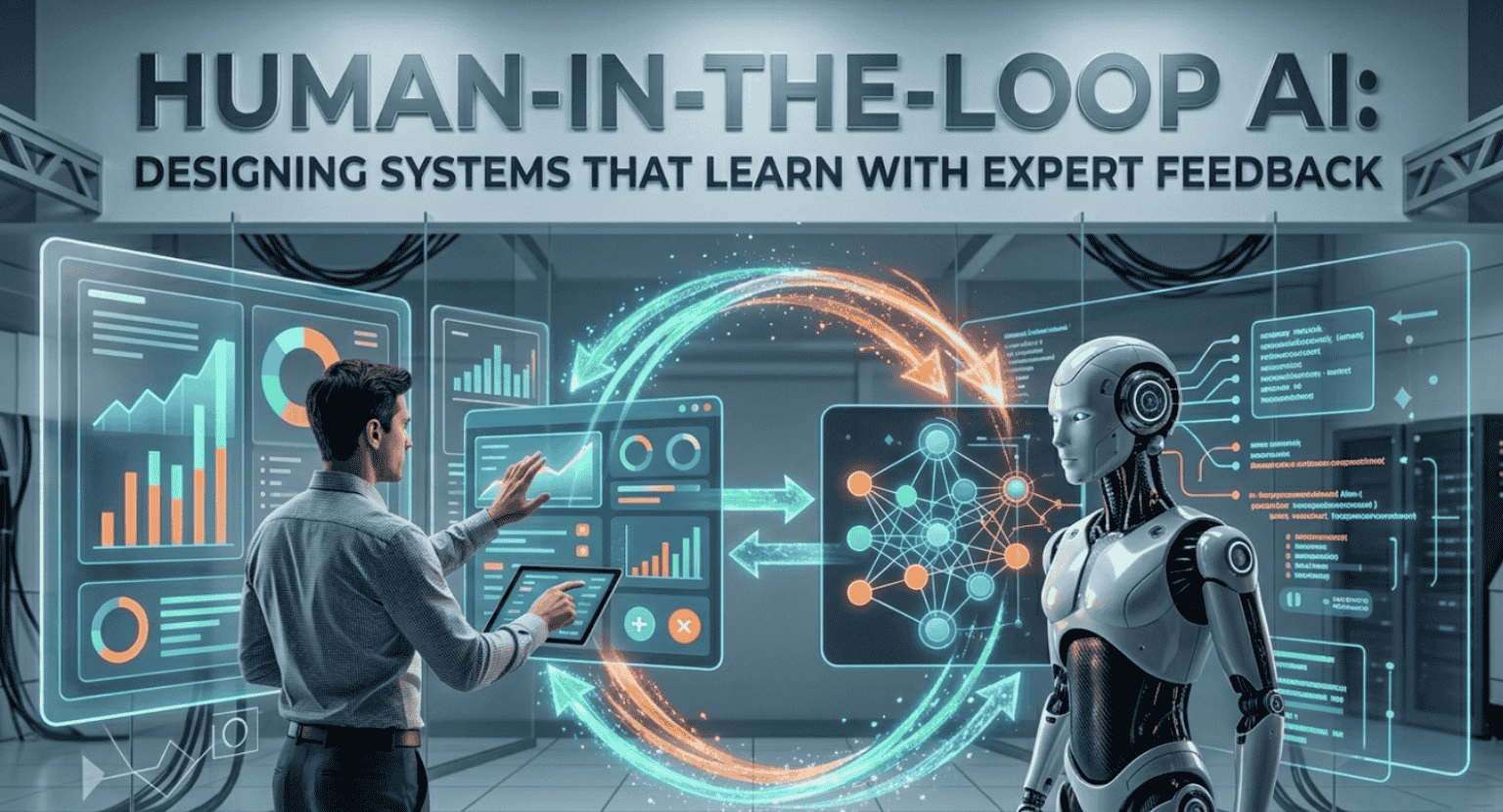
The HITL process is a virtuous cycle where human expertise is used to validate AI output and, in turn, make the AI smarter.

Three Models of Human-in-the-Loop Interaction
HITL is not a one-size-fits-all concept. The level of human involvement can be tailored to the risk and complexity of the task.
Model 1: AI as an Assistant (Pre-Action Review): This is the most common model for high-stakes decisions. The AI performs the initial analysis and provides a recommendation, but a human makes the final, accountable decision.
In Practice (Healthcare): An AI model analyzes a patient's chest X-ray and highlights areas that are likely to be malignant. A human radiologist then reviews the AI's findings, applies their expert judgment, and makes the final diagnosis.
Model 2: AI as a Reviewer (Post-Action Audit): For lower-risk, high-volume tasks, the AI can be allowed to operate autonomously, with humans reviewing a sample of its decisions for quality control and auditing purposes.
In Practice (Finance): An AI system automatically processes and approves 98% of standard insurance claims that fall within normal parameters. The remaining 2% of high-value or ambiguous claims are automatically routed to a human claims expert for a manual review.
Model 3: AI as a Student (Active Learning): This model is focused on continuous improvement. When the AI encounters a situation where its confidence is low, it escalates the task to a human.
In Practice (Customer Service): A customer service chatbot confidently answers routine questions. When it encounters a novel or complex question it doesn't understand, it seamlessly transfers the conversation to a human agent. The human agent's answer is then used as a new training example to make the chatbot smarter.
How Hexaview Engineers Responsible AI Systems
At Hexaview, we believe that the implementation of AI in the enterprise must be grounded in the principles of safety, compliance, and trust. Our approach to building AI solutions is centered on designing and engineering effective Human-in-the-Loop workflows. We don't just deliver a predictive model; we build the complete, end-to-end system that supports it. This includes creating the intuitive user interfaces for human review, architecting the feedback mechanisms that allow the AI to learn from human expertise, and building the robust data pipelines and audit trails that are essential for a compliant and trustworthy AI-powered operation.

As artificial intelligence continues to transform enterprise operations, organizations are increasingly recognizing that fully autonomous systems are not always the optimal solution especially in h
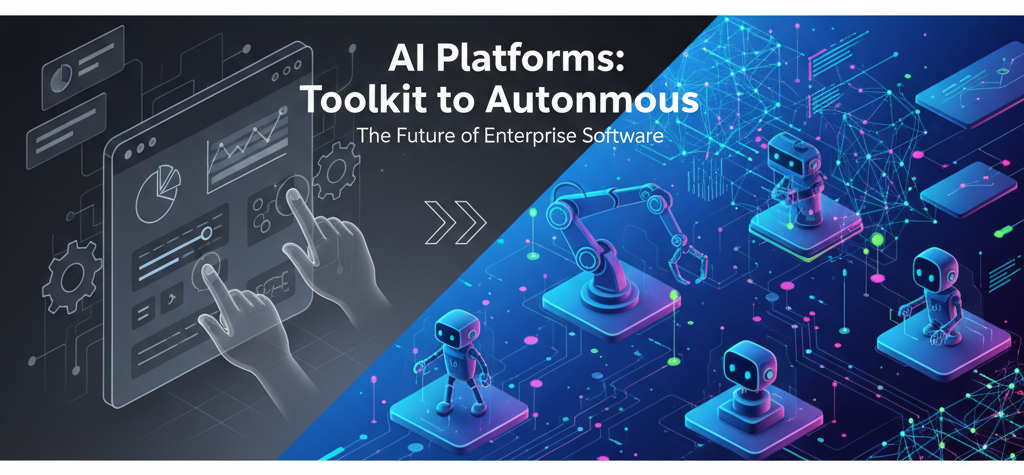
In today’s era, mechanization taking place everywhere with a new age of development in more automated systems, applications, and robots, etc.
Machine learning and AI are the leading cutting-edge technologies giving automation a new dimension with more tasks performed by machines itself.Though, nowadays many tasks can be independently performed by AI-enabled devices, systems or machines without the help of humans.
But developing such machines is not possible without the help of humans.
So, Human-in-the-Loop or HITL is a model or concept requires human interaction.What is Human-in-the-Loop ?
Human-in-the-loop (HITL), basically you can say, is the process of leveraging the power of the machine and human intelligence to create machine learning-based AI models.
HITL describes the process when the machine or computer system is unable to solve a problem, needs human intervention like involving in both the training and testing stages of building an algorithm, for creating a continuous feedback loop allowing the algorithm to give every time better results.Humans annotate or label data then give to the machine learning algorithm to learn from such and take decisions from such predictions.