In the modern business world, organizations across all industries are under constant pressure to improve quality, enhance efficiency, and maintain compliance with international standards. The International Organization for Standardization, commonly known as ISO, has developed a wide range of standards that help businesses achieve consistency, reliability, and customer satisfaction. ISO training plays a vital role in helping professionals and organizations understand, implement, and maintain these standards effectively. It provides the essential knowledge and skills required to build strong management systems that drive continual improvement and long-term success.
ISO training is designed to familiarize participants with the structure and purpose of ISO standards. Whether it is ISO 9001 for quality management, ISO 14001 for environmental management, ISO 45001 for occupational health and safety, or ISO 27001 for information security, each standard provides a framework for achieving excellence in its respective field. Through comprehensive instruction, participants learn how these standards promote consistency, minimize risks, and improve organizational performance. The training also explains how ISO standards are interconnected, allowing organizations to integrate multiple systems to streamline operations and reduce duplication of effort.
The foundation of ISO training lies in understanding the principles of management systems. Participants are introduced to the Plan-Do-Check-Act (PDCA) cycle, which forms the basis of most ISO standards. This approach emphasizes planning for objectives, implementing actions, monitoring results, and continually improving processes. By applying this structured methodology, organizations can achieve better control over their operations, reduce errors, and respond effectively to internal and external challenges. ISO training helps employees internalize this mindset so that continual improvement becomes an integral part of the organizational culture rather than a one-time initiative.
A key focus of ISO training is documentation and process control. Every ISO standard requires proper documentation to ensure transparency, traceability, and accountability. Training sessions guide participants on how to develop policies, procedures, and records that align with standard requirements. They also learn how to maintain version control, conduct document reviews, and ensure that all relevant personnel have access to the latest information. Effective documentation supports consistency in operations and provides a solid foundation for audits and assessments.
Another significant area covered in ISO training is risk-based thinking. Modern ISO standards emphasize identifying and addressing potential risks that may impact an organization’s objectives. Participants are taught how to conduct risk assessments, evaluate their significance, and implement preventive measures. This proactive approach helps organizations avoid disruptions and ensures greater stability and resilience. Risk-based thinking also encourages innovation, as it helps organizations seize opportunities for improvement rather than merely reacting to problems.
ISO training also emphasizes the importance of internal auditing and management review. Participants learn how to plan and conduct internal audits to verify compliance with ISO requirements and assess the effectiveness of implemented processes. These audits provide valuable insights into strengths, weaknesses, and areas for improvement. Additionally, management reviews help leadership teams evaluate overall system performance and make informed decisions for future planning. Together, auditing and management reviews ensure that the organization remains committed to continual improvement and sustained excellence.
Leadership and employee involvement are central themes throughout ISO training. Successful implementation of ISO standards requires commitment from top management and active participation from employees at all levels. Training helps leaders understand their roles in setting objectives, providing resources, and promoting a culture of quality and accountability. Employees, on the other hand, gain awareness of how their daily activities contribute to the organization’s broader goals. This shared understanding fosters teamwork and creates an environment where everyone is dedicated to achieving quality outcomes.
ISO training is highly beneficial for professionals across various sectors, including manufacturing, construction, healthcare, IT, education, and food industries. It is suitable for quality managers, auditors, engineers, consultants, and anyone responsible for system implementation or process improvement. For individuals, ISO training enhances career prospects by developing expertise in internationally recognized standards. Certified professionals are in high demand because they possess the knowledge required to help organizations achieve compliance, improve performance, and maintain customer trust.
For organizations, investing in ISO training leads to measurable benefits. Trained employees can identify inefficiencies, implement corrective actions, and maintain compliance with minimal external assistance. This reduces operational costs and strengthens competitiveness. ISO-trained professionals ensure that systems are implemented effectively, audits are handled smoothly, and certification processes are completed successfully. The long-term result is a more efficient, resilient, and trusted organization that continuously strives for excellence.
In conclusion, ISO training is not just about learning a standard—it is about cultivating a culture of quality, responsibility, and continuous improvement. It equips professionals with the tools and confidence needed to enhance performance, achieve compliance, and exceed customer expectations. In an era where global competition and regulatory demands are constantly evolving, ISO training empowers both individuals and organizations to adapt, innovate, and thrive. By embracing ISO principles through effective training, businesses can build stronger systems, foster trust, and ensure sustainable success for years to come.

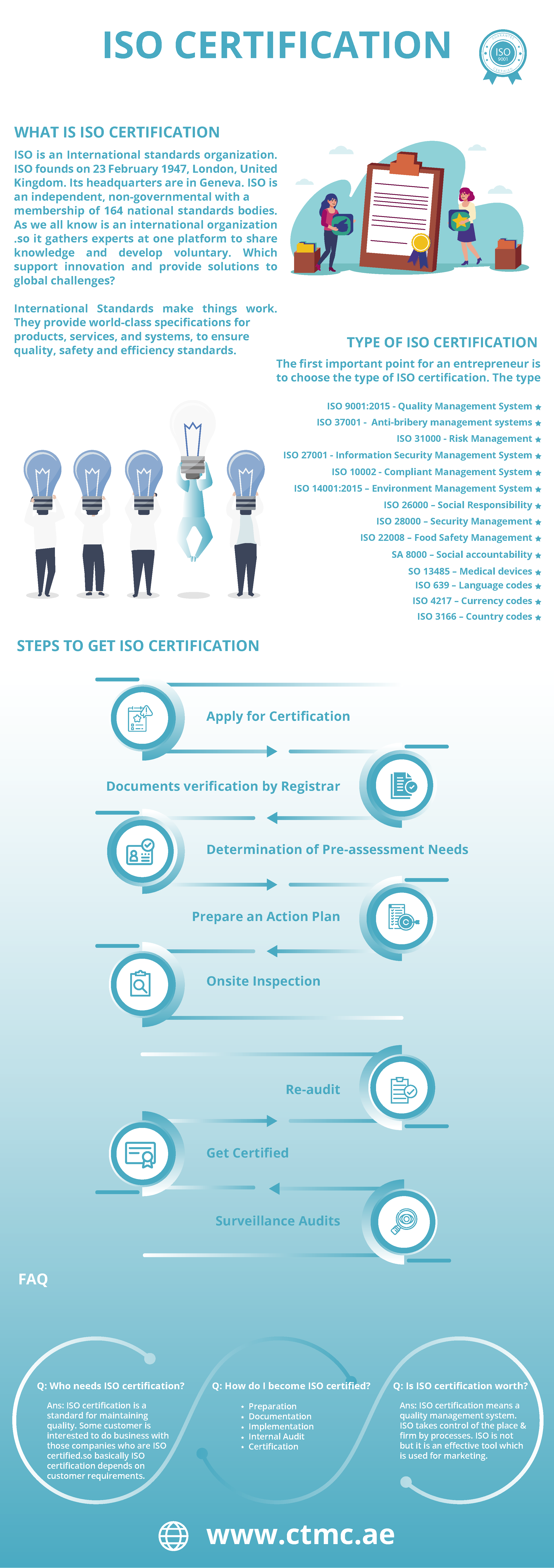
Chiltern TMC Consultant providing ISO 9001, ISO 14001, ISO 45001, ISO 22000 HACCP, ISO 26000, ISO 27001, ISO 17025, ISO 29000, SA 8000, ISO 50001, API, Sedex, BCMS, BRC, GMP, FSC Certificate Implementation, ISO Training and Consulting Services in Dubai.