
Choosing to study abroad is one of the most exciting and life-changing decisions a student can make. Among all global study destinations, the United Kingdom stands out for its academic excellence, globally recognized universities, and diverse cultural experience. Every year, thousands of international students apply for different admission cycles in the UK — and the Fall Intake remains the most popular and competitive one. If you’re planning to begin your higher education journey in the UK, understanding how to prepare for the Fall Intake will help you get ahead of the competition.
Understanding the Fall Intake in UK
The fall intake in UK (also known as the September intake) is the primary academic session for most universities and colleges across the country. It usually begins in September and extends until December, offering a wide range of undergraduate and postgraduate programs. During this period, students have access to the largest selection of courses, scholarships, and internship opportunities. Most prestigious institutions such as the University of Oxford, University of Cambridge, University of Manchester, and Imperial College London open their main admission rounds during the fall.
Because this intake attracts a global pool of applicants, students need to prepare well in advance — ideally 8 to 12 months before the session begins. From course selection to documentation and visa processing, every step needs careful planning to ensure a smooth transition.
Step 1: Research the Right Course and University
Your first step should be identifying the course that aligns with your career goals and academic interests. The UK is home to a diverse range of programs across fields like Business, Engineering, Computer Science, Arts, Health Sciences, and Law. Visit official university websites, compare course modules, and review student testimonials.
Shortlist at least three to five universities based on your eligibility, budget, and preferred city. Consider factors such as the university ranking, teaching style, internship availability, and employment outcomes. Many UK universities also offer placement years or internships, giving you hands-on experience that enhances your career prospects.
Step 2: Check Eligibility and Entrance Requirements
Each UK university has specific entry requirements depending on the course level. Generally, you’ll need:
- Academic transcripts from your previous education
- English proficiency test scores (IELTS, TOEFL, or PTE)
- Letters of recommendation
- Statement of Purpose (SOP) explaining your motivation and goals
- Resume or CV, especially for postgraduate programs
It’s crucial to review the university website for program-specific criteria, as competitive courses such as MBA, Medicine, and Engineering may have additional requirements.
Step 3: Prepare and Take Required Exams
Most universities in the UK require proof of English language proficiency. Prepare for exams like IELTS or TOEFL at least 6–9 months before applying. Aim for scores that meet or exceed the minimum band required by your chosen institution.
Additionally, if your program demands tests like GMAT or GRE, schedule them early so you can submit results before the deadline. Remember, early preparation reduces stress and improves your overall profile strength.
Step 4: Application Process and Deadlines
Applications for the fall intake typically open between November and February, depending on the university. You can apply directly through the university’s website or via UCAS (Universities and Colleges Admissions Service) for undergraduate programs.
Make sure to submit all required documents accurately. Include a well-written SOP that reflects your goals, achievements, and reasons for choosing the UK as your study destination. Once submitted, you may receive an offer letter within 4–8 weeks, depending on the institution.
Step 5: Financial Planning and Scholarships
Studying in the UK can be a significant investment, so it’s vital to plan your finances. Apart from tuition fees, you’ll need to budget for accommodation, living expenses, and travel. Explore various scholarships, bursaries, and grants offered by universities, government programs, and private organizations. Some well-known scholarships include:
- Chevening Scholarships
- Commonwealth Scholarships
- GREAT Scholarships
- University-specific awards
Having financial documents ready is also essential for your visa process.
Step 6: Apply for a UK Student Visa
After receiving your Confirmation of Acceptance for Studies (CAS) from the university, apply for your Tier 4 (Student) Visa. You’ll need to provide valid documents such as your passport, CAS letter, proof of financial stability, and English test results. The visa process usually takes 3 to 4 weeks, so apply early to avoid last-minute delays.
Step 7: Accommodation and Pre-Departure Preparation
Once your visa is approved, it’s time to arrange accommodation. UK universities offer both on-campus and off-campus housing options. On-campus living provides a convenient and community-focused experience, while off-campus housing can offer more independence.
Before departure, attend university orientation programs or pre-departure sessions to understand UK culture, academic expectations, and student support systems. Prepare essential documents, pack your essentials, and stay updated on travel regulations.
Career Opportunities After Fall Intake
One of the biggest advantages of the UK’s Fall Intake is the post-study work opportunities it offers. With the Graduate Route visa, international students can stay in the UK for up to two years after completing their degree to gain work experience. This opens doors to careers in sectors like finance, IT, healthcare, marketing, and engineering.
UK universities also maintain strong industry connections, ensuring students have access to internships, job fairs, and professional development workshops.
Conclusion
Starting your academic journey through the fall intake in UK is a life-changing decision that offers world-class education and global career growth. From choosing the right course to obtaining a student visa, every step requires careful planning and preparation. To make the process smoother and more efficient, students often seek guidance from professional Study Abroad Consultants who can assist with applications, documentation, and visa counseling.
By preparing early and staying informed, you can turn your dream of studying in the UK into a successful and rewarding reality.




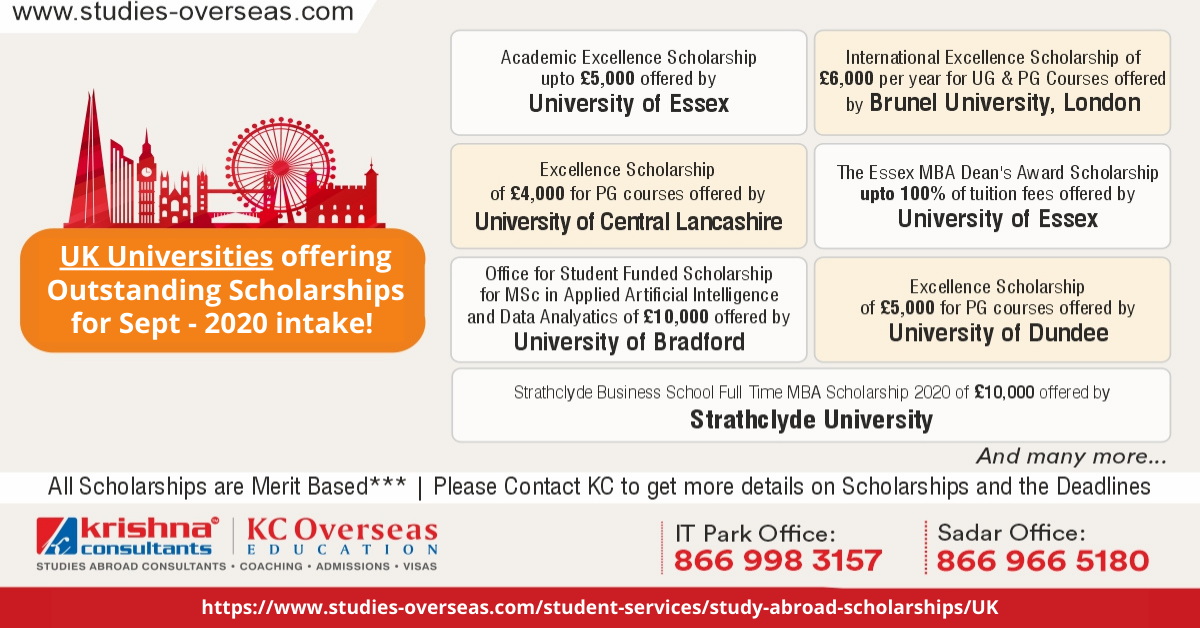
List of Universities in UK for International Students offering Outstanding Scholarships for Sept - 2020 intake!