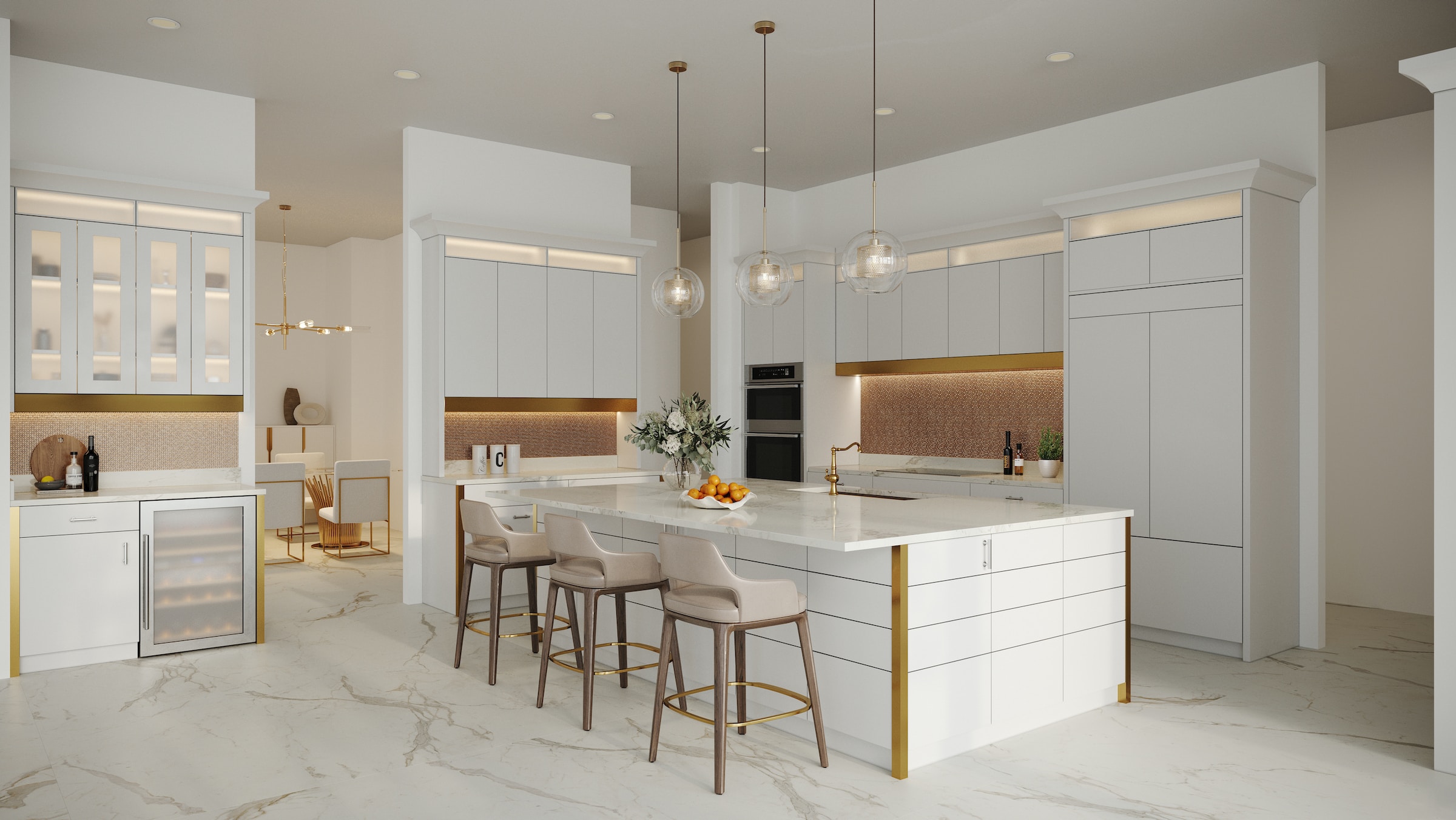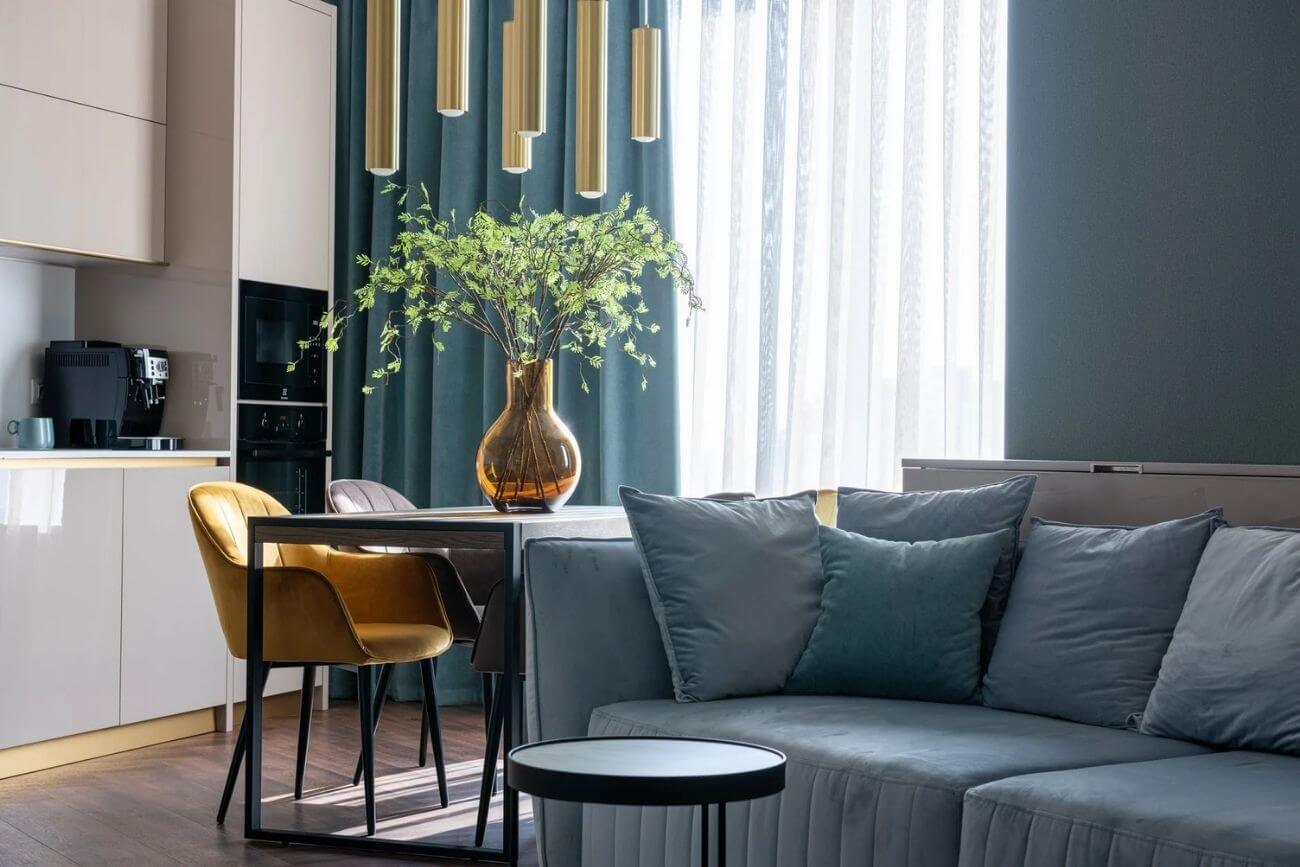


Metallics are no longer just accents; they are integral players in a modern, sophisticated interior color palette. Incorporating finishes like warm brass, cool chrome, deep bronze, or subtle satin gold adds immediate texture, light reflection, and a layer of curated luxury to any room. The secret to success lies in choosing the right metallic that complements your base color scheme and knowing how to mix and match for a professional look.
Choosing the Right Metallic Undertone
The metallic finish you select should harmonize with the dominant undertone of your interior color palette (which we discussed previously: warm or cool).
Warm Color Palette Integration
- Base Colors: Creams, Beiges, Earth Tones.
- Harmonizing Metallics: Gold, Brass, Copper.
- Effect: Enhances the coziness and richness of the room.
Cool Color Palette Integration
- Base Colors: Grays, Blues, Crisp Whites.
- Harmonizing Metallics: Chrome, Polished Nickel, Silver.
- Effect: Provides a clean, modern contrast and brilliance.
Choosing a primary metallic that aligns with your room’s temperature creates an effortlessly cohesive feeling. For instance, a gray and white cool interior color palette truly shines when paired with sleek, reflective chrome fixtures.
Mixing Metallics for Depth
While the old rule dictated choosing one metallic and sticking to it, modern design embraces mixing finishes to create greater depth and visual interest. The key is to make one finish the clear dominant player and use the second as a strategic accent.
- Dominant Finish (70%): Use your primary, temperature-aligned metallic for all large items, such as overhead lighting fixtures, kitchen or bathroom hardware, and major furniture frames.
- Accent Finish (30%): Introduce the secondary metallic in smaller accessories. Think photo frames, small vases, decorative trays, or table lamp bases.
For example, a warm interior color palette might feature 70% brushed brass (dominant) for all cabinet hardware and main lighting, accented by 30% black iron or oil-rubbed bronze (accent) in smaller accessories. This layered approach adds complexity without appearing chaotic.
Application and Placement
Metallics should be placed where they can catch and reflect light, enhancing the overall brilliance of your interior color palette.
- Reflectivity Matters: Highly polished finishes (like chrome or polished brass) offer sharp, high-glamour reflections, while brushed or satin finishes provide a softer, more subtle glow. Use brushed finishes for large surfaces to reduce glare and polished finishes on small, attention-grabbing details.
- Balancing the Weight: If your primary metallic is heavy and dark (like bronze), balance it with an airy, bright metallic (like silver or light gold) in the same space to prevent the room from feeling too weighted down.
By viewing metallics as carefully chosen tones within your broader interior color palette, you ensure they act as sophisticated highlighters that beautifully complement, rather than overpower, your chosen design scheme.