Opal engagement rings are growing in popularity, and for good reason. They offer a mesmerizing, iridescent alternative to traditional diamonds, capturing light and imagination in ways that few other stones can. If you and your partner value uniqueness, color, and the story behind your jewelry, an opal ring is the perfect symbol of your one-of-a-kind love.
However, buying an opal engagement ring requires knowledge different from that needed for a diamond. This comprehensive guide will walk you through every step, empowering you to make an informed and confident choice that will bring you happiness for a lifetime.

Juyoyo Opal Engagement Rings
Why Choose an Opal Engagement Ring?
Before we dive into the "how," let's solidify the "why." An opal ring is more than just a piece of jewelry; it's a statement.
- Unmatched Beauty: The phenomenon known as "play-of-color" sets opals apart. Tiny silica spheres diffract light, creating a dazzling internal fire of rainbow hues. No two opals are exactly alike, ensuring that your ring is as unique as your relationship.
- Symbolism: Opals have long been associated with love, passion, hope, and purity. They are believed to intensify emotions and foster loyalty and faithfulness—a wonderful basis for a marriage.
- A Break from Tradition: Opting for an opal consciously steps away from convention. It speaks to couples who value artistry, individuality, and vintage romance.
Understanding the Opal: The "Queen of Gems"
The first step is to understand the stone itself. Opals are silica-based with a high water content. The spectacular "play of color" you see is caused by microscopic silica spheres diffracting light.
The Four Main Types of Opal
Not all opals are created equal, especially in terms of durability for an engagement ring.
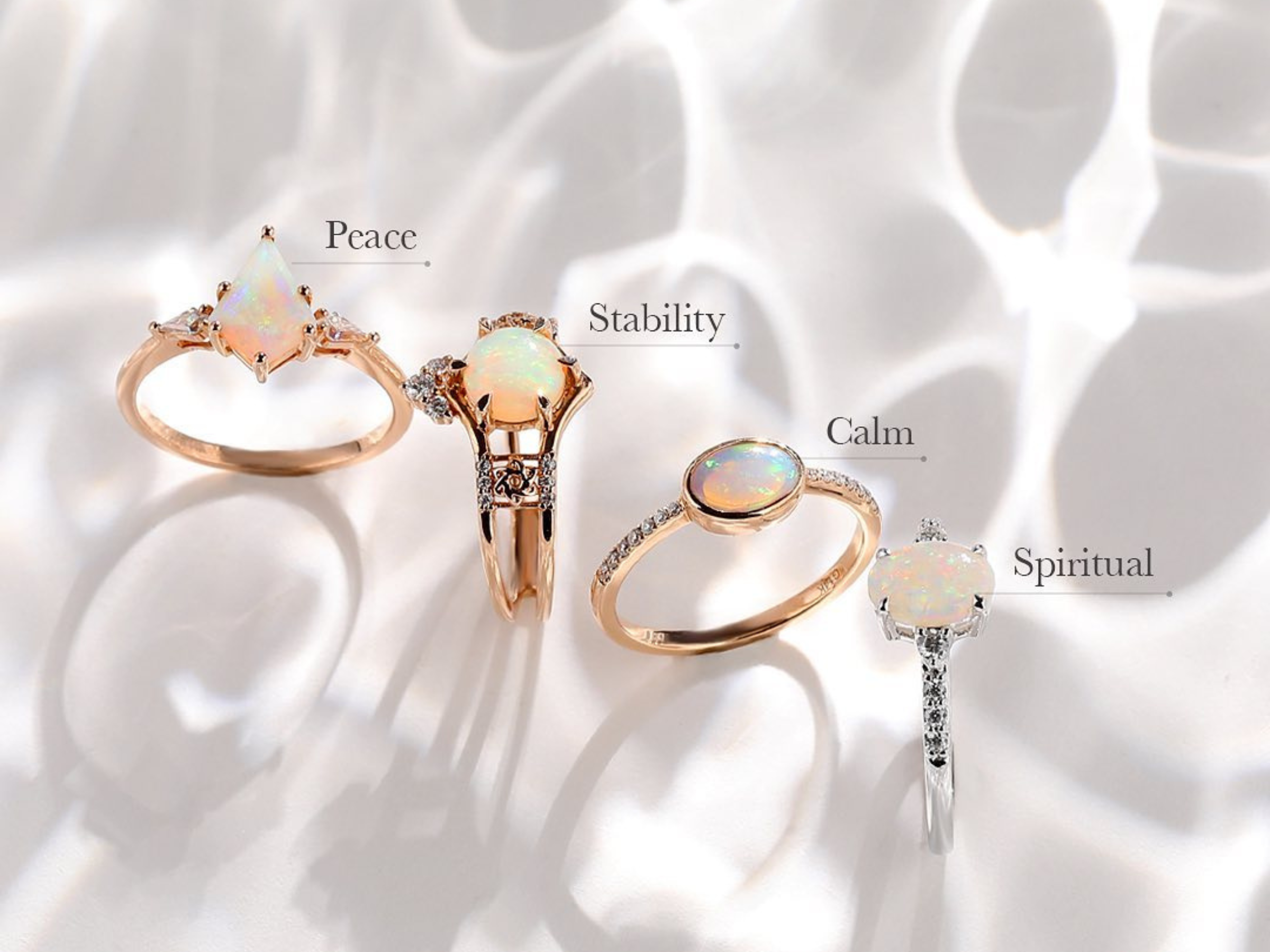
The most traditional and common type is precious white/light opal. This type has a translucent to white body color and displays brilliant play-of-color. While beautiful, it requires a highly protective setting due to its relatively low durability for daily wear.
The second type is the highly coveted and most valuable black opal. It is characterized by a dark body color ranging from deep gray to black. This dark base makes the iridescent colors incredibly vibrant and intense, giving them the highest vibrancy. This makes it an excellent, durable choice for an engagement ring.
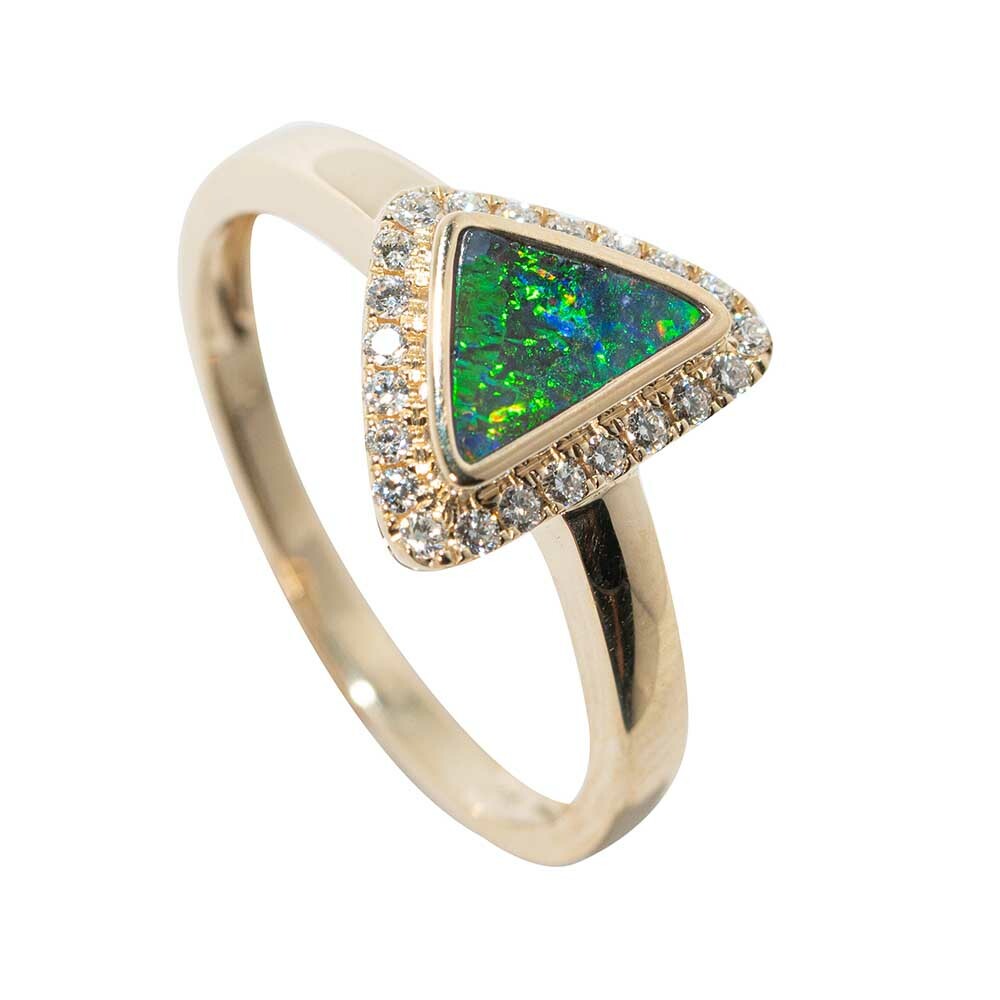
Third is the unique boulder opal. It forms naturally in veins within ironstone or other rock matrices, so the natural rock backing remains on the stone. This natural backing significantly increases the stone's durability and often features unique patterns defined by the host rock.
Finally, there is a crystal/water opal. This type has a clear or highly translucent body, which makes the color appear to magically float within the stone. Although ethereal, it is generally considered the most fragile type and can be scratched easily. Therefore, it requires extra care and protective settings.
The Five Key Steps to Choosing Your Perfect Opal Ring
Step 1: Set a Realistic Budget
Opals offer incredible variety at many price points. You can find beautiful stones for a few hundred dollars, or you can invest thousands in a rare black opal. Setting a budget up front helps narrow your search. Remember to factor in the cost of the setting and metal.
Step 2: Prioritize the "Big 3" of Opal Quality
Forget the diamond's 4Cs. For opals, you need to evaluate the following:
Color Play: This is the most important factor. Look for:
- Brightness: How vibrant and intense are the colors? A bright, fiery opal is more valuable.
- Pattern: The arrangement of the color play. Harlequin patterns, which feature large, angular patches, are the most prized, though flame, ribbon, and pinfire patterns are also beautiful.
- Range of Colors: A stone that shows multiple colors (red, green, and blue) is typically more valuable than a stone that shows only blue and green.
Body Tone: As discussed, this ranges from black (N1-N4) to white (N5-N9). A darker body tone generally makes the color play more dramatically.
Cut and Shape: A well-cut opal should be symmetrical with a good, even dome (cabochon) and no flat spots. The shape is a matter of personal preference. Oval, round, pear, and freeform are all popular.
Step 3: Select the Right Setting for Protection and Style
Since opals are softer than diamonds (ranging from 5.5 to 6.5 on the Mohs scale), the setting is important for protection as well as style.
- The Bezel Setting: Our top recommendation for an engagement ring. A metal rim encircles the opal, holding it securely in place and protecting its edges from knocks and bumps. It’s sleek, modern, and practical.
- The Halo Setting: A circle of small diamonds (melee) surrounding the center opal adds sparkle and creates a protective barrier.
- Avoid High Prong Settings: Prongs can leave the opal vulnerable to side impact. If you prefer prongs, make sure they are sturdy and that the opal isn't sitting too high.
Step 4: Choose a Durable Metal
The band needs to be sturdy. Platinum and 18k gold (white, yellow, or rose) are excellent choices for daily wear due to their strength and durability.
Step 5: Verify the Source and Ask the Right Questions
When buying, especially online, remember that safety is key. Buy from a reputable seller, such as Juyoyo.
- Ask about the origin of the opal (e.g., Australian vs. Ethiopian).
- Ask if the opal has been treated (e.g., smoke treatment for black opals or resin impregnation for Ethiopian opals). Reputable sellers will disclose this information.
- Request a certificate of authenticity from a recognized gemological institution.
The Final Word: A Ring as Unique as Your Love
Selecting an opal engagement ring takes you on a journey into a world of stunning colors and deep symbolism. It's a choice for the bold, the romantic, and the individual. When you understand the different types of opals, know what to look for in terms of quality, and select a protective setting, you're not just buying a ring—you're investing in a timeless heirloom that will tell your unique love story for generations to come.