

Construction projects are exciting because they lead to growth, new spaces, and better facilities. However, anyone who has worked in construction knows that the process is never simple. A construction project involves many moving parts—from planning and design to material selection, budgeting, labor management, and final delivery. If any of these areas fall out of balance, the entire project can face delays, increased costs, poor results, or even failure.
This is where professional project management plays a critical role. Project management in construction ensures that a project moves forward in a structured, planned, and controlled way. It helps owners, contractors, engineers, and stakeholders stay aligned and focused on achieving the same goals. In this blog, we will explore why project management is so important for construction, how it makes a difference, and the key benefits it delivers.
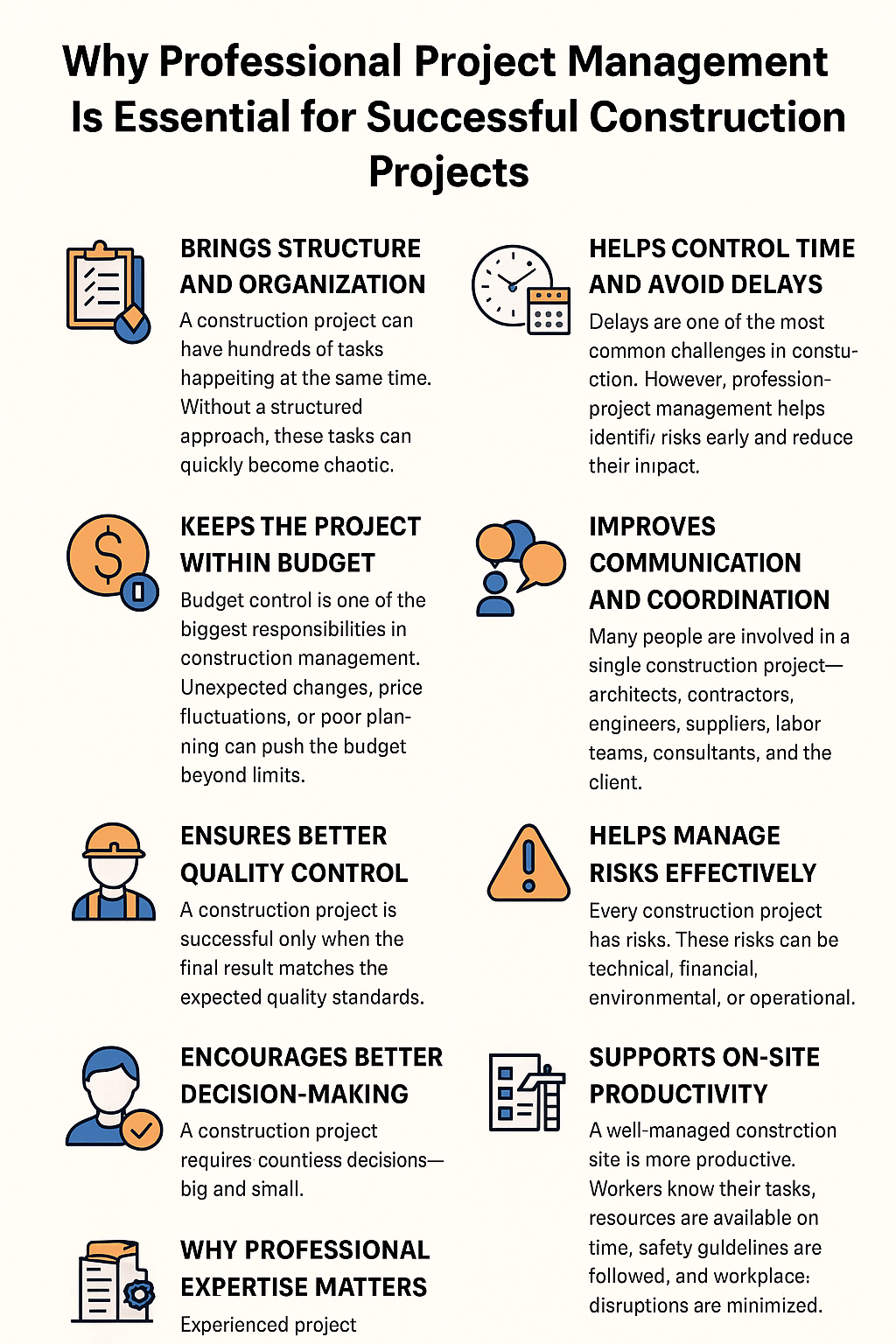
1. Brings Structure and Organization
A construction project can have hundreds of tasks happening at the same time. Without a structured approach, these tasks can quickly become chaotic. Project management brings a systematic method to the entire process. It begins with a detailed plan that defines:
- Project scope
- Timeline
- Responsibilities
- Budget
- Quality expectations
- Materials and resources needed
This planning stage ensures that everyone involved knows what has to be done, who is doing it, and when it needs to be completed. Clear planning sets the foundation for smooth construction.
2. Helps Control Time and Avoid Delays
Delays are one of the most common challenges in construction. They may happen due to weather, raw material shortages, labor issues, design changes, or administrative reasons. However, professional project management helps identify risks early and reduce their impact.
Project managers break the complete timeline into smaller milestones. Each milestone becomes an achievable target, and daily or weekly progress can be measured. If something starts to fall behind schedule, adjustments can be made before it turns into a major delay.
By managing time effectively, project managers help ensure that construction is completed on or before the planned deadline.
3. Keeps the Project Within Budget
Budget control is one of the biggest responsibilities in construction management. Unexpected changes, price fluctuations, or poor planning can push the budget beyond limits. A professional project manager tracks expenses regularly and compares them with the planned financial forecast.
Accurate budgeting includes:
- Estimating materials and labor costs
- Identifying hidden or additional costs
- Planning for emergencies
- Monitoring spending throughout the project
When costs are controlled from the beginning, it becomes easier to maintain financial discipline and avoid unpleasant surprises later.
4. Improves Communication and Coordination
Many people are involved in a single construction project—architects, contractors, engineers, suppliers, labor teams, consultants, and the client. If communication is weak among these groups, confusion and errors can occur.
Project management ensures that there is a clear system for communication. Progress is shared regularly, issues are discussed openly, and decisions are documented. Everyone receives the right information at the right time.
Good communication helps prevent misunderstandings and ensures that all teams work together smoothly. It also builds trust and transparency throughout the project.
5. Ensures Better Quality Control
A construction project is successful only when the final result matches the expected quality standards. Project managers play a key role in making sure the project is not just completed, but completed correctly.
Quality control involves:
- Checking material quality
- Monitoring workmanship
- Reviewing design compliance
- Ensuring safety standards
- Conducting inspections
Project management builds quality checks into every phase of construction. Instead of waiting until the end, problems are identified early and corrected immediately. This leads to stronger, safer, and more reliable structures.
6. Helps Manage Risks Effectively
Every construction project has risks. These risks can be technical, financial, environmental, or operational. Project management identifies potential risks before they occur and prepares strategies to reduce or avoid them.
For example, if material shortages are predicted, procurement plans can be changed in advance. If weather delays are expected, schedules can be adjusted. Risk management ensures that the project continues smoothly even when challenges arise.
7. Encourages Better Decision-Making
A construction project requires countless decisions—big and small. Without a structured system, decision-making can become slow or unclear. Project management provides accurate information, regular reporting, and data-based analysis. This makes it easier for stakeholders to make informed decisions.
Whether it's selecting materials, hiring contractors, or approving design changes, project managers present clear options along with their effects on time, cost, and quality. This improves clarity and reduces confusion.
8. Supports On-Site Productivity
A well-managed construction site is more productive. Workers know their tasks, resources are available on time, safety guidelines are followed, and workplace disruptions are minimized. When the site runs efficiently, productivity increases, and the project progresses faster.
Project managers also make sure that tools, equipment, and materials arrive when they are needed. This prevents waiting periods or delays caused by missing resources.
9. Provides Peace of Mind to Clients
Construction can be stressful. Clients often worry about timelines, costs, contractor performance, legal compliance, and final outcomes. With professional project management, they can relax knowing that the work is being monitored by experts.
Clients receive regular updates, progress reports, and complete transparency. This builds confidence and allows them to focus on their business while experts manage the construction.
10. Why Professional Expertise Matters
Experienced project management companies bring years of industry knowledge, technical understanding, and hands-on experience. They know how to plan effectively, solve problems, manage teams, and deliver projects successfully. Companies like SD-Cap provide this level of professional guidance, helping projects achieve quality, efficiency, and timely completion without unnecessary complications.
Conclusion
Construction projects are complex, but with the right project management, they can be completed smoothly and successfully. Professional management brings control, clarity, accountability, and expertise—making sure that the project is finished on time, within budget, and up to the expected quality. Whether it’s a small building or a large commercial development, project management is the foundation that holds everything together and ensures a positive outcome.