When you decide to welcome a bird into your home, one of the most important decisions you'll make is choosing the right bird cage. Your bird's cage is not just a home; it's a place that will impact its health, comfort, and happiness. A proper cage is essential for your bird's well-being, ensuring they feel safe, secure, and engaged. In this guide, we’ll walk you through everything you need to know before purchasing a bird cage.
1. Importance of Choosing the Right Bird Cage for Your Pet
Choosing the right bird cage goes beyond simple aesthetics; it's crucial for your pet's overall health and happiness. A cage that’s too small or uncomfortable can lead to stress, poor health, and behavioral issues. Birds are naturally active and curious creatures, so they need a space that provides both physical comfort and mental stimulation. Providing the right cage allows your bird to stretch its wings, interact with its environment, and feel safe and secure.
2. Understanding Your Bird’s Needs
Before you start shopping, it's important to understand your bird's species and what it needs. Different birds have different cage requirements based on their size, activity level, and natural behaviors.
Species-Specific Cage Requirements
For example, parrots, with their strong beaks and energetic nature, need a cage that’s both sturdy and spacious. Smaller birds like budgies or finches require less space but still need room to fly around comfortably. The cage should reflect these needs, whether it's large enough for a parrot to spread its wings or more compact for a small finch.
Size, Shape, and Layout Considerations
The size of the cage is arguably the most important factor. The larger the bird, the larger the cage should be. Ensure the cage is tall enough for them to climb and fly, and wide enough for them to move around freely. Some birds prefer horizontal space, while others, like parrots, enjoy vertical space for climbing.
Importance of Providing Adequate Space and Comfort
A cramped cage will cause your bird to feel stressed and unhappy. The cage should allow your bird to perch comfortably, move around, and explore its environment. Comfort is key to a happy, healthy bird.
3. Key Factors to Consider When Buying a Bird Cage
There are several important factors to consider when choosing a bird cage. These include size, materials, bar spacing, and cage layout.
Cage Size and Dimensions
A bird cage should provide enough space for your bird to move freely and express natural behaviors. As a rule of thumb, the cage should be at least two times the bird's wingspan in width and height. Larger birds, such as cockatoos or macaws, will require even bigger cages.
Material: Wire, Wood, or Acrylic?
Bird cages come in a variety of materials, each with its pros and cons. Wire cages are the most common and come in a range of styles. Make sure the wires are made from durable, rust-resistant materials, such as stainless steel or powder-coated metal. Wood is another option, but it may be harder to clean and can attract pests. Acrylic cages are visually appealing but can be expensive and may not provide adequate ventilation.
Bar Spacing and Its Importance for Safety
Bar spacing is crucial for your bird’s safety. Bars that are too wide can allow small birds to escape or, worse, get their heads stuck. The recommended bar spacing depends on your bird's size. For small birds like finches, spacing should be no wider than 1/2 inch. For larger birds, like cockatoos or macaws, the spacing should be around 3/4 to 1 inch.
Cage Layout: Horizontal vs. Vertical Design
Horizontal cages provide more floor space for birds to spread their wings and move around. Vertical cages are ideal for climbing birds like parrots, as they offer more vertical space. The choice between horizontal and vertical depends on your bird’s preferences and natural behaviors.
4. Safety Features to Look For
Safety should always be your top priority when buying a bird cage.
Non-Toxic Materials and Finishes
Ensure that the cage is made from non-toxic materials. Avoid cages with harmful paints or finishes that could be dangerous if ingested. Look for cages that are labeled as non-toxic, and if you're unsure, contact the manufacturer for more details.
Smooth Edges and Secure Door Latches
Inspect the cage for sharp edges or points that could hurt your bird. The door latches should also be secure enough to prevent your bird from escaping. A bird that knows how to open doors can easily make its escape if the latch is flimsy.
Easy-to-Clean Features
Cages with removable trays or easy-to-clean surfaces are ideal. Make sure the cage is designed for simple cleaning to help maintain a healthy environment for your bird. Cages with smooth surfaces or a non-stick coating will be easier to clean and sanitize.
5. Types of Bird Cages
There are different types of bird cages to consider, each suited for different birds and needs.
Standard Cages: Pros and Cons
Standard bird cages are the most common. They are often rectangular with horizontal bars, providing ample space for smaller birds. While they are affordable and easy to find, they may not offer the best space for larger birds or those that need more climbing opportunities.
Aviaries: For Larger Birds or Multiple Birds
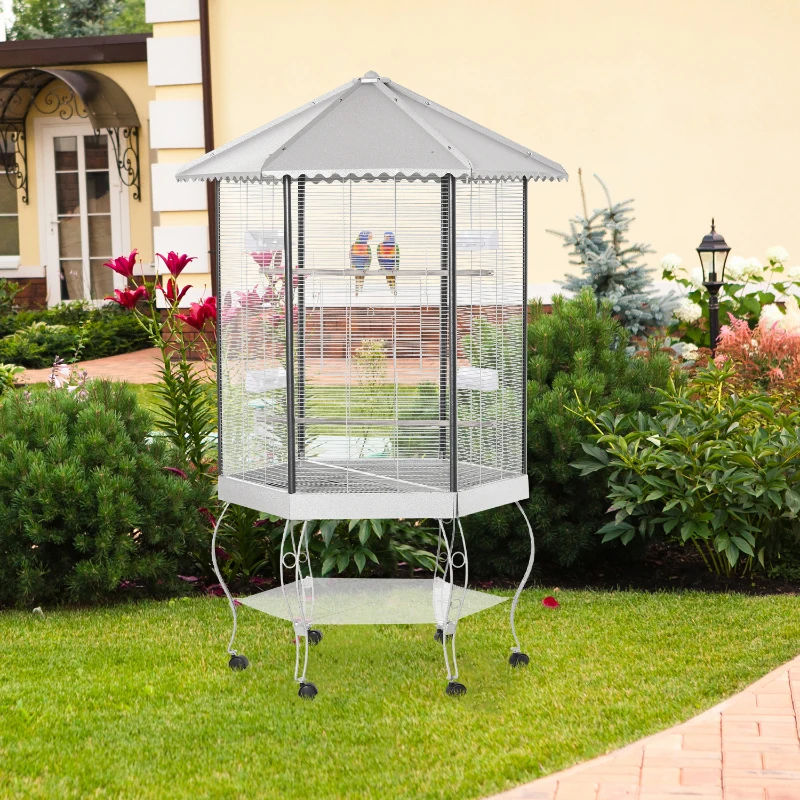
If you have a large bird or multiple birds, an aviary might be the best option. Aviaries provide more room for birds to move around and are perfect for birds that need plenty of space to fly and stretch their wings. They are generally larger and can accommodate a variety of birds, but they may be more expensive.
Travel Cages: When and Why You Need One
Travel cages are designed for short trips or visits to the vet. These cages are smaller, lightweight, and portable, but still provide enough space for your bird to feel safe. They are perfect for short-term use but shouldn’t be a substitute for the primary cage.
Playpens and Other Cage Alternatives
For those who want to offer their bird more freedom, playpens and alternative setups are an option. These allow birds to explore outside their cages while still being contained in a safe area. Playpens are often used to give birds more space for socializing and physical activity.
6. Bird Cages for Sale
Looking for the perfect bird cage? You’ll find a wide selection of bird cages for sale in pet stores and online retailers. Whether you're looking for a budget-friendly option or a premium aviary, there are many choices available to suit your needs. When shopping for a cage, make sure to compare prices and features to get the best deal while ensuring quality and safety for your bird. Retailers like Aosom offer a variety of bird cages that cater to different bird sizes and species, making it easier for you to find the right cage for your feathered friend.
7. Bird Cage Accessories
Once you’ve chosen the right cage, you’ll need to consider accessories to create a comfortable and engaging environment for your bird.
Perches, Food, and Water Containers, and Toys
Birds need a variety of perches to help them exercise their feet and legs. Perches made from natural wood or rope are great for providing variety and comfort. Don’t forget to include food and water containers that are easy to access and clean.
How to Select the Right Accessories for Your Bird’s Needs
When choosing accessories, think about your bird’s natural behaviors. Larger birds will need sturdy perches and toys that can withstand their strength, while smaller birds may enjoy hanging toys or foraging options. Providing plenty of variety and stimulation will keep your bird engaged and happy.
Customizing Your Bird’s Environment for Comfort and Stimulation
Birds are intelligent creatures and need mental stimulation to stay healthy. You can customize your bird’s cage with toys, climbing structures, and puzzles to keep them entertained. Consider rotating toys regularly to provide variety and prevent boredom.
8. Cage Placement in Your Home
Choosing the right spot for your bird's cage is just as important as selecting the cage itself.
Where to Place the Bird Cage for Optimal Comfort and Safety
Place the cage in a quiet, stable environment, away from drafts and direct sunlight. Birds need a calm space where they feel secure, but they also enjoy being part of the family. Place the cage in a room where they can interact with you and the family, but avoid locations with high foot traffic.
Factors to Consider: Noise, Temperature, and Natural Light
Birds thrive in environments with moderate temperatures and natural light. Avoid placing the cage in areas with extreme temperature fluctuations or constant noise. A stable and quiet environment will help keep your bird calm and happy.
9. Maintenance and Cleaning
Maintaining a clean cage is essential for your bird's health. Dirty cages can lead to the spread of bacteria and parasites, which can harm your bird.
Tips for Maintaining a Clean and Hygienic Cage
Clean the cage regularly by removing old food, droppings, and soiled bedding. Wipe down the bars and perches to remove any residue. Change the water and food daily to prevent contamination.
Choosing Cages that Are Easy to Clean and Sanitize
Look for cages with removable trays or those that are designed for easy access to all areas for cleaning. A cage that’s easy to maintain will help you keep your bird’s environment hygienic and comfortable.
10. Budgeting and Price Considerations
Bird cages come in a wide range of prices depending on size, material, and design.
Understanding the Price Range of Different Bird Cages
You can find budget-friendly cages starting at around $30 to $50 for smaller birds. Larger, more intricate cages for parrots or aviaries can cost several hundred dollars or more. Consider your bird’s size, needs, and the longevity of the cage when determining your budget.
How Much to Spend Based on Bird Size, Type, and Needs
If you have a small bird, you can often get away with a less expensive cage. However, larger birds or multiple birds will require a more substantial investment. Don’t skimp on quality; investing in a sturdy, durable cage will save you money in the long run.
Where to Find Good Deals and Quality Cages
Look for sales at pet stores or online retailers. Many retailers offer discounts on bird cages, especially around holidays. Be sure to read reviews and do research to ensure you’re getting good quality at a fair price.
Finding the Perfect Cage for Your Bird
Choosing the right bird cage is crucial for your bird's well-being. By considering factors like size, materials, safety features, and your bird's needs, you can create a comfortable, secure home. Take your time to find the perfect cage to ensure your bird thrives. For quality bird cages, Aosom offers a range of options designed for comfort and durability, helping you provide the best living space for your feathered friend.

The problem with not having too much experience with birds is that you probably do not know much about the different types of Bird Cages that you can purchase or what sort of Parrot Toys would offer your pet the most amazing advantages.
Nevertheless, it is never too late to learn how to take care of your pet bird.Now, when it comes to choosing the right kind of product, it would be a good idea to start with the most essential one – your pet’s cage.
One of the biggest mistakes that you could make would be to pick up just any cage because you believe that a bird does not need too much space.
Well, the reality is that as long as you would like for it to have a long and happy existence, you should consider offering it as much space as possible.
You could even invest in a cage that comes with additional levels, all sorts of toys and accessories and a water/food dispenser.Depending on your budget, you could have your bird live like a king/queen.
When the space is limited, you are bound to deal with some violence, which is definitely something that you can easily avoid.