


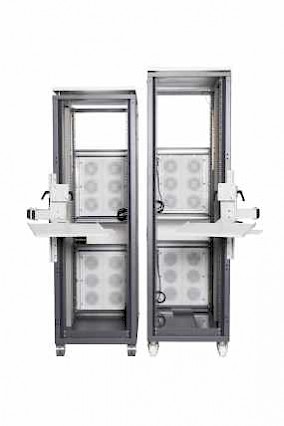
As testing environments become more complex in 2025, the need for organized, scalable, and reliable infrastructure has never been greater. Whether it’s a telecom lab validating 5G hardware, an automotive EMC chamber, or a production floor running high-volume tests, the backbone of efficient workflows often starts with the right support hardware—specifically, electronic test equipment racks.
Modern testing systems now involve multi-instrument setups, higher power demands, denser wiring, and greater thermal loads. At the same time, organizations want cleaner layouts, better safety, and flexible configurations that adapt to rapid technology changes. These trends have led to a new generation of test racks designed for performance, longevity, and ease of use.
Before choosing a rack for your lab or engineering facility, it’s essential to understand the features that actually matter. Below are the five key attributes that define the new standard for electronic test equipment racks in 2025.
Key Takeaways
- Learn the five essential features that define modern electronic test equipment racks.
- Understand how better rack design improves safety, workflow efficiency, and equipment longevity.
- Identify what organizations should consider when selecting a rack for advanced testing needs.
- Gain practical best practices for implementing and optimizing rack infrastructure in your lab.
Why Modern Test Racks Matter More Than Ever
Engineers, educators, and R&D teams often overlook test equipment racks when planning a lab upgrade. Yet these structures play a critical role in organization, airflow, cable routing, accessibility, and even measurement accuracy. A poor-quality rack can lead to overheating, clutter, difficult maintenance, and unsafe environments. Conversely, a well-designed rack supports reliable performance and smooth day-to-day operations.
As test systems evolve—especially with RF-heavy setups, automated scripting, robotics, and production-level validation—the supporting hardware must evolve too. Let’s explore the five key features that define high-quality electronic test equipment racks today.
1. Robust Structural Design for Stability and Safety
The foundation of any good test rack is its structural integrity. Modern racks are engineered to handle heavier instruments, high-power loads, and dense installations without compromising safety.
A well-built rack offers:
- High load capacity for oscilloscopes, signal analyzers, RF sources, power meters, and custom hardware.
- Reinforced frames that eliminate vibration, ensuring instruments perform consistently.
- Secure mounting rails designed for standardized test equipment form factors.
In high-precision environments—especially RF and EMC labs—even minor vibrations or instability can affect results. That’s why stability has become a priority for engineering teams in 2025.
Best practice: Always check the rack’s rated load capacity and consider the future equipment you may add. A slightly oversized rack ensures long-term scalability without structural strain.
2. Intelligent Cable Management That Reduces Clutter and Error Rates
Modern testing setups involve hundreds of cables—RF jumpers, data lines, power cords, control cables, and grounding wires. Poor cable routing creates confusion, increases troubleshooting time, and introduces signal noise or performance issues.
Today’s leading electronic test equipment racks include:
- Integrated cable ducts and horizontal/vertical channels
- Pass-through openings to move cables cleanly between rack sections
- Color-coded or tag-friendly routing points
- Tie-down brackets and organized anchor points
- Effective cable management does more than make the rack look clean. It:
- Improves safety by preventing accidental disconnects
- Makes maintenance faster and more predictable
- Reduces the risk of signal interference or RF leakage
- Enhances cooling efficiency by keeping airflow unobstructed
Best practice: Label cables during installation and maintain a cable map. This significantly reduces downtime during upgrades or troubleshooting.
3. Advanced Thermal Management for High-Density Equipment
As test instruments become more powerful, they generate more heat. Without proper thermal control, performance drops and components degrade prematurely. This makes cooling one of the most important features of modern racks.
A strong thermal management system includes:
- Ventilated side panels for passive airflow
- Front-to-back or bottom-to-top ventilation paths
- Optional forced-air cooling modules
- Dedicated spaces for power distribution units away from heat-sensitive tools
High-end electronic test equipment can lose accuracy when operating above target temperatures. A well-ventilated rack keeps instruments stable, extending lifespan and improving test repeatability.
Best practice: Leave space between high-power equipment and avoid stacking heat-intensive devices directly on top of each other.
4. Modularity and Adaptability for Future-Proofing
Technology is evolving faster than ever, and labs must adapt quickly. A non-modular rack becomes obsolete faster, forcing expensive replacements. In contrast, modular electronic test equipment racks can grow with your needs.
Modern racks offer:
- Adjustable shelves and mounting rails
- Removable panels for customization
- Expansion sections that let you scale up easily
- Compatibility with a wide variety of equipment formats
Adaptability is especially important in research, academic, and evolving industry labs where new instruments and automation systems are added frequently.
Best practice: Choose a rack that supports interchangeable accessories so you can reconfigure layouts without starting from scratch.
5. Integrated Power Management and Smart Safety Features
Modern racks are increasingly equipped with intelligent power systems designed to support sensitive test equipment.
Key features include:
- Built-in PDUs (Power Distribution Units) with overload protection
- Surge suppression and clean power delivery
- Grounding points essential for RF and EMC environments
- Emergency cut-off switches when working with high-voltage setups
Smart racks also include digital monitoring for:
- Voltage levels
- Current consumption
- Thermal anomalies
These capabilities help prevent damage, reduce downtime, and maintain safe working conditions.
Best practice: Position the PDU where it's easily accessible, and avoid overloading a single outlet strip even if the rack supports high capacity overall.
How to Choose the Right Rack for Your Lab
Selecting the right test equipment rack depends on your test environment, available space, and expected growth. Here are a few tips that organizations should keep in mind:
1. Assess Your Current and Future Equipment List
Avoid choosing a rack based solely on current needs—consider scalability.
2. Prioritize Thermal and Cable Management
These two factors have the biggest impact on long-term usability.
3. Consider Accessibility for Maintenance
Choose racks with removable doors, sliding shelves, and easy rear access.
4. Ensure Compatibility With Specialized Instruments
Some RF or network analyzers have unique mounting requirements.
5. Look for Safety Certifications
Compliance ensures both performance and user protection.
FAQs About Electronic Test Equipment Racks
1. What size rack do I need for my test equipment setup?
Most labs use standard 19-inch racks, but the height depends on the number of instruments. Engineers should also consider additional space for cooling, cable routing, and future expansion.
2. How important is ventilation in electronic test equipment racks?
Ventilation is crucial. Heat buildup leads to inaccurate measurements, reduced equipment lifespan, and potential failure. Modern racks use strategic airflow paths and optional cooling modules to prevent overheating.
3. Can I customize a rack for specialized testing?
Yes. Many modern racks offer modular panels, adjustable rails, and accessory mounting options so labs can configure them for RF, EMC, automated test systems, or production testing environments.
4. What safety features should I look for?
Grounding points, overload protection, surge suppression, and stable construction are essential. For high-voltage labs, emergency power-off switches add an extra level of protection.
5. How do electronic test equipment racks improve workflow efficiency?
Organized cables, easy access to instruments, and structured layouts reduce troubleshooting time, minimize errors, and support faster test cycles.
6. Are racks needed for small-scale or educational labs?
Yes. Even small labs benefit from better organization, improved safety, and cleaner workflows. Educators especially appreciate racks because they help students maintain discipline in practical environments.
Upgrade Your Lab With Smarter Rack Infrastructure
Investing in the right rack is one of the easiest ways to improve safety, accuracy, and efficiency across your testing environment. Modern electronic test equipment racks are engineered to adapt to new technologies, protect valuable instruments, and support long-term testing needs.
For organizations looking for high-quality, customizable, and future-ready solutions, Orbis Systems delivers reliable rack designs backed by years of engineering expertise—helping teams build smarter, safer, and more efficient test environments.