

As mobile networks evolve toward ultra-dense 5G deployments and early 6G research accelerates in 2026, base station testing has become more complex than ever before. Massive MIMO arrays, higher frequency bands, carrier aggregation, and increased output power levels are pushing RF test environments to their limits. In this landscape, precise RF signal routing is no longer optional—it’s foundational.
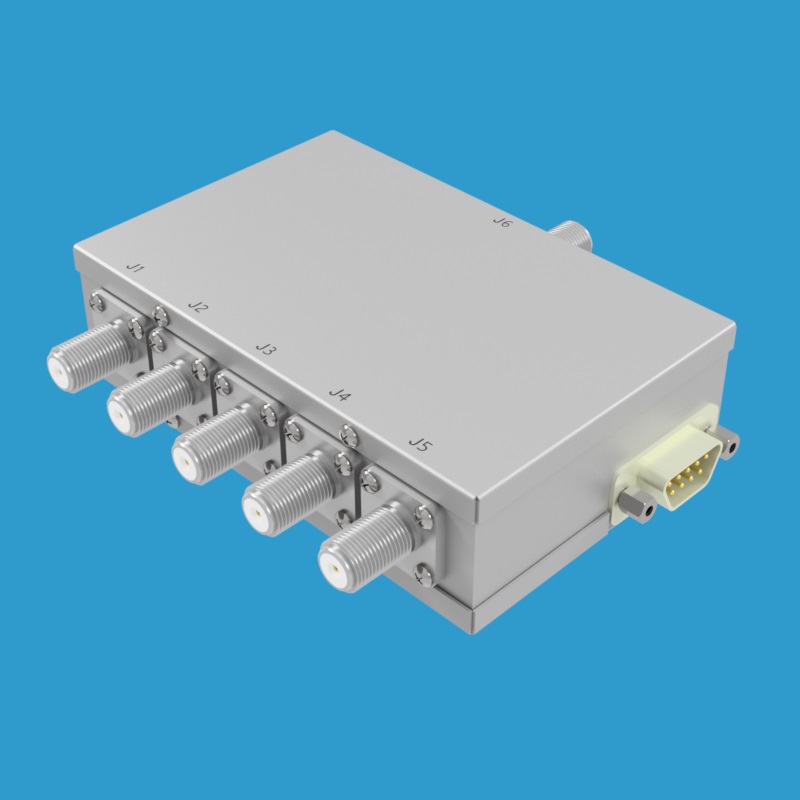
This is where a high power RF switch becomes indispensable. Designed to manage high-wattage RF signals with minimal loss, these switches play a critical role in ensuring base stations perform reliably under real-world conditions. From development labs to production validation, they help engineers maintain signal integrity, repeatability, and test accuracy across increasingly complex RF paths.
Key Takeaways
- Learn why base station testing demands high-power, low-loss RF signal routing
- Understand the technical challenges RF switches solve in modern telecom testing
- Discover essential features to look for when selecting RF switching solutions
- Explore best practices to optimize RF switch performance in test environments
The Growing Complexity of Base Station Testing
Base stations are no longer simple radio nodes. Today’s systems support multiple bands, multiple standards (3G, 4G, 5G), beamforming, and dynamic power control—all within a single enclosure. Testing these systems requires routing RF signals between transmitters, receivers, antennas, power amplifiers, and measurement equipment without compromising performance.
Any signal degradation introduced during testing can lead to misleading results. Even minor insertion loss or leakage between paths can distort EVM measurements, mask interference issues, or create false pass/fail outcomes. As power levels increase, the risks multiply—making traditional low-power switching solutions unsuitable for modern base station validation.
What Makes RF Signal Routing Critical in Base Station Labs
Reliable RF signal routing ensures that each test scenario reflects real operating conditions. During base station testing, signals are frequently switched between:
- Multiple antennas or antenna ports
- Transmit and receive chains
- Load conditions and measurement instruments
- Redundant paths for calibration and fault testing
Without robust switching, engineers face longer test cycles, inconsistent data, and increased risk of damaging sensitive RF components. High-power switching solutions are built specifically to address these challenges while maintaining electrical performance.
Why High Power Matters in Telecom Test Environments
Base station transmit paths often operate at significantly higher power levels than user devices. Testing these paths requires components that can safely handle peak and average power without distortion, overheating, or premature failure.
A high power RF switch is engineered with materials, thermal design, and isolation characteristics that allow it to manage these demands. Unlike standard switches, it can maintain stable performance even when exposed to continuous high-power RF signals during stress tests or long-duration measurements.
This capability is especially important for validating power amplifiers, antenna ports, and MIMO configurations under worst-case conditions.
Key Features That Enable Reliable Base Station Testing
Not all RF switches are suitable for telecom infrastructure testing. The most effective solutions share several critical characteristics.
High power handling ensures the switch can support real base station output levels without compression or damage. Low insertion loss preserves signal strength and measurement accuracy, particularly important when testing over wide frequency ranges.
High isolation prevents signal leakage between unused paths, which is essential in dense RF environments with multiple active channels. Broad frequency coverage allows a single switching platform to support legacy networks alongside newer bands.
Reliability and durability are equally important. Base station labs often run continuous test cycles, making long operational life and stable performance non-negotiable requirements.
Addressing Common Testing Challenges with RF Switching
One of the biggest challenges in base station testing is maintaining repeatability across test runs. Inconsistent signal routing introduces variability that can mask real performance issues. High-quality RF switching minimizes these variables, ensuring consistent electrical paths every time.
Thermal management is another concern. High-power RF signals generate heat, which can affect both the switch and surrounding components. Purpose-built RF switches incorporate designs that dissipate heat efficiently, reducing downtime and maintenance needs.
Interference is also a constant threat in multi-band test environments. High isolation and proper grounding help prevent cross-talk, enabling cleaner measurements and more reliable certification outcomes.
Best Practices for Implementing RF Switches in Base Station Testing
To get the most value from RF switching systems, labs should follow a few proven best practices.
Start by matching the switch’s power and frequency ratings to both current and future test requirements. Over-specifying slightly can protect against evolving standards and reduce the need for frequent upgrades.
Ensure switching solutions integrate seamlessly with automated test systems. Automated control reduces human error, shortens test cycles, and improves throughput—especially important for production-level validation.
Pay close attention to system layout. Proper cable management, grounding, and shielding amplify the benefits of high-performance switching and reduce unwanted RF effects.
Finally, prioritize scalability. Modular RF switch architectures allow test setups to grow as base station designs become more complex.
The Role of RF Switching in Next-Generation Networks
As the industry moves toward advanced 5G features and early 6G research, base station architectures will continue to evolve. Higher frequencies, wider bandwidths, and intelligent beam management will place even greater demands on test infrastructure.
RF switching will play a central role in enabling flexible, reconfigurable test environments capable of adapting to new standards. Integration with AI-driven test automation and predictive maintenance systems is already reshaping how RF labs operate.
Reliable signal routing will remain a cornerstone of accurate testing—regardless of how network technologies advance.
Frequently Asked Questions
Why can’t standard RF switches be used for base station testing?
Standard RF switches are typically designed for low-power applications and may introduce excessive loss, heating, or failure when exposed to base station-level power. High-power solutions are built specifically to handle these conditions safely and accurately.
How does RF switching affect test accuracy?
Poor-quality switching can distort signals, introduce leakage, or create inconsistent paths. High-performance switching ensures stable, repeatable signal routing, which directly improves measurement accuracy.
Are high-power RF switches suitable for automated testing?
Yes. Many modern RF switch modules are designed for seamless integration with automated test equipment, enabling faster testing and reduced operator intervention.
What should labs consider when upgrading RF switching infrastructure?
Labs should evaluate power handling, frequency range, isolation, switching speed, and long-term reliability. Future scalability is also critical as network standards evolve.
How does isolation impact multi-antenna testing?
High isolation prevents unwanted coupling between signal paths, which is especially important when testing MIMO and beamforming systems with multiple active channels.
Building Confidence in Base Station Test Results
Reliable base station testing depends on precise control of RF signal paths under real operating conditions. High-performance RF switching eliminates uncertainty, reduces rework, and helps engineers validate network infrastructure with confidence.
Organizations looking to strengthen their RF test capabilities benefit from working with experienced solution providers who understand the demands of modern telecom testing. Orbis Systems brings deep expertise in RF test automation and high-power signal routing, delivering solutions trusted by engineers building the next generation of wireless networks.
By investing in the right switching technology today, test labs can stay prepared for the challenges—and opportunities—of tomorrow’s connected world.