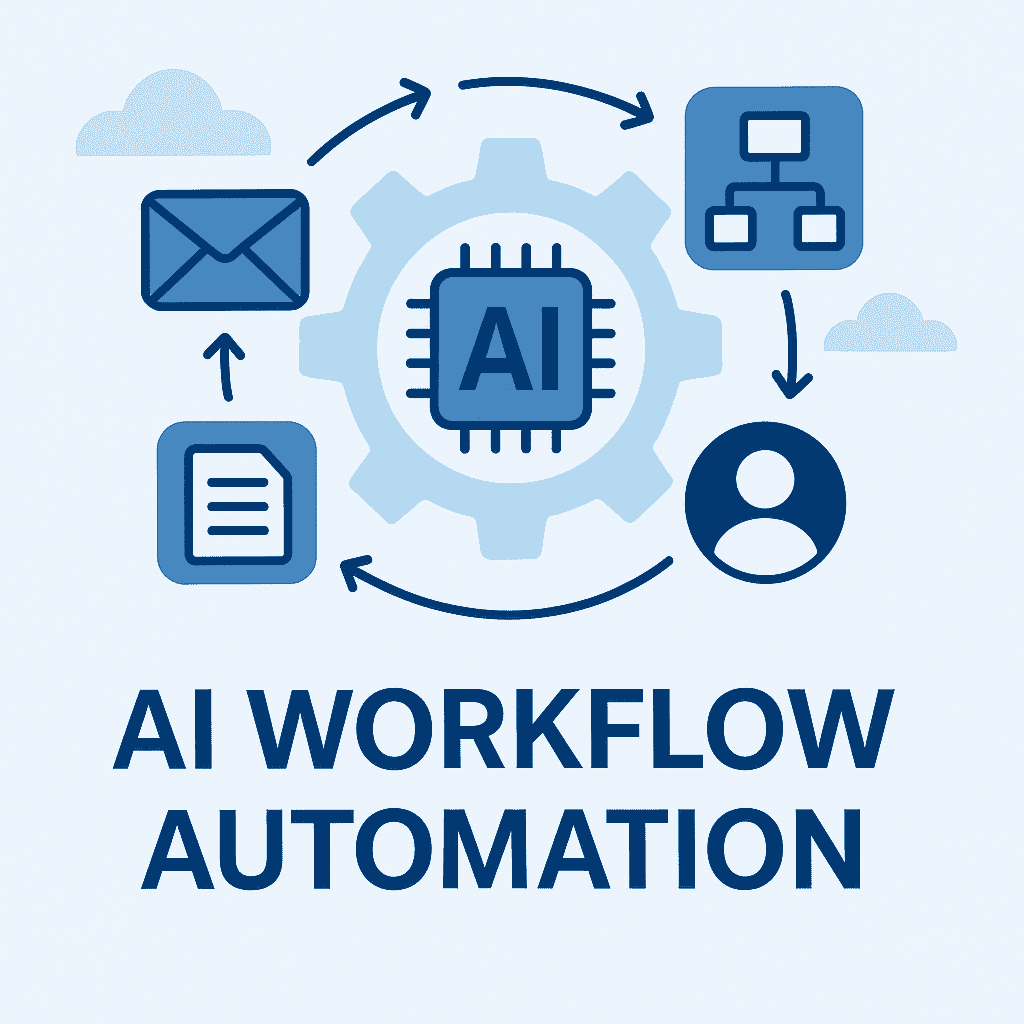
In an era defined by rapid digital transformation, organizations are under constant pressure to operate faster, smarter, and more efficiently. Artificial intelligence (AI) has become a central force in meeting these demands, and one of the most impactful applications is AI workflow automation. This approach uses intelligent systems to streamline, optimize, and in many cases fully automate complex business processes—unlocking new levels of productivity and innovation.
What Is AI Workflow Automation?
AI workflow automation refers to the integration of artificial intelligence technologies—such as machine learning, natural language processing (NLP), predictive analytics, and computer vision—into everyday business workflows. Unlike traditional automation, which relies on rigid rules and predictable tasks, AI-driven automation adapts to changing conditions, analyzes large amounts of data, and learns from patterns over time.
While rules-based automation can only follow predetermined instructions, AI automation can make decisions, identify anomalies, and even improve workflows autonomously.
Why AI Workflow Automation Matters
Businesses today must process enormous amounts of data, manage increasingly complex systems, and respond to customers faster than ever. AI workflow automation addresses these challenges by:
1. Increasing Efficiency
AI eliminates repetitive tasks such as data entry, scheduling, document processing, and reporting. Employees spend less time on administrative work and more time on strategic, creative, or customer-focused tasks. This shift boosts overall productivity and reduces operational bottlenecks.
2. Reducing Human Error
Manual workflows often lead to mistakes—from typos to misinterpretations to overlooked details. AI systems perform tasks consistently and accurately, significantly lowering error rates and ensuring high-quality outputs.
3. Enhancing Decision-Making
By analyzing historical and real-time data, AI tools generate insights that help leaders make informed decisions. Predictive models can forecast demand, identify risks, uncover trends, and recommend next steps—turning raw data into actionable intelligence.
4. Improving Customer Experience
AI-powered workflows enable faster responses, personalized interactions, and seamless service delivery. Whether through chatbots, automated ticket routing, or sentiment analysis, businesses can resolve issues more quickly and tailor solutions to individual customers.
5. Scaling Operations
AI automation allows organizations to scale without proportionally increasing staff or infrastructure. Workflows can expand to handle greater volumes of data, transactions, or customer inquiries with minimal human involvement.
Common Use Cases of AI Workflow Automation
AI workflow automation is transforming nearly every industry. Some notable examples include:
Customer Service: Automated chatbots, call routing, and AI-based response suggestions.
Finance: Fraud detection, invoice processing, document verification, and risk assessment.
Human Resources: Resume screening, interview scheduling, onboarding processes, and employee analytics.
Healthcare: Automated appointment systems, patient triage, and medical image analysis.
Sales & Marketing: Lead scoring, personalized campaign automation, and predictive customer behavior.
Operations & Supply Chain: Inventory forecasting, demand planning, and logistics optimization.
These applications not only reduce manual workload but also enhance the accuracy, speed, and intelligence of business operations.
Key Technologies Behind AI Workflow Automation
To function effectively, AI automation relies on several core technologies:
Machine Learning (ML): Recognizes patterns and improves predictions through training data.
Natural Language Processing (NLP): Enables systems to understand and interpret human language.
Robotic Process Automation (RPA): Executes repetitive tasks, enhanced when combined with AI to handle unstructured data.
Computer Vision: Analyzes images, videos, and visuals for tasks like document scanning or defect detection.
Predictive Analytics: Anticipates future outcomes based on data trends.
Together, these technologies create “intelligent workflows” capable of handling tasks previously thought to require human judgment.
Challenges and Considerations
While AI workflow automation offers tremendous benefits, organizations must navigate challenges such as:
Ensuring data quality and privacy
Integrating AI tools with legacy systems
Managing cultural shifts within the workforce
Avoiding over-automation that removes essential human oversight
A thoughtful strategy, clear objectives, and proper change management are essential for successful implementation.
The Future of Work with AI Automation
As AI continues to evolve, workflow automation will become even more intuitive, autonomous, and deeply embedded across industries. Future systems will not only execute tasks but orchestrate entire business processes, predict issues before they arise, and collaborate seamlessly with human teams.
Organizations that embrace AI workflow automation today are positioning themselves for long-term success—achieving new efficiencies, enhancing customer experiences, and unlocking innovative opportunities that redefine the future of work.