

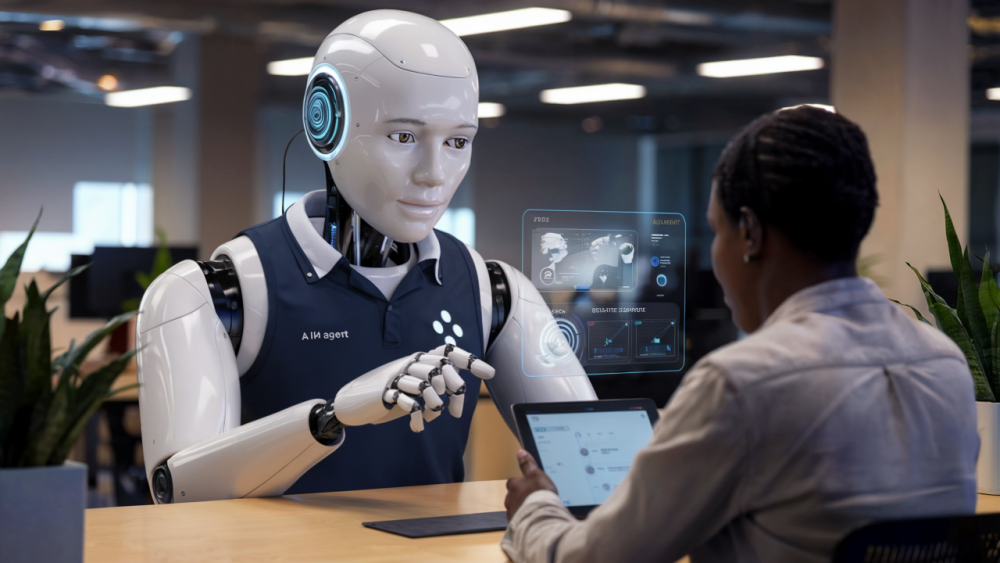
Customer experience in the U.S. has been slipping for a while now, and a lot of companies are starting to feel the fallout. People want quicker, more personal help, but most teams are managing complex processes across multiple touchpoints. That’s one reason AI agents are getting so much attention. They give companies a way to handle the pressure without stretching their support teams too thin. These agents offer faster and more personalized support.
Right now, around 51% of companies are exploring how these agents can fit into their day-to-day operations. And they’re not just basic chatbots anymore. Instead of waiting for a customer to ask something, they can step in early and guide them before an issue grows. For businesses, the real opportunity is choosing AI systems that can adjust as customer needs change and boost customer experience.
Companies that leverage AI agent development services can build solutions that handle immediate customer needs and improve through analytical insights. By 2029, Agentic AI will handle 80% of common customer service issues without human help.
Understanding Intelligent AI Agents in Business Context
AI agents have reshaped how businesses approach customer and employee support. Unlike conventional software, these agents work autonomously and adapt to changing circumstances.
AI Agents vs Traditional Chatbots: Key Differences
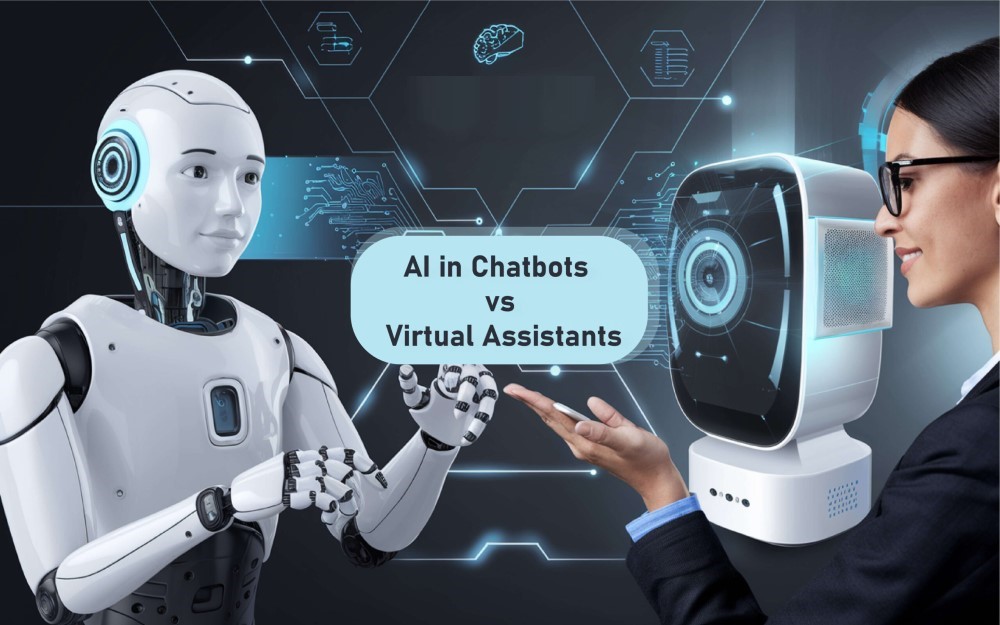
The approach and modus operandi of an AI agent differ from the majority of the chatbots people have been familiar with. While older chatbots rely on set scripts and respond only when certain keywords appear, AI agents take a more flexible approach. They can understand intent, interpret the context behind a question, and stay consistent across longer conversations. As a result, their responses feel more connected to what the user is trying to get done.
The main differences include:
Intelligence Level
- Chatbots: Confined to predefined responses
- AI agents: Make predictive, autonomous decisions based on context
Learning Capabilities
- Chatbots: Static, with no ability to improve over time
- AI agents: Continuously learn from interactions and refine through feedback loops
Conversational Ability
- Chatbots: Limited to simple keyword recognition
- AI agents: Handle complex, nuanced conversations with contextual awareness
Integration Flexibility
- Chatbots: Often siloed and restricted to narrow functions
- AI agents: Seamlessly integrate with multiple business systems, scaling as organizational needs evolve
Autonomous agents in AI can understand user needs, find the best solution path, and take independent actions across different channels and languages. Chatbots simply repeat information, while AI agents think through problems.
Proactive vs Reactive Support Models
The rise of proactive support models marks another breakthrough. Reactive systems wait for users to report problems. Proactive AI anticipates needs before they surface.
Proactive AI assistants analyze huge volumes of data to spot patterns and predict future behaviors or issues. They monitor live interactions to deliver customized and relevant solutions. Users get faster, smoother experiences since they don't need to initiate requests or fix issues themselves.
Role of AI Agent Development Services in Modern CX/EX
AI agent development services help organizations move from reactive operations to predictive strategy. Companies can build systems that automate tasks today and grow continuously tomorrow.
Modern AI agent development companies create solutions that:
- Handle repetitive tasks so teams can focus on strategy and innovation
- Retain context, learn priorities, and adjust tone in real time
- Link different systems for smooth information flow
These services give companies a practical starting point for real digital change. Instead of drowning in scattered data or clunky processes, teams start to get clearer information and small bits of automation worked into their everyday routines. Over time, the different systems in the organization begin to connect more seamlessly. It’s not just about speeding up tasks—these changes make the business better prepared for whatever comes next.
How AI Agents Work Across Customer and Employee Journeys
"Before AI, nurses were spending time on non-clinical intake. Now, they can immediately begin injury assessments, just like doctors can step into an examination room and know exactly who the patient is." - Cindy Gambosh, Director of Workforce Automation, CorVel
A sophisticated framework powers both customer and employee experiences through AI agents. These systems combine advanced capabilities that work together to provide uninterrupted support.
Intent Recognition and Sentiment Analysis in CX
AI agents process user queries through intent recognition systems to determine customer goals. These systems go beyond basic keyword matching and analyze relationships between words and sentences to understand the mechanisms.
In real time, the technology also extracts sentiment data, detecting emotions that range from satisfaction to frustration. Sentiment analysis helps agents adapt their responses and identify potential escalation needs. For instance, autonomous agents in AI can offer better support or connect users with human representatives when they detect negative sentiment.
Workflow Automation in HR and IT Support
AI agent development services optimize repetitive processes in workplace settings. HR departments use these systems to handle time-sensitive tasks such as:
- Benefits enrollment and policy questions
- Time-off requests and approvals
- Document retrieval for pay stubs and tax forms
IT support teams use autonomous agents to manage password resets, account unlocks, and software access provisioning without human intervention. Support teams can focus on strategic initiatives as automation handles routine tickets.
Real-Time Personalization Using Backend Integrations
Backend integration creates powerful personalization capabilities. AI agents create a unified view of customer data by connecting with multiple enterprise systems at once. Through this connected foundation, dynamic recommendations adjust in real time to evolving priorities.
These enterprise systems keep information synchronized across channels. Users get consistent experiences whether they participate via web, mobile, or email. The result delivers customized interactions that feel natural rather than automated.
Human-in-the-Loop Escalation Protocols
An AI agent development company implements human-in-the-loop (HITL) protocols as safety mechanisms, despite advances in autonomy. HITL systems follow a clear pattern: the agent suggests an action, waits for human review, then proceeds after approval.
This approach builds trust with users, prevents irreversible mistakes, and maintains accountability. Escalation might happen due to low confidence scores, high-stakes decisions, user requests, negative sentiment detection, or ethical concerns. HITL represents a fundamental requirement for reliable AI systems that balance efficiency with human judgment rather than serving as a temporary solution.
Use Cases of AI Agents in Customer and Employee Support
AI agents now solve real business problems in multiple business areas. The following use cases show how companies use artificial intelligence agents to tackle specific challenges.
1. Customer Service: Order Tracking, Refunds, and Product Queries
AI agents make it easier for companies to handle large volumes of customer questions without overwhelming their teams. In ecommerce, for example, these systems can manage routine queries about orders, returns, or payments on their own. When this work moves off employees’ plates, customers get faster answers, and internal teams can spend more time on projects that support growth and new ideas.
2. HR support: Onboarding, Benefits, and Policy Queries
AI agents make HR teams more efficient by handling routine tasks, especially during onboarding. They fill out forms, manage document signing, and answer policy questions 24/7. The AI platforms also create customized first-day content for new employees, depending on their job and location. By offloading the repetitive elements to AI, human resources teams have more time to craft a welcoming experience for onboarding.
3. IT Helpdesk: Password Resets and System Troubleshooting
IT support teams benefit greatly from AI agent services. Routine tasks like password resets, once a major drain on helpdesk time, are now handled automatically. By offloading these repetitive requests, AI agents free IT staff to focus on complex problems that require human expertise.
4. Sales and Marketing: Personalized Recommendations
AI agents analyze customer data to suggest products that match each person's interests. They check what customers browse, buy, and their loyalty status to make relevant suggestions. Retailers who use AI-powered recommendation systems see significant participation from their subscribers.
5. Retail and Travel: Omnichannel Support and Itinerary Planning
An AI agent development company can help create smooth experiences across all channels in retail and travel. In retail, AI keeps customer support aligned across websites, social media, and stores. In travel, platforms like Google Maps and Google Travel use AI to combine flights, hotels, and local information into personalized recommendations for travelers.
Conclusion
AI agents have changed the game when it comes to customer and employee support in businesses. Moving beyond traditional chatbots, the systems provide proactive assistance, as opposed to simply answering questions. Organizations are given access to powerful tools that learn and improve through real-time data analysis.
These AI solutions deliver clear benefits to businesses. They work around the clock to provide consistent support and cut down response times that today's customers demand. Also, they let human agents tackle complex problems that need emotional intelligence.
Companies that adopt AI agent technologies and invest in development services will lead the market. Reliable strategies combine autonomous features with human oversight to create support systems that balance speed with empathy. Artificial intelligence agents won't replace human support teams but boost their capabilities to build stronger connections between businesses and their customers.

Many businesses today struggle with staying on top of innovation and increasing revenue.
The customer experience and overall behavior add a layer that places greater focus on UX/UI designs to create the level of user-friendliness needed for sustained customer retention, engagement and brand promotion.Design tools that are algorithm-driven assist with constructing a UI as well as prepare content and the overall personalization of the user experience.
https://is.gd/DLAxlJ INCREASED PRODUCTIVITYThe fact is, UX and AI are basically commingled in the new design era.
It is a widely held belief that AI will inevitably replace designers that the intrinsic need for human-driven UX.
According to Futurist Thomas Frey, “2 billion jobs will disappear by 2030, and robots will probably take over a portion of jobs which are now occupied by humans.” By using AI in UI design, the overall productivity of designers will increase via the training of robots to conduct tasks such as color scheme adjustment and resizing, which gives designers the ability to focus on more complex UI design elements.IMPROVED DESIGN SYSTEMSBy utilizing AI in UI design, overall designer productivity will be increased as robots can be trained to perform specific design elements that will essentially allow designers to place their focus on strategic and complicated UI design elements.
When machines automate these repetitive tasks, human creativity is increased along with elements such as automation, the creation of more effective functions within modular design systems and personalized system.OPTIMIZATION AND SPEEDArtificial intelligence focuses primarily on increasing speed and optimization.