

Chatbots used to follow scripts. They answered a few fixed questions and then failed. Most customers could tell the moment the bot hit its limits. The experience felt rigid, predictable, and often frustrating. That era is ending.
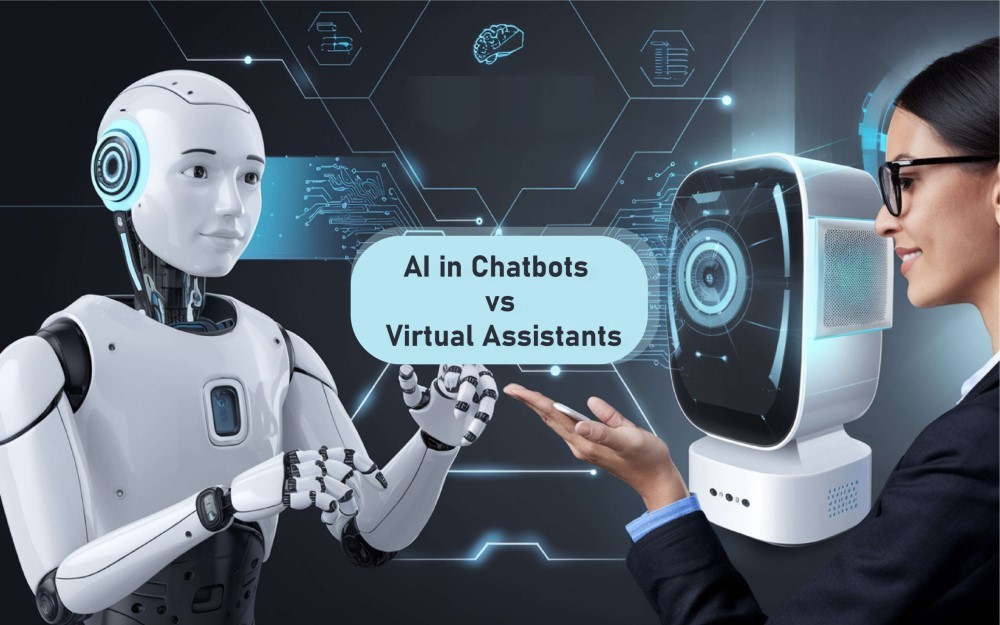
Today’s chatbots behave differently. They are powered by complex models, real-time data, and careful engineering. They can remember what you said a few minutes ago, understand context, take action across systems, and finish tasks without passing the user around. They feel less like automated menus and more like capable digital coworkers.
That shift did not happen by accident. It is the result of deep, behind-the-scenes work by AI development services and specialist teams inside every artificial intelligence development company. These teams tune models, shape conversational flows, and build integrations that make interactions feel natural instead of mechanical.
Why Enterprises are Investing in Advanced Conversational AI
Spending follows value. The overall artificial intelligence market continues to expand quickly. Recent estimates put the global AI market at roughly USD 279 billion in 2024, and projections show steep growth over the next decade.
The chatbot and conversational AI market shows that companies are already buying solutions. In 2024, analysts estimate the market to be somewhere between USD 7.8 billion and USD 11.6 billion, and the projections keep climbing. The reason is simple: natural language models are getting better, and more enterprises are confident enough to roll these tools into real operations. It’s a sign that conversational AI has moved from “interesting experiment” to a core part of how businesses serve customers and streamline work.
Analysts predict that agentic AI will transform customer service by automating the majority of routine issues and reducing operational effort. That is a structural shift for service operations and a major reason firms hire artificial intelligence development services.
Essential AI Development Services for Chatbots
A lot of buzz is about large language models. But bringing a model into production requires many skills beyond the model itself. A typical artificial intelligence development company will combine these capabilities:
- Data Engineering: Clean, integrated, and governed data makes language models useful for business tasks.
- Model Selection and Fine Tuning: Off-the-shelf models are a start. Real-world performance usually needs customization.
- Integration Engineering: The assistant must reach CRM records, inventory, billing engines, and compliance controls.
- Conversation Design and Testing: Real conversations are complex. Designers create natural flows, anticipate edge cases, and build graceful error-handling into the experience.
- Monitoring and Retraining: Usage patterns evolve. The system must adapt without breaking.
This end-to-end capability is why firms choose external AI development services. They buy not only technology but the operational framework that makes AI reliable.
Real Business Impacts Customers are Experiencing
Speed and resolution matter. A Freshworks analysis depicts that chatbot-resolved issues are completed significantly faster than human handoffs, with strong satisfaction scores. Users get answers faster. Companies reduce talk time and rework.
Finance and retail are early beneficiaries. Morgan Stanley predicts that nearly half of online shoppers will use AI agents by 2030, which could add about USD 115 billion to U.S. ecommerce sales. Those are not small impacts. They reflect better product discovery, personalized offers, and automated order handling.
The Technical Ingredients of Next-Gen Virtual Assistants
A modern virtual assistant is built on several interconnected layers, each serving a critical role:
- Understanding Layer: Natural language understanding and entity extraction.
- Reasoning Layer: Context management, business rules, and retrieval of relevant knowledge.
- Action Layer: Orchestration: calling APIs, updating records, initiating workflows.
- Safety and Governance: Access controls, logging, audit trails, and human escalation paths.
An experienced artificial intelligence development services team designs and integrates these layers, so the assistant operates predictably, securely, and with business-grade performance.
Design and Human Factors that Separate Success from Failure
Technical plumbing alone does not guarantee adoption. Human factors matter. Artificial intelligence services and solutions embed UX research into conversational design. They measure confusion points and improve phrasing. They treat handoff as a feature, not a failure.
Short, clear responses. Natural fallbacks. Confident confirmations. These details make enterprise deployments stick and earn lasting user trust.
Governance, Risks, and How Developers Mitigate Them
Generative models are powerful, but they carry inherent risks: hallucinations, data leakage, and uncontrolled outputs. That is why top artificial intelligence development companies put governance first.
Key mitigations include:
- Strict access controls and data masking.
- Response filters and fact-checking layers.
- Audit trails for every conversational turn.
- Human review loops for high-risk outcomes.
These controls are not optional. They justify enterprise procurement and reduce regulatory exposure.
What to Expect When You Hire an Artificial Intelligence Development Company
While deliverables and timelines may vary, a trusted AI partner will typically provide:
- A discovery phase that maps use cases and data sources.
- Rapid prototype that proves core capabilities.
- A phased rollout with metrics and guardrails.
- Ongoing managed services for improvement.
An experienced partner will also help you measure ROI. They track containment rates, resolution times, customer satisfaction, and downstream revenue impact.
Closing Thought
Next-gen chatbots and virtual assistants aren’t just smarter. They’re being built in a different way. Good ones mix powerful engineering with real data, thoughtful design, and effective oversight. They need teams who understand both the tech behind the models and the parts of your business that drive revenue or reduce cost. When all of that fits together, the experience feels less like a script and more like genuine support.
If your organization is exploring conversational AI, begin with the outcomes that matter most. What’s slowing people down? What’s costing money? What would a “win” look like in day-to-day operations? Being clear here saves months later. When you engage with an artificial intelligence development company, ask for results from real projects, not broad promises.
Get a roadmap that shows how early pilots connect to business value, so everyone knows what success should look like before anything is built. Make sure safety and monitoring are part of the plan from day one. These guardrails matter more as teams scale.
The tools are ready. The business cases are proven. The value is there for companies that execute well. When you bring in the right talent, routine service requests stop slipping through the cracks. Customer conversations become faster. Teams gain time back. And over time, something more compelling emerges.
Your chatbot evolves into a quiet source of margin. That is the true promise of next‑generation AI assistants. They don’t just automate; they elevate how your business works.