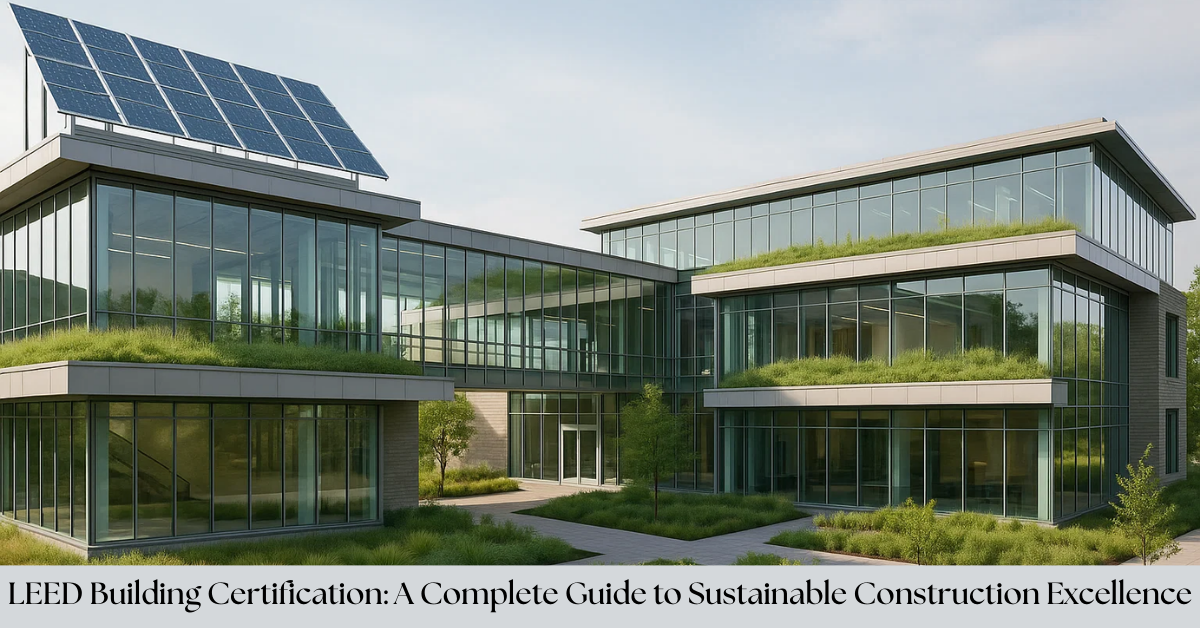
Sustainable construction has shifted from a niche trend to a global requirement. As cities expand and environmental pressure intensifies, organizations are increasingly turning toward recognized sustainability standards to guide their building strategies. Among these, LEED Building Certification has emerged as one of the most widely adopted systems for validating a project’s environmental performance. Over the years, LEED has helped shape how buildings are designed, constructed, operated, and maintained, promoting efficiency and long-term environmental responsibility.
This article breaks down the essentials of LEED, its process, rating systems, advantages, and why sustainability-focused building strategies have become the backbone of modern development.
What Is LEED and Why Does It Matter?
LEED stands for Leadership in Energy and Environmental Design, a globally recognized green building certification program developed by the U.S. Green Building Council (USGBC). It provides measurable standards to assess how environmentally responsible a building is across its lifecycle — from conceptual design to daily operations.
The core aim is simple but demanding:
Reduce the negative environmental impact of buildings while improving performance, occupant well-being, and long-term efficiency.
LEED is used across:
- Commercial buildings
- Residential complexes
- Industrial facilities
- Educational institutions
- Healthcare centers
- Government and public infrastructure
The criteria evaluate multiple performance categories, ensuring sustainability is not limited to a single metric but woven into the building’s entire ecosystem.
Key Categories Evaluated Under LEED
LEED certification evaluates buildings holistically across several essential sustainability dimensions.
1. Energy Efficiency
This includes reducing energy use through advanced HVAC systems, controlled lighting strategies, renewable energy integration, and improved insulation. Points are awarded for optimizing performance above industry standards.
2. Water Conservation
LEED emphasizes minimizing water consumption through efficient fixtures, rainwater harvesting, wastewater reuse, and landscaping that requires less irrigation.
3. Material Selection
Projects are encouraged to use recycled, low-carbon, low-VOC (volatile organic compounds), and regionally sourced materials to reduce environmental impact.
4. Indoor Environmental Quality (IEQ)
Good ventilation, natural lighting, clean air, and thermal comfort directly influence occupant well-being. LEED places significant weight on IEQ.
5. Location & Transportation
Projects earn points by promoting walkability, access to public transportation, reduced parking footprints, and electric vehicle (EV) charging infrastructure.
6. Sustainability of Site Development
This covers ecosystem preservation, reduced soil pollution, stormwater management, open spaces, green roofs, and sustainable landscaping.
7. Innovation & Design
Teams are rewarded for pioneering unique sustainability solutions beyond standard LEED requirements.
How LEED Certification Works
LEED certification is structured around a detailed scoring system, where buildings accumulate points depending on how many sustainability criteria they satisfy.
Certification Levels
Certified: 40–49 points
Silver: 50–59 points
Gold: 60–79 points
Platinum: 80+ points
The process is highly structured, ensuring clarity and transparency at every stage.
The LEED Certification Process: Step by Step
A clear roadmap helps prevent delays, miscommunication, and design inefficiencies. The general phases include:
1. Registration
Projects are registered on the LEED online platform. Documentation requirements, fees, and certification pathways are established here.
2. Integrative Planning
This phase sets the sustainability vision of the project. Architects, engineers, contractors, environmental experts, and facility managers collaborate early to design an optimal, resource-efficient structure.
3. LEED Scorecard & Strategy
The team evaluates which credits are achievable and aligns them with project goals. This includes strategies for water reduction, energy modeling, materials, and site optimization.
4. Documentation & Implementation
Each strategy must be validated through reports, photos, calculations, modeling, and vendor data. Implementation is monitored closely to match LEED requirements.
5. Review by GBCI
The Green Business Certification Inc. (GBCI) conducts an official review, verifies documentation, and provides comments or requests for clarification.
6. Final Certification
Once everything is validated, the certification level is awarded. The project then earns its place in the global community of sustainable structures.
Types of LEED Rating Systems
LEED is not a one-size-fits-all model. Different types of buildings require different sustainability approaches. Some key systems include:
LEED for Building Design and Construction (BD+C)
For new buildings and major renovations.
LEED for Interior Design and Construction (ID+C)
For commercial interiors that require sustainable upgrade.
LEED for Existing Buildings: Operations & Maintenance (O+M)
For improving operational efficiency in already-constructed buildings.
LEED for Homes
Focused on residential structures that promote healthier living spaces.
LEED for Neighborhood Development (ND)
Supports large-scale urban development that promotes community sustainability.
Selecting the right system requires clarity about the project type, lifecycle stage, and sustainability intention.
Why LEED Certification Benefits Modern Infrastructure
Sustainability isn’t just a buzzword anymore — it’s a strategic advantage with real operational and financial returns.
1. Lower Operating Costs
Efficient energy and water systems significantly reduce monthly utility expenses. Over the building’s lifespan, these savings often surpass the cost of certification.
2. Enhanced Market Value
Certified buildings tend to command higher lease rates, resale values, and occupancy levels due to their superior performance and reduced risk profile.
3. Better Indoor Air & Occupant Health
LEED promotes ventilation, air purification, and non-toxic materials, which improve employee productivity and reduce health complaints.
4. Environmental Leadership
Organizations gain strong ESG (Environmental, Social, Governance) alignment, improving brand reputation and investor appeal.
5. Compliance & Future-Proofing
As environmental regulations become stricter worldwide, LEED-certified buildings already meet or exceed these standards.
Smart Strategies for Successfully Achieving LEED
While LEED is rigorous, it becomes manageable with structured planning.
Here are proven strategies that teams rely on:
Integrate sustainability planning from the conceptual design stage
Conduct energy and daylight simulations early
Use low-flow fixtures and advanced metering tools
Select responsible material suppliers
Reduce construction waste through recycling and reuse
Comply strictly with documentation requirements
Encourage collaboration between architects, engineers, contractors, and environmental experts
Buildings that treat sustainability as an inherent design principle rather than an add-on achieve higher scores with less friction.
The Future of Sustainable Construction
The global shift toward green infrastructure is accelerating. Corporations, governments, and communities are setting ambitious climate goals, and buildings are central to that mission. LEED continues to evolve in response — integrating renewable energy, carbon reduction strategies, life-cycle analysis, smart building technology, and nature-based design solutions.
The future belongs to buildings that are not merely efficient but actively regenerative — structures that respect ecosystems, enhance community well-being, and operate with minimal environmental footprint.
Conclusion
LEED certification has transformed the global building industry by offering a robust framework for sustainability, performance, and responsible development. As awareness grows and environmental risks intensify, sustainable construction is no longer optional — it is the foundation on which the next generation of resilient, efficient, and future-ready buildings will stand. Organizations adopting this path not only save resources but also create healthier environments and long-term operational value. The growing demand for experts capable of guiding this transition highlights the essential role played by Green Building Consultants.