


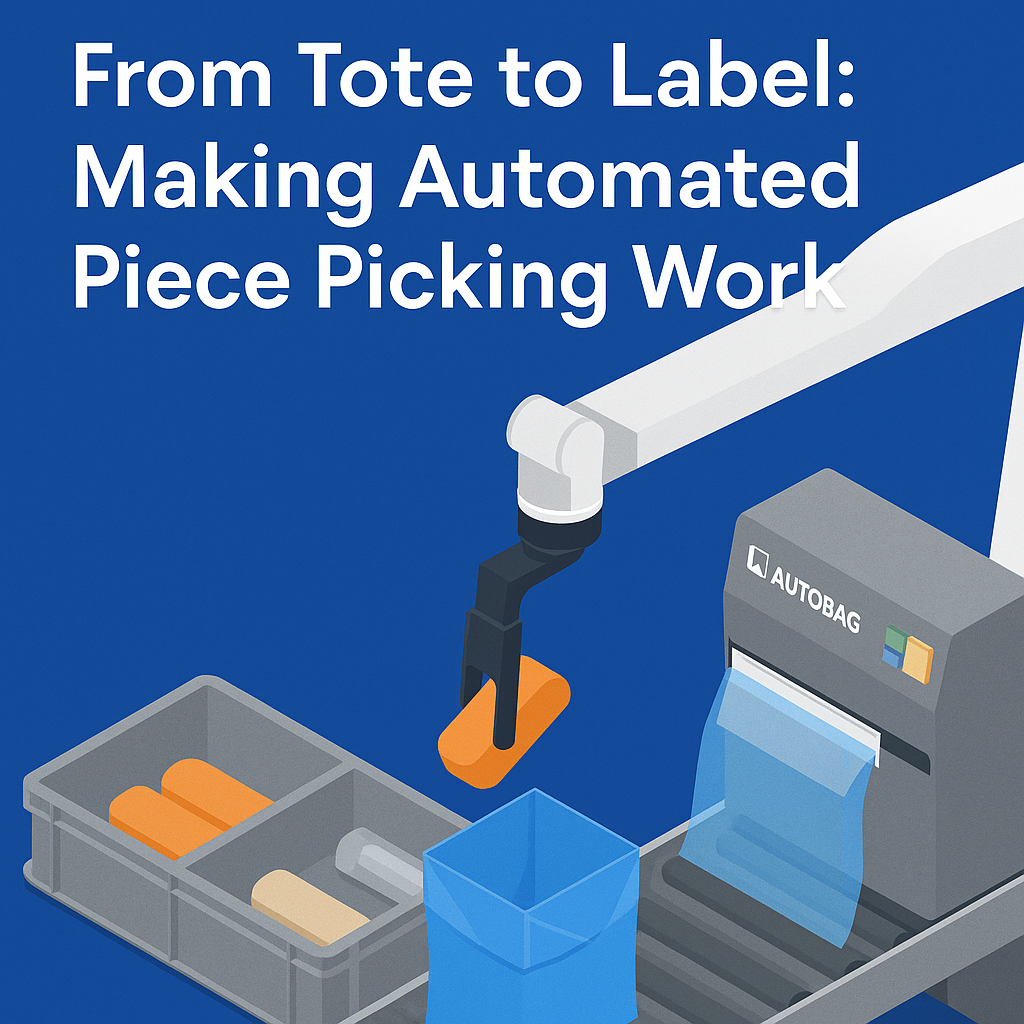
Fast, accurate fulfillment is now the baseline. To keep promises without adding headcount, many operations are building an automated piece picking lane anchored by a robotic piece picking system. When designed well, it creates a steady pick-to-pack rhythm, fewer errors, and a shorter path from order release to ship label.
How the cell actually runs
At the core sits an AI picking robot. Vision software identifies each item in a tote, selects a stable grasp, and the arm executes a precise transfer. In most layouts the arm functions as a pick and place robot, handing the product to the next step into a chute, a carton, or directly to packaging. Pair this cell with robotic bagging and you enable direct-to-bag fulfillment: the robot drops the item into an open bag, the bagger seals and labels it, and the parcel heads straight to sortation. Fewer touchpoints mean faster cycle times and consistent presentation at weigh/scan.
Why it matters for operations
Good warehouse automation picking is less about flashy peak pph and more about consistency you can plan around. Vision-confirmed picks reduce mispicks and reships. Standardized handoffs keep pack stations balanced. When volume spikes or staffing dips, a stable automated lane protects promise dates without expanding floor space.
What to validate before you buy
Real performance depends on your inventory and presentation. Run a focused pilot and measure what counts:
SKU coverage & accuracy: Include rigid boxes, soft mailers, glossy films, and clear clamshells. Track grasp success and exception rates over multi-hour runs.
Sustained throughput: Verify average picks per hour under your lighting and tote pitch; peaks alone can mislead.
Integration depth: Confirm clean handshakes with WMS/WES, scanners, scales, and the bagger so confirmations and labels post automatically.
Changeover & learning: New items should take minutes, not days. Favor systems that improve grasp strategies over time.
Uptime & service: MTBF/MTTR, spare-parts availability, and response commitments matter as much as robot specs.
Comparing vendors with data not hype
You’ll see search debates like piecepicking vs osaro when shortlisting options. Treat them as a prompt to run side-by-side trials using your SKUs, identical fixtures, and a neutral scorecard: coverage, sustained pph, exception recovery, integration effort, and support quality. The best fit is the one your team trusts on a peak Monday afternoon.
Getting started
Begin with a high-volume lane single-line orders or top movers to prove the numbers quickly. Once stable, replicate horizontally and tighten upstream standards (slotting, tote fill, label placement) to multiply downstream gains.
A thoughtful robotic piece picking system driven by an AI picking robot, orchestrated as pick and place, and finished with robotic bagging turns item-level work into a dependable engine for modern fulfillment.

How far is your office from your best PG convenience?This is by a wide margin the main highlight consider while picking convenience.
You will spend a significant piece of your day here, and you could be burning the midnight oil too in your underlying years.