

When Familiar Systems Begin to Feel Unfamiliar
Every enterprise reaches a moment when the systems that once supported growth begin to quietly resist it. It doesn’t happen suddenly. It happens through small signs. A user request takes longer to implement than it should. A minor enhancement requires unexpected testing. A process breaks after years of functioning flawlessly. Teams fix the issues, often without thinking too deeply about the broader pattern.
But eventually, someone asks the question no one wants to ask at first: “Are our systems holding us back?”
That question becomes the beginning of a journey—one that many leaders don’t expect, but quickly realize is necessary. A journey of rediscovering how their technology aligns with the business they’ve become, instead of the business they once were. This is where the story of legacy modernization begins.
Seeing Legacy Systems Through a New Lens
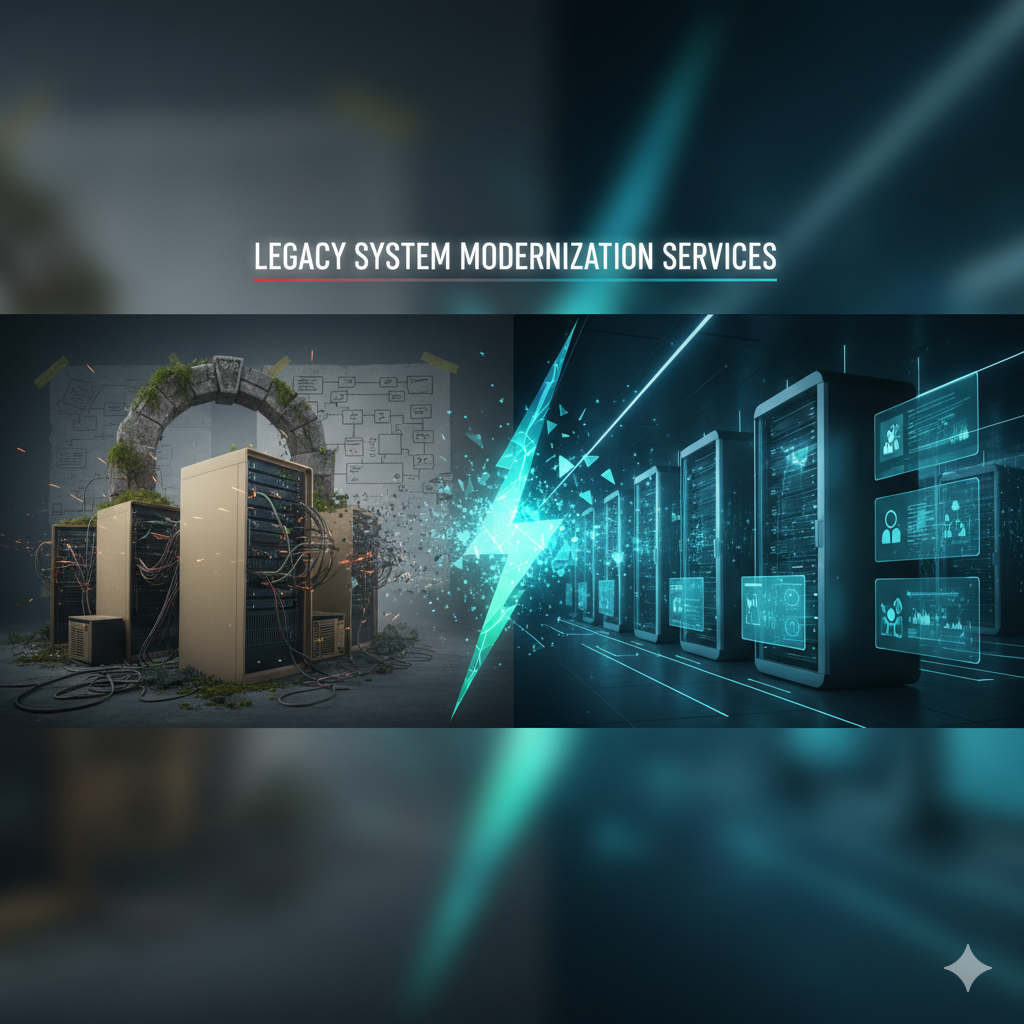
When organizations finally pause to examine their legacy systems with honesty, a new reality comes into focus. These systems were built for a different time—one with slower customer expectations, predictable workloads, simpler compliance needs, and straightforward integrations. They served their purpose well. They carried the business through critical years. But the world changed around them.
Modern enterprises now operate in an environment defined by:
• Agile transformation
• Data-driven decision making
• Digital customer experiences
• Global operations
• Security complexities
• Rapid innovation cycles
Legacy environments struggle to keep up not out of failure, but because they were never designed for this era.
This realization often leads executives toward resources such as Why Every CIO Should Prioritize Legacy Modernization in 2025—a guide that makes modernization less intimidating and more strategic.
The Hidden Weight Enterprises Carry
Legacy systems create a kind of invisible weight. Organizations don’t notice it at first. They work a little harder to keep systems stable. They build workarounds. They create custom scripts. They delay certain enhancements because the risk feels too high. Over time, small inefficiencies accumulate into enterprise-wide friction.
Teams begin experiencing:
• Slower Delivery Cycles: Delays in innovation because foundations cannot support modern development speed.
• Growing Security Concerns: Vulnerabilities surface as frameworks age and compliance needs rise.
• Integration Challenges: Difficulty connecting older systems with cloud platforms and new tools.
• Operational Inconsistencies: Unpredictable system behavior impacting productivity.
This is the weight modernization aims to lift.
A Story of Systems That Want to Evolve
The most powerful part of modernization is not the technology—it is the realization that systems want to evolve, just like the business. They hold years of institutional knowledge, business rules, process logic, and customer data. Modernization does not discard this value. Instead, it lifts it into a form that can support future plans.
That is what makes modernization not a replacement, but a renewal.
Understanding the Many Roads to a Modern Future
Every enterprise embarks on the modernization journey in its own way. Some begin with small steps, testing new integrations. Others start with planning, architecture reviews, or pilot migrations. Modernization is not a single path. It is a set of paths, each suited to a different business story.
Typical paths include:
• Rehosting: Moving existing systems to modern infrastructure without large code changes.
• Replatforming: Transitioning parts of the system to cloud-ready environments.
• Refactoring: Restructuring code to improve maintainability and performance.
• Re-architecting: Redesigning the system to support new digital models.
• Replacement: Introducing modern applications when legacy systems reach functional limits.
This isn’t just a technical decision—it is a strategic one.
Where the Right Tools Change the Entire Journey
Modernization is not carried out blindly. Organizations use sophisticated tools to understand dependencies, vulnerabilities, and structural patterns before making decisions. This is where a legacy modernization tool plays a crucial role.
It provides clarity where complexity once lived. It gives teams visibility into code structures, integration points, and high-risk areas. It transforms modernization from guesswork into guided execution.
Letting Go of Limitations Without Letting Go of What Works
Many leaders worry modernization means losing the stability their legacy systems provided. The truth is the opposite. Modernization keeps the stability and replaces the fragility. It preserves what made the system valuable while removing the constraints that hinder progress.
This is the heart of legacy modernisation—a process that respects legacy value while preparing the enterprise for its next chapter.
The Human Story Behind Modernization
Behind every modernization project is a team of people. Developers who maintain the system. Analysts who rely on it for insights. Operations teams who troubleshoot issues at odd hours. Leaders who make decisions under uncertainty.
Modernization affects all of them.
When systems evolve:
• Work feels lighter
• Problem-solving becomes faster
• Risks reduce
• Collaboration improves
• Creativity returns
Modernization, at its core, is a human transformation as much as a technical one.
When Modernization Becomes a Turning Point
Organizations describe the turning point differently. Some recognize it when customer satisfaction begins to slip. Others see it when innovation slows. A few experience a costly outage that reveals systemic fragility.
But most discover it quietly, during conversations about growth and competitiveness. They ask:
“Can our systems take us where we want to go?”
Modernization becomes the answer.
The path becomes clearer when teams explore resources like 5 Cost-Saving Lessons From Successful Legacy Modernization Projects, which show how organizations reduce cost, minimize risk, and accelerate value during modernization.
Modernization as a Catalyst for Enterprise Reinvention
Once modernization begins, enterprises start noticing changes well before the process completes. Systems become faster. Teams release features sooner. Security improves. Integrations stabilize.
These early wins signal something profound:
The enterprise has shifted from coping with constraints to shaping future possibilities.
This shift affects strategy, culture, and even customer experience. Suddenly, ideas once dismissed as impossible now feel achievable.
Building for Future Growth Instead of Past Limitations
Modernization frees enterprises from architectural choices made years ago. It allows systems to be designed for future opportunities, not past constraints.
This future orientation supports:
• Expansion Into New Markets: Systems scale flexibly as business grows.
• Better Digital Experiences: Customers benefit from faster, more reliable platforms.
• Better Operational Resilience: Modern systems maintain stability under heavy load.
• Smarter Automation: Organizations adopt modern workflows without resistance.
The organization moves from lagging to leading.
Security Strengthens When Modernization Happens
Security threats evolve faster than legacy environments can adapt. Older systems often depend on outdated authentication methods, unsupported frameworks, or hard-coded logic that introduces risk.
With modernization, enterprises gain:
• Upgraded frameworks
• Improved encryption
• Reduced attack surfaces
• Better compliance alignment
• Stronger identity management
These improvements turn security into a business accelerator instead of a barrier.
Helping Systems Catch Up With the Business Vision
Modernization is about aligning enterprise technology with enterprise ambition. Many organizations discover that their business strategy has evolved far beyond what their legacy platforms can support. Modernization brings technology back into alignment with goals, vision, and long-term direction.
Teams feel the difference. Leaders see the impact. Customers experience the results.
The Beginning of a New Digital Chapter
Modernization does not end with deployment. It marks the beginning of a new chapter, where systems evolve continuously, teams innovate confidently, and the organization grows without technological resistance.
This chapter is shaped by systems designed for:
• Adaptability
• Speed
• Security
• Innovation
• Longevity
And that is why organizations embark on modernization—not to replace the past, but to build the future.
Have Questions? Ask Us Directly!
Want to explore more and transform your business?
Send your queries to: info@sanciti.ai