


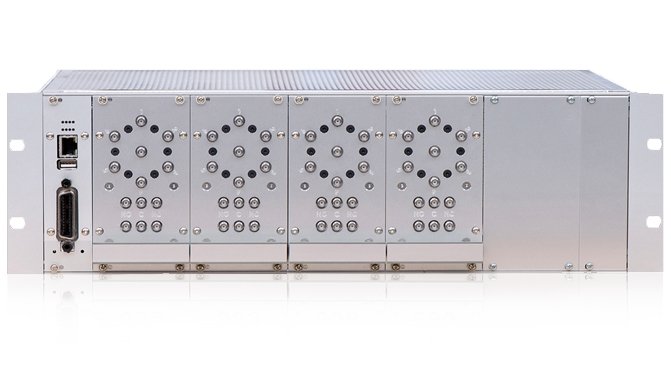
As wireless technologies accelerate toward 5G-Advanced, 6G, private networks, and mission-critical RF systems in 2025, the demand for cleaner signals, higher power handling, and more efficient test setups continues to surge. Whether it's communication infrastructure, defense radar, satellite telemetry, or high-density IoT deployments, every system today relies on smarter, faster, and more resilient RF components. Among these critical building blocks, the high power RF switch plays a transformative role—enabling seamless routing, signal integrity, and performance stability even under extreme conditions.
Modern wireless systems cannot afford downtime or inaccurate measurements. Higher frequencies, tighter bandwidth requirements, and heavy traffic loads have pushed traditional switch architectures to their limits. This is where high power RF switching technology steps in, bringing reliability, precision, and efficiency to both operational networks and RF test environments.
Before diving deeper, here’s a quick breakdown of what you’ll learn.
Key Takeaways
- Understand how a high power RF switch improves signal routing, test accuracy, and overall wireless system performance.
- Explore the expanding applications of high power switches across 5G, IoT, radar, satellite, and defense systems.
- Learn about key design features—like isolation, insertion loss, and linearity—that affect real-world performance.
- Discover practical selection and implementation best practices for labs, enterprises, and engineering teams.
- Get answers to common questions about performance, power handling, and switch reliability.
The Growing Importance of High Power Switching in 2025
The RF landscape today is more crowded than ever. Wireless devices are pushing higher transmission power, test labs are working with more complex MIMO and beamforming configurations, and network environments demand near-zero latency and exceptional uptime. This exponential growth has created new challenges:
Systems must handle increasingly high RF power levels.
Test setups need to accommodate diverse frequency ranges and dynamic routing.
Designers require components that remain accurate under temperature, load, and duty-cycle strain.
A high power RF switch enables these needs by providing safe, efficient, and repeatable RF path routing without degrading the signal chain. When integrated strategically, it supports higher throughput, extends device life, and enhances overall system reliability.
What Makes a High Power RF Switch Different?
High power switching technology goes beyond basic signal routing. These switches are engineered to tolerate significantly higher power levels—often tens, hundreds, or even thousands of watts—while maintaining stable electrical performance.
Key characteristics include:
1. Superior Power Handling
These switches dissipate heat more effectively and use rugged materials to withstand voltage peaks, continuous RF power, and pulsed operations.
2. High Isolation
Isolation ensures signals stay confined within their intended paths, reducing crosstalk and preventing interference in multi-channel environments.
3. Low Insertion Loss
Low insertion loss prevents signal degradation, allowing tests and transmissions to reflect true device behavior.
4. Fast Switching Speed
Rapid switching is essential in automated RF test systems, dynamic communication setups, and agile antenna arrays.
5. Reliability Under Stress
High power switches are designed to handle long duty cycles, ensuring stable performance in round-the-clock systems such as telecom networks or radar monitoring stations.
These features collectively enhance performance, efficiency, and accuracy across wireless systems.
Where High Power RF Switches Make the Biggest Impact
1. 5G and Emerging 6G Networks
Massive MIMO, beam steering, and carrier aggregation require extremely precise signal routing. A high power RF switch ensures clean transitions and protects sensitive components from overload.
2. Military and Defense Radar
Radar systems depend on high-power pulse transmissions. Switches must survive intense peaks without breakdown while keeping the signal pure.
3. Satellite & Aerospace Communication
With longer signal travel distances and strict reliability demands, switch performance directly influences mission stability.
4. RF Test & Measurement Labs
Automated test systems rely heavily on switching to route signals between devices, instruments, and antennas. High power switching ensures consistent, repeatable measurements.
5. Industrial IoT and Smart Infrastructure
Smart grids, factory automation, and large-scale sensors use strong RF signals, especially in busy or electromagnetically harsh environments.
Across these applications, a well-designed high power RF switch becomes a foundational component that supports scalability and long-term performance.
Challenges Modern Wireless Systems Face — and How High Power Switches Solve Them
1. High RF Load and Heat Dissipation
Wireless transmitters often work under continuous load. Without the right switching infrastructure, heat buildup can damage sensitive circuits.
Solution: High power switches use thermally optimized materials and mechanical architectures to dissipate heat effectively.
2. Maintaining Signal Integrity
With rising frequencies and more complex modulation, even minor signal distortion can disrupt performance.
Solution: Precision manufacturing and low-loss design help maintain spectral purity.
3. Multi-Channel Complexity
Advanced networks involve routing signals between many antennas, subsystems, and routers.
Solution: Matrix configurations of high power switches simplify routing and reduce manual intervention.
4. Equipment Downtime
Mechanical failures or poor switching speed slow down test timelines or interrupt network operation.
Solution: Ruggedized switches withstand millions of cycles, reducing maintenance and downtime.
Best Practices for Selecting and Implementing a High Power RF Switch
Choosing the right switch can significantly influence system longevity and performance. Here are practical insights for engineers, organizations, and educators alike:
1. Evaluate Power and Frequency Requirements
Always match the switch’s rated power to your system’s peak and continuous load. Consider frequency range carefully to avoid performance drops at higher bands.
2. Check Isolation and Insertion Loss
These two parameters directly affect signal quality. Higher isolation and lower insertion loss generally translate to cleaner performance.
3. Look for Rugged Thermal Design
High power systems generate heat. Ensure the switch includes heat sinks, dissipative materials, or thermal protection mechanisms.
4. Consider Control Interface Compatibility
Whether you're integrating with automated test setups or network equipment, ensure the switch supports TTL, USB, Ethernet, or GUI-based control options as needed.
5. Plan for Future Scalability
A well-designed switching architecture supports seamless upgrades and multi-path configurations without replacing the entire system.
6. Validate Reliability Ratings
MTBF (Mean Time Between Failures) and cycle life ratings indicate long-term durability—critical for mission-critical applications.
Organizations implementing these principles tend to see better system uptime, smoother test workflows, and cost efficiencies over time.
Frequently Asked Questions (FAQ)
1. What is a high power RF switch used for?
It’s used to route RF signals between different paths while handling high power levels safely. Applications include wireless communication, radar, satellite systems, and test environments.
2. How much power can a high power RF switch typically handle?
It varies by design—some handle tens of watts, while specialized models can handle hundreds or even thousands of watts in pulsed or continuous wave (CW) modes.
3. Does a high power RF switch affect signal quality?
Yes, but in a positive way when chosen correctly. Quality switches minimize insertion loss, maintain high isolation, and preserve the integrity of high-frequency signals.
4. Can these switches operate at high frequencies like mmWave?
Many modern designs support high-frequency ranges used in 5G and emerging 6G systems. Always verify the rated frequency bandwidth before selection.
5. Are high power switches suitable for automated test systems?
Absolutely. Their fast switching speed, durability, and clean signal performance make them ideal for automated RF test frameworks, especially in production environments.
6. How do I choose the right switch for my application?
Start with power requirements, frequency range, environmental conditions, control interfaces, and desired reliability metrics. Each of these factors plays a key role in system performance.
Ready to Strengthen Your RF System Performance?
Adopting advanced switching technology is one of the most effective ways to elevate wireless performance, reduce downtime, and future-proof your RF infrastructure. Whether you’re building complex communication systems or refining your automated test setup, a well-designed high power RF switch can become a critical enabler of cleaner, faster, and more reliable operations.
Innovators in the field—such as Orbis Systems—continue to lead the industry with high-quality, high-performance solutions engineered for the evolving demands of modern wireless environments. Their expertise ensures organizations stay ahead of the curve with equipment built for accuracy, durability, and long-term assurance.

High Performance Trucks Market report published by Value Market Research, which studies the future outlook of the market.
It includes the size, share, growth, trends, key players, segments and regional analysis in detail during the study year 2019-2027.The research report also covers the comprehensive profiles of the key players in the market and an in-depth view of the competitive landscape worldwide.
The major players in the High Performance Trucks include Volvo, Nissan, Daimler, Paccar, Scania, MAN, GMC, Ford, FCA, and Toyota .
This section includes a holistic view of the competitive landscape that includes various strategic developments such as key mergers & acquisitions, future capacities, partnerships, financial overviews, collaborations, new product developments, new product launches, and other developments.Get more information on "Global High Performance Trucks Research Report" by requesting FREE Sample Copy at https://www.valuemarketresearch.com/contact/high-performance-trucks-market/download-sampleMarket SegmentationThe broad High Performance Trucks has been sub-grouped into the Fuel Type, Power Output, Application and Region.
The report studies these subsets with respect to the geographical segmentation.
The strategists can gain a detailed insight and devise appropriate strategies to target specific market.