For more than half a century, the discipline of application engineering has been, at its core, a practice of construction. Humans, armed with logic and programming languages, have meticulously built complex systems from the ground up, line by line. This entire paradigm; the very definition of a "developer"; is on the cusp of a radical transformation. The emergence of powerful, generative AI in engineering is not just another tool in the developer's toolbox; it is a fundamental shift in the entire craft.
We are moving from an era of manual construction to an era of AI-assisted creation and direction. The most valuable engineers of the next decade will not be the fastest typists; they will be the most effective architects, prompters, and reviewers. This new co-creative process, powered by AI copilots, is not only accelerating how we build but is fundamentally changing what we build, paving the way for a new generation of truly intelligent apps that are generative and conversational by default.
The Shift in the Engineer's Role: From Coder to Conductor
The first and most immediate change is the redefinition of the engineer's role. In the traditional model, a developer's time is disproportionately spent on low-level, repetitive tasks: writing boilerplate code, debugging simple syntax errors, and generating standard unit tests. This is the "friction" that slows down innovation.
Generative AI, specifically in the form of integrated AI copilots, automates this layer of friction almost entirely. This doesn't make the engineer obsolete; it makes them more valuable by elevating their work.
- From Manual Coder to AI Director: The engineer’s job is shifting from writing code to directing the AI to generate it. The new core skill is the ability to write a clear, concise, context-rich prompt that guides the AI to produce a high-quality, secure, and efficient block of code.
- From Bug Hunter to Quality Architect: Instead of spending hours hunting for a misplaced comma, the engineer's time is reallocated to higher-level, strategic quality assurance. Their expertise is now focused on reviewing the AI-generated code for architectural soundness, security vulnerabilities, and adherence to complex business logic; tasks that require human judgment and deep contextual understanding.
- From Builder to Integrator: As AI generates the individual components (the microservices, the API endpoints, the UI elements), the engineer's primary role becomes that of a systems integrator and architect. Their focus is on how these components connect, scale, and communicate within a larger, more complex system.
The Shift in the Application: From Static Tools to Intelligent Partners
The second, and arguably more profound, change is in the nature of the applications we are building. The last 30 years of software have been dominated by the "graphical user interface" (GUI); a world of static forms, buttons, and dashboards.
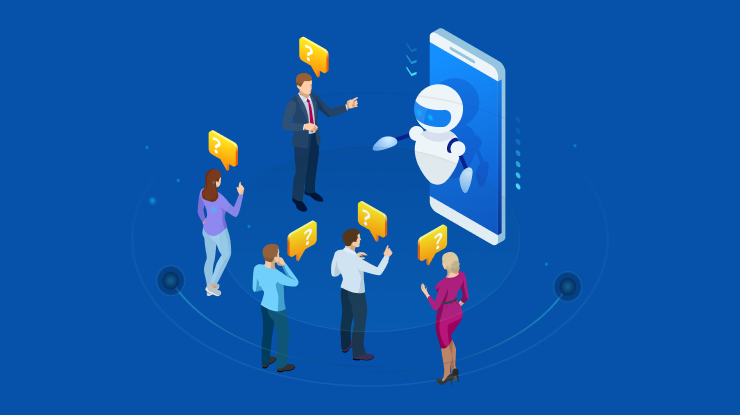
Generative AI is introducing a new, far more powerful interface: the "conversational user interface" (CUI). The AI copilot is becoming the new UX layer.
- Old Apps (Static): A user opens a business intelligence dashboard. They see 10 charts and 5 tables. They must manually find the data, correlate the insights, and decide what to do next. The application is a passive tool.
- New Apps (Intelligent): A user opens an intelligent app. There is a single prompt. The user types, "Summarize our sales performance in the northeast region for Q3, identify the top three at-risk accounts, and draft follow-up emails for their account managers." The application is the copilot. It understands the request, performs the analysis, and takes the initial action. The application is an active partner.
This means custom software development is no longer just about building workflows; it's about building reasoning engines. This is the new frontier of product engineering services.
The Shift in the SDLC: The AI-Augmented Workflow
This new human-AI partnership fundamentally alters every single phase of the traditional software development life cycle (SDLC). The entire process becomes a continuous, collaborative dialogue between the human architect and the AI agent.
The Traditional vs. AI-Augmented SDLC
THE EVOLUTION OF THE SOFTWARE DEVELOPMENT LIFECYCLE
PHASE 1: PLANNING
- TRADITIONAL: Humans manually draft user stories & technical specs.
- AI-AUGMENTED: Humans prompt AI to generate first drafts of specs, user stories, and even architectural diagrams for human review.
PHASE 2: DEVELOPMENT
- TRADITIONAL: Humans manually write, refactor, and document code.
- AI-AUGMENTED: Humans prompt AI to generate boilerplate code, refactor legacy systems, and write documentation. Human focus is on review and integration.
PHASE 3: TESTING
- TRADITIONAL: Humans manually write unit tests, regression tests, and test data.
- AI-AUGMENTED: Humans prompt AI to generate comprehensive test suites, create realistic mock data, and even identify subtle bugs.
PHASE 4: DEPLOYMENT & OPS
- TRADITIONAL: Humans manually write deployment scripts (IaC) and monitor logs for errors.
- AI-AUGMENTED: AI generates Infrastructure-as-Code scripts, and AI-powered observability tools (part of DevOps automation) proactively detect anomalies and predict failures.
Why This Is the New Competitive Advantage
This transformation is not a distant, academic concept. It is a present-day competitive imperative. Companies that cling to the traditional, fully manual model of application engineering will be comprehensively outpaced in two critical ways:
- Speed: An AI-augmented engineering team can simply build, test, and deploy features at a velocity that a manual team cannot match.
- Capability: An AI-augmented team is not just building faster; they are building smarter. They are creating the intelligent apps that will become the next generation of enterprise software, offering conversational, predictive, and automated experiences that will make traditional, static applications feel obsolete.
Organizations must now ask a critical question: is our current AI strategy just about using AI tools, or is it about fundamentally retooling our engineering culture and processes to compete in this new era?
How Hexaview Is Leading the Future of Engineering
At Hexaview, we are at the C of this new paradigm. We are not just a custom software development shop; we are a dedicated AI engineering services partner. We understand that the future is about integrating AI at the very core of the engineering process.
Our product engineering services are built for this new reality. We leverage AI in engineering to accelerate our own workflows, delivering higher-quality, more resilient software to our clients faster. More importantly, we provide the expert copilot integration solutions that help our clients build their own domain-specific, intelligent applications. We are the strategic partner you need to navigate this shift, transforming your development practices and your products to win in the age of Generative AI.