In the world of modern DevOps automation, "stability" is the name of the game. Yet, for most Site Reliability Engineering (SRE) teams, incident response is a chaotic, manual, and sleep-deprived nightmare. The core problem is simple: our ability to generate machine data (logs, metrics, traces) has completely outpaced our human ability to interpret it during a crisis.
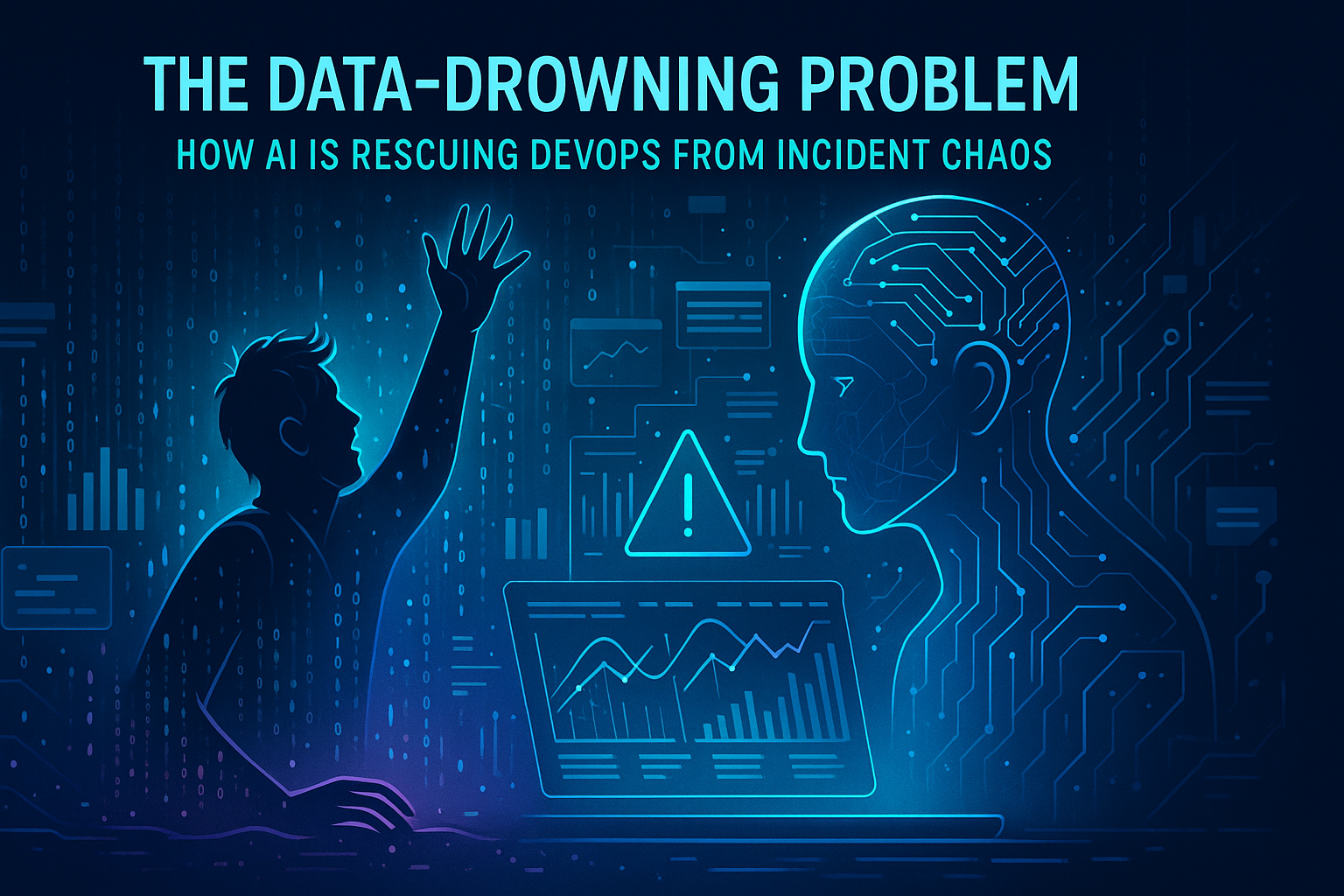
When a critical service fails, it doesn't create one clean alert. It creates a "symphony of noise"—a thousand different "symptom" alerts as every connected microservice begins to fail. This is the data-drowning problem. Your best engineers are forced to become digital archaeologists, digging through terabytes of data, manually correlating timestamps, and frantically trying to find the one event that started the cascade.
The Agitation: The Crippling Cost of Manual Response
This manual, reactive process isn't just inefficient; it's a massive financial and cultural drain on your organization.
The "Mean Time to Resolution" (MTTR) is the clock that starts ticking the second you lose revenue. This manual "war room" approach, filled with engineers on a 3 AM call, is disastrously slow. What's the real cost?
- Massive Revenue Loss: For an e-commerce platform, 90 minutes of checkout downtime on a high-traffic day can mean millions in lost sales.
- Engineer Burnout: The number one cause of SRE burnout is alert fatigue and high-stress, middle-of-the-night incidents. You are burning out your most valuable, expensive talent.
- Customer Trust Erosion: In a subscription-based economy, stability is a feature. Frequent or long outages are the fastest way to drive customers to your competitors.
Industry analysts at firms like Gartner have repeatedly found that mature AIOps (AI for IT Operations) implementations can reduce MTTR by 60% or more. This isn't an incremental improvement; it's a fundamental change to the business.
The Solution: The AI-Powered "Root Cause" Engine
The solution is to stop using humans as slow, stressed-out data processors. An AI copilot built for IT operations is the definitive answer to the data-drowning problem.
This is not just a "smarter" dashboard. It is an intelligent app designed to perform three critical tasks that humans simply cannot do at scale:
- Intelligent Alert Correlation: Instead of showing you 1,000 individual alerts, the AI ingests the entire "alert storm." It understands the topology of your system and uses machine learning to automatically group all related "symptom" alerts into one single, actionable incident. It cuts through the noise and points directly to "patient zero" the first service that failed.
- Automated Root Cause Analysis (RCA): This is the most powerful part. The AI doesn't just show you what broke; it tells you why. It automatically ingests and correlates all three pillars of observability at once:
- Logs: It finds the "payment failed: database connection timeout" error.
- Metrics: It sees the "database CPU spiked to 100%" metric at the exact same time.
- Traces: It identifies the exact code deployment (v1.3.4) that introduced a new, inefficient query.
The AI presents a simple, plain-English summary: "Incident caused by deployment v1.3.4, which led to a database CPU spike and cascading failures in the payment service."
- Automated Remediation: A mature AIOps platform connects this diagnosis to your DevOps automation runbooks. It doesn't just find the problem; it suggests the fix. The SRE’s job is elevated from a frantic "digger" to a "director"—a human expert who validates the AI's findings and simply clicks "Approve Rollback."
The New DevOps Workflow: From 90 Minutes to 5 Minutes
The AI-augmented workflow fundamentally changes the economics of incident response, compressing a 90+ minute manual fire-drill into a 5-minute surgical fix.

How Hexaview Builds Your AIOps Foundation
This 60%+ reduction in incident response time is not an off-the-shelf product. It requires a robust, well-architected AI strategy and a deep integration with your specific CI/CD pipelines and observability tools.
At Hexaview, we are a premier custom DevOps automation partner that specializes in the complex AI in engineering. We build the resilient, high-performance foundation that AIOps requires.
- We implement the DevOps automation and observability platforms to ensure the right data is being collected.
- Our AI engineering services team helps you select and integrate the right AI models to analyze your unique operational data.
- Our copilot integration solutions build the "connective tissue" that allows the AI to not just find the problem, but to safely fix it by triggering your automation runbooks.
Stop letting manual incident response burn out your team and drain your revenue. Let us help you build the intelligent, self-healing systems that turn 90-minute outages into 5-minute fixes.

AIOps tools and solutions are rapidly being adopted by enterprises across the world.
Here are 9 KPIs that can help you measure the effectiveness and impact of AIOps solutions in your company