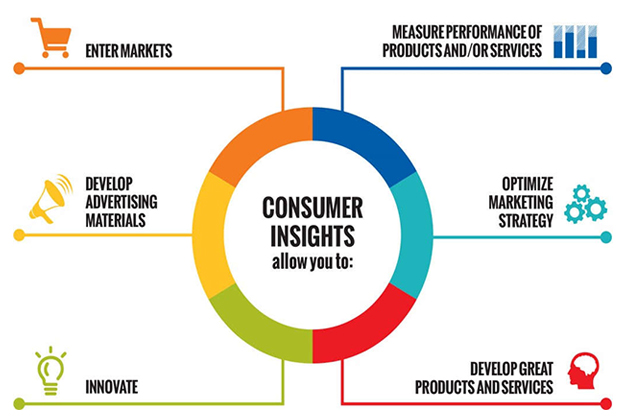
Market research reveals multiple growth and competitiveness-improving opportunities by making sense of market disruptions, customer values, and what rival brands are doing. Therefore, it brings clarity, especially in the digital era, where every consumer switches brands sooner or later. This era necessitates strategic planning, which is not effective if high-quality data and precise insight are not behind it. This post will focus on the importance of market research as an enabler of smarter business decisions, helping brands compete in their target industry with their full potential.
Why is Market Research Important to Make Smarter Business Decisions?
1. Understanding Customer Needs with Greater Precision
Market researchers will help the corporate firms understand what customers want via tools such as SurveyMonkey, Qualtrics, and Google Surveys. They all help teams gather opinions in minutes. So, an organization will know which features buyers care about the most or whether launching a new variant of a product will sell well. Many business intelligence and analytics solutions tap into the data that market researchers gather to empower leaders who want to grow their firm’s market share.
Gaining insights into in-house and rival entities’ design, packaging, pricing, partnerships, and customer retention programs also offers new ideas or strategies to adopt. The sooner those ideas help a company improve customer experiences, the better. Alignment with customer expectations with informed strategies is crucial, and that is why market research (MR) professionals’ assistance is helpful.
2. Market Opportunities and Growth Potential Evaluation
Market research supports a better understanding of market size, trends, and emerging opportunities. For example, organizations leverage tools from Gartner, Forrester, and Euromonitor to study new categories or regions. Doing so helps decision makers understand if a market is growing or slowing. It also allows teams to verify the trends from qualitative and quantitative research solutions. So, comparing segments and prioritizing high-value areas becomes straightforward.
For instance, first, a technology startup will use secondary research from Statista to study the global demand for AI-powered software. Later, based on the study of adoption rates and activities of competitors, the startup must select a realistic expansion plan. In such a case, market researchers ensure that other teams focus on areas that deliver the highest return.
3. Reducing Risk by Better Forecasting
Reliable market research positively correlates with forecasting accuracy. It allows companies to study historical data, patterns of customer behavior, and competitor performance to aid business decision-makers across supply, production, inventory, and budget planning. That way, leaders who base decisions on MR data successfully reduce the possibility of making costly mistakes.
Think of companies producing consumer goods, such as Unilever. They heavily invest in market research to test product ideas prior to approving large-scale manufacturing. Essentially, they elicit early feedback from target audiences. As a result, they can modify concepts based on what consumers like. This approach reduces risk and enhances the chances of successful product launches.
Conclusion
Market researchers’ contributions support an enterprise’s long-term planning by providing an ongoing view of how markets change. The smarter business decisions that MR enables are vital to organizations since they intend to increase resilience to greater economic stressors. Those decisions certainly help leadership teams achieve their goals. In other words, data-driven business decision-making also ensures that growth strategies stay grounded in reality.




What is the meaning of gaining Business Insights from Analytics?However big or small a company is, business insights from analytics is a common task that everyone ought to perform and know about.
It is only after analyzing data and information that one finds proper insights into their business to help in creating plans and strategies.Analytics is a simple process that follows data collection and helps in acquiring valuable information from the huge amount of collected data.
It tells what is of what use and how after understanding thoroughly the collected data can be used for the benefits of a business.As for business insights, it is the process of gaining information on the processes through which solutions and better strategies can be created easily.
How Business Insights from Analytics helps in business growthBusiness Intelligence is one factor that helps in not just finding the problems with the existing strategies but also provide a headstrong solution.
Whatever kind of problem there is, it can never be one that cannot be solved with thorough market research.Every business needs to first research the effective measures of steps taken and then analyze the collected data to gain the efficacy of the situations.Having a team of analysts would be the initial and most necessary step to provide an excellent analysis of data.There are not ways but sundry methods suitable differently to different business research companies in India and other countries that analyze data to provide accurate and proper business insights.Adopt the following methods to gain valuable business insights from analytics:Collecting data and analyzing it on various aspects- Gather the required data after proper market research and online/ normal surveys.
Divide the collected data into different categories for easy accessibility.Evaluating the accuracy of data and its relevancy too- Make sure the data is relevant and accurate as per the requirement and niche.Understanding Consumer Behavior- Analyze the collected data in order to evaluate the consumer buying behavior which tells a lot about what they prefer and is confused about.

Architectural Paints and Coatings Industry research report delivers a close watch on leading competitors with strategic analysis, micro and macro market trend and scenarios, pricing analysis and a holistic overview of the market situations in the forecast period.UpMarketResearch offers a latest published report on “Global Architectural Paints and Coatings Market Analysis and Forecast 2018-2025” delivering key insights and providing a competitive advantage to clients through a detailed report.
The report contains 140 pages which highly exhibit on current market analysis scenario, upcoming as well as future opportunities, revenue growth, pricing and profitability.Architectural Paints and Coatings Industry research report delivers a close watch on leading competitors with strategic analysis, micro and macro market trend and scenarios, pricing analysis and a holistic overview of the market situations in the forecast period.
Further, key players, major collaborations, merger & acquisitions along with trending innovation and business policies are reviewed in the report.
The report contains basic, secondary and advanced information pertaining to the Architectural Paints and Coatings Industry global status and trend, market size, share, growth, trends analysis, segment and forecasts from 2018 – 2025.Get Exclusive FREE PDF Sample Copy of This Report @ https://www.upmarketresearch.com/home/requested_sample/5766The scope of the report extends from market scenarios to comparative pricing between major players, cost and profit of the specified market regions.
The numerical data is backed up by statistical tools such as SWOT analysis, BCG matrix, SCOT analysis, PESTLE analysis and so on.
The statistics are represented in graphical format for a clear understanding on facts and figures.The generated report is firmly based on primary research, interviews with top executives, news sources and information insiders.