





Wireless testing timelines are under pressure like never before. As devices evolve to support 5G Advanced, early 6G research, massive MIMO, beamforming, and higher frequency bands, test complexity continues to rise. In 2025, engineering teams are expected to validate more antennas, more orientations, and more scenarios—without extending development cycles. This is where multi-axis antenna positioning systems are redefining how RF and OTA testing is performed, helping labs achieve faster, more repeatable, and automation-ready measurements.
Modern test environments can no longer rely on manual rotation or single-axis motion. Precision, speed, and synchronization with test software have become critical requirements. Multi-axis positioning brings these capabilities together, enabling test engineers to reduce measurement time while maintaining accuracy and compliance.
Key Takeaways
- Why multi-axis motion is essential for faster OTA and radiated testing in 2025
- How automated positioning reduces manual intervention and test variability
- Practical ways to optimize test workflows using multi-axis control
- What to look for when selecting a future-ready antenna positioning solution
Why Test Time Is a Critical Metric in Modern RF Labs
Test time is no longer just an operational concern—it directly impacts product launch schedules, certification readiness, and development costs. With wireless devices incorporating multiple antennas and operating across wide frequency ranges, traditional test approaches struggle to keep up.
Manual or semi-automated positioning introduces delays between measurements, increases operator dependency, and limits test repeatability. As a result, teams often face longer validation cycles and higher risk of inconsistencies.
A modern antenna positioning system addresses these challenges by enabling precise, programmable motion across multiple axes. Instead of stopping tests to manually adjust orientation, engineers can execute continuous, automated measurement sequences that dramatically reduce overall test duration.
Understanding Multi-Axis Antenna Positioning
Multi-axis antenna positioning systems typically support motion in azimuth, elevation, and sometimes roll or radial axes. This allows antennas or devices under test to be positioned accurately in three-dimensional space, closely simulating real-world operating conditions.
Unlike single-axis solutions, multi-axis systems enable:
- Continuous angular sweeps without interruption
- Complex orientation patterns for beam characterization
- Synchronized movement with RF measurement equipment
These capabilities are especially valuable for OTA testing, where radiation patterns must be measured across hundreds or thousands of angular points.
How Multi-Axis Positioning Reduces Test Time
Continuous Motion Instead of Stop-and-Go Testing
Traditional testing often relies on step-and-measure workflows. The system moves to a position, stops, stabilizes, measures, and then moves again. This approach is inherently time-consuming.
Multi-axis positioning enables continuous scanning, where measurements are taken while the antenna is in motion. This significantly shortens test cycles without compromising data quality.
Automation Eliminates Manual Bottlenecks
Manual repositioning introduces delays and variability. Automated multi-axis control removes the need for operator intervention, allowing tests to run unattended—even overnight or during off-hours.
By integrating the antenna positioning system directly with test software, motion and measurement are tightly synchronized, ensuring consistent execution every time.
Faster Setup for Complex Test Scenarios
Multi-axis systems simplify the execution of complex test plans. Predefined motion scripts allow engineers to switch between test scenarios quickly, reducing setup and reconfiguration time between measurements.
Benefits Beyond Speed: Accuracy and Repeatability
Reducing test time is only valuable if accuracy is preserved. Multi-axis antenna positioning systems are designed to deliver high angular resolution and repeatability, which are critical for reliable RF measurements.
Key benefits include:
- Precise angular positioning for accurate radiation pattern capture
- Repeatable motion profiles that support regression testing
- Reduced human error compared to manual adjustments
These advantages are particularly important in certification testing, where consistent results are essential for compliance with global standards.
Key Features to Look for in Multi-Axis Positioning Systems
Not all positioning solutions offer the same level of performance. When evaluating options, organizations should consider features that directly impact efficiency and scalability.
Important capabilities include:
- High-speed motors with smooth motion control
- Multi-axis synchronization for complex movement patterns
- Open software interfaces for automation and integration
- Mechanical stability to support heavier antennas or DUTs
A well-designed antenna positioning system should also be adaptable, allowing labs to scale from R&D to production testing without major reconfiguration.
Best Practices to Optimize Test Workflows
Align Motion Profiles with Measurement Goals
Avoid unnecessary angular resolution where it adds no value. Tailoring motion steps and sweep speeds to the specific test objective can significantly reduce overall measurement time.
Integrate Early with Test Automation
Positioning systems deliver the most value when integrated into automated test environments. Early integration with RF instruments, chamber control software, and data processing tools ensures smooth operation and minimal rework.
Standardize Test Sequences
Creating standardized motion scripts for common test cases improves consistency and shortens setup time. This approach is especially useful for educational institutions and shared labs where multiple users rely on the same infrastructure.
Supporting Emerging Use Cases in 2025
Multi-axis antenna positioning is no longer limited to traditional antenna pattern measurements. In 2025, these systems play a vital role in:
- Beamforming and adaptive antenna validation
- Massive MIMO performance testing
- Automotive OTA testing for V2X and ADAS systems
- Early-stage 6G research and prototyping
As wireless technologies evolve, flexible and automation-ready positioning solutions become essential for staying competitive.
Frequently Asked Questions
How does a multi-axis antenna positioning system differ from a single-axis solution?
Multi-axis systems allow movement across multiple angular dimensions simultaneously, enabling faster and more realistic testing compared to single-axis solutions that require sequential repositioning.
Can multi-axis positioning be used in compact OTA chambers?
Yes. Many modern systems are designed with compact footprints and can be tailored for small or mid-sized chambers without sacrificing performance.
Does continuous motion affect measurement accuracy?
When properly synchronized with RF instruments, continuous motion testing maintains accuracy while significantly reducing test time.
Is multi-axis positioning suitable for both R&D and production environments?
Absolutely. With programmable control and automation support, the same system can be used across development, validation, and production testing.
What industries benefit most from multi-axis antenna positioning?
Telecommunications, automotive, aerospace, consumer electronics, and academic research institutions all benefit from faster and more repeatable RF testing.
Take the Next Step Toward Faster, Smarter RF Testing
Reducing test time is no longer about cutting corners—it’s about using smarter tools that align with modern wireless demands. Multi-axis antenna positioning systems provide the precision, speed, and automation capabilities required to keep pace with evolving standards and tighter development schedules.
By adopting advanced motion control solutions from trusted innovators like Orbis Systems, organizations can streamline their RF testing workflows with confidence, leveraging proven expertise, robust engineering, and a forward-looking approach to wireless test automation.

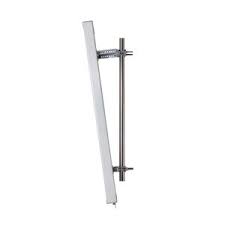
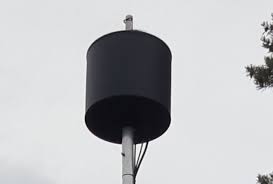
The new Switched Multi-beam Antenna Market report offers a comprehensive study of the current scenario of the market including major market dynamics.
Also, it highlights the in-depth marketing research with the newest trends, drivers, and segments with reference to regional and country.
Further, this report profiles top key players and analyze their market share, strategic development, and other development across the world.The research report also covers the comprehensive profiles of the key players in the market and an in-depth view of the competitive landscape worldwide.
The major players in the switched multi-beam antenna market include AT, ET Industries, Ericsson, Broadcom, CCI antennas, Comba Telecom, Commscope, Kathrein, Huawei Technologies.
This section consists of a holistic view of the competitive landscape that includes various strategic developments such as key mergers & acquisitions, future capacities, partnerships, financial overviews, collaborations, new product developments, new product launches, and other developments.Get more information on "Global Switched Multi-beam Antenna Market Research Report" by requesting FREE Sample Copy at https://www.valuemarketresearch.com/contact/switched-multi-beam-antenna-market/download-sampleMarket DynamicsSwitched multi-beam antenna is gaining robust attention due to its ability to reduce the existing interference; improve transmission quality, and increase gain and diversity.
Smart antennas will be necessary to provide mobility support for many new and emerging technologies such as virtual reality, self-driving cars, connected vehicles, and Voice over 5G (Vo5G).