






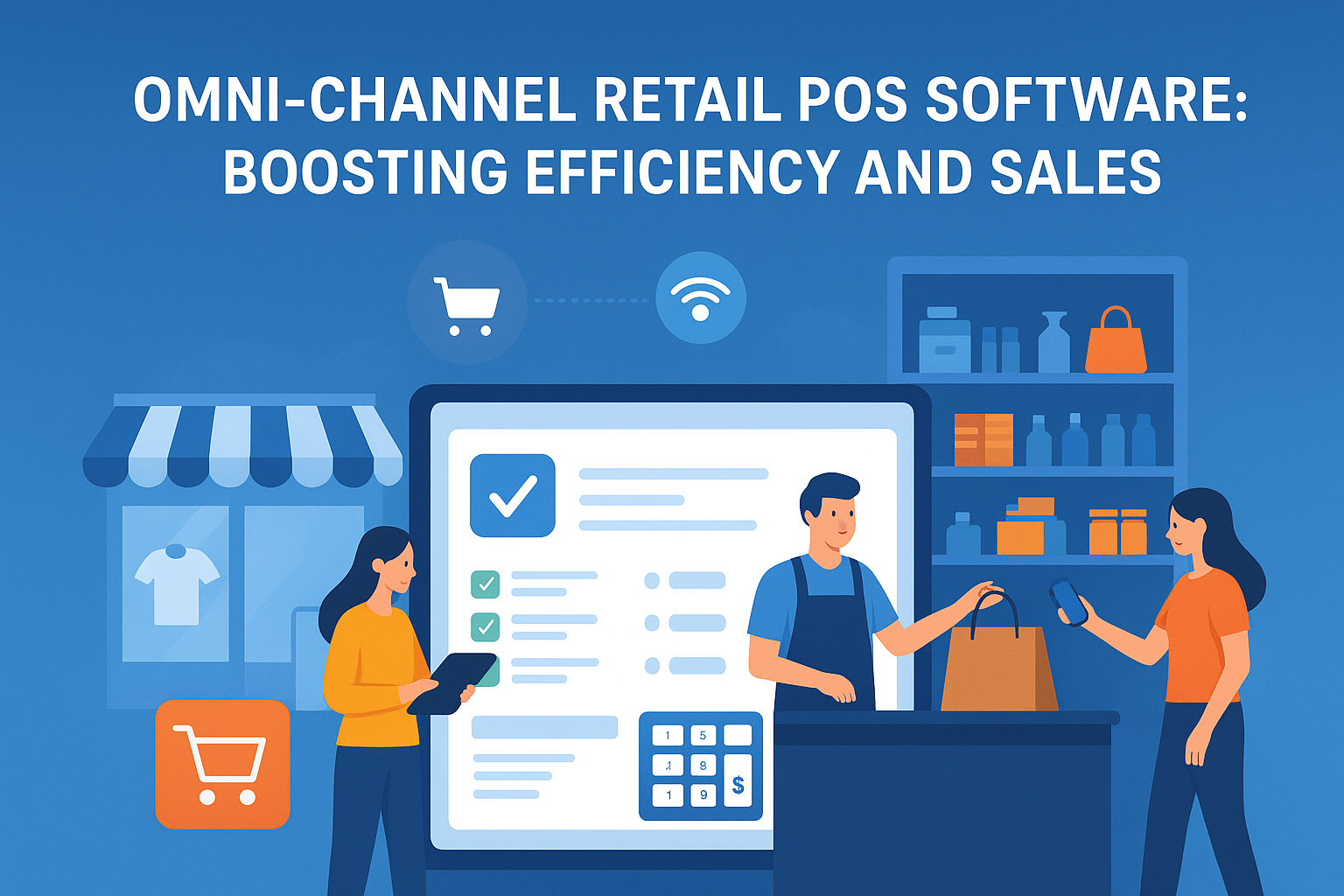
Retailers today don’t just sell in physical stores or online storefronts. They operate in a blended world where shoppers can browse on mobile, compare on social, and buy in-store. Because of that, promotions can’t live in silos anymore. The smartest retailers are shifting to unified promotions management, where all price discounts, reward programs, coupons, bundles, and offers behave consistently across every touchpoint.
Let’s break down how this works and why it can be a real growth lever for modern retail.
Understanding unified promotions in the real world
Think about a customer who sees an offer online and then walks into a store expecting the same deal. If the promotion exists online but not offline, you’re breaking trust. When online and offline promotion performance gets aligned, your business behaves like a single marketplace instead of separate channels competing with each other.
- Unified promotions management simply means this:
- One promotion engine feeding all channels
- One source of promotional truth
- One logic that defines who gets what deal and when
So promotions aren’t manually recreated for ecommerce, POS, app, marketplace, and loyalty portals. They’re created once and executed everywhere.
What is a retail promotion strategy in this framework?
At its core, what is retail promotion strategy? It’s the method by which retailers offer incentives to drive sales. But with unified promotions, the strategy evolves to become data-driven and channel-agnostic. Instead of running promotions based on intuition or seasonal tradition, businesses look at:
- Historical sales patterns
- Customer segmentation
- Basket composition
- Real-time inventory availability
- Regional pricing and purchasing trends
- Competitive pricing signals
- This lets retailers run promotions with intent instead of noise.
For example:
- If store inventory is oversupplied: push in-store promotions
- If ecommerce conversion drops: initiate time-bound digital coupons
- If a product sells well only in certain regions: apply localized offers
- If loyal customers respond well to bundles: increase combo promotions
Promotions shift from broad-brush discounting to targeted incentivization.
How Unified Promotions Management works operationally
Here’s what actually happens inside the system when promotions run:
- Promotion creation
Business teams set a rule like: 15 percent off on all winter jackets above Rs. 3,000 for loyalty customers.
- Eligibility logic
The system checks:
- Customer profile
- Cart conditions
- Inventory levels
- Validity period
- Channel (store, web, marketplace, app)
- Real-time execution
The same promotion applies whether the customer:
- scans a barcode in-store
- checks out online
- purchases via mobile
- buys through a connected retail partner
- Data capture and measurement
Performance insights return:
- Conversion impact
- Margin effects
- Revenue lift
- Customer response
This loop lets retailers refine promotions continuously.
- Avoiding the discount trap
Many retailers assume promotions equal discounts. That’s lazy marketing. Unified promotions enable smarter incentives such as:
- Buy-more-save-more tiers
- Cross-sell offers
- Personalized loyalty rewards
- Time-based urgency triggers
- Event-based campaigns
- Gamified shopping incentives
- Region-specific incentives
Instead of slashing prices across the board, retailers influence buying behavior in strategic ways.
Upscaling the business through unified promotions
When a retailer applies unified promotions the right way, here’s the impact.
1. Better customer experience
Shoppers feel valued because they get consistent offers everywhere.
2. Increased conversion
If a buyer sees an offer right when they’re ready to purchase, the friction disappears.
3. Higher average order value
Bundles and tier-based discounts naturally push bigger baskets.
4. Real-time responsiveness
Promotions can be changed, paused, or optimized instantly based on data.
5. Channel harmony
Instead of stores complaining that online undercuts them, or vice-versa, every channel works together.
6. Inventory alignment
Promotions sync with stock availability, reducing deadstock and aging inventory.
7. Revenue lift with margin protection
When promotions are targeted, discount leakage is minimized and profitability improves.
Where many retailers go wrong
The common pitfalls include:
- Running too many promotions at once
- Offering blanket discounts without segmentation
- Ignoring cross-channel interactions
- Setting promotions without checking stock
- Failing to measure promotional ROI
- Training store staff poorly on applied offers
Unified promotions solve these issues structurally rather than band-aid-style.
Final thought
Unified promotions management isn’t just a technology shift, it’s a strategic mindset shift. When every promotion is created and managed centrally, customers get a single coherent experience, teams operate with clarity, and the business becomes capable of scaling without chaos. Retailers who understand and apply this unified approach will be the ones winning loyalty and maintaining sustainable profitability in the years ahead.
Get yourself ahead in the retail market with Sonata's unified commerce strategy.
An integrated commerce solution that brings together all the aspects of customer experience to build an effective commerce strategy.
Utilize this platform for an effective run of your business.
Accelerate productivity and minimize cost with end to end retail software.
Sonata software provides the multi-channel retail software which assists in creating an omnichannel platform to address customer experiences and altogether in overall growth.
