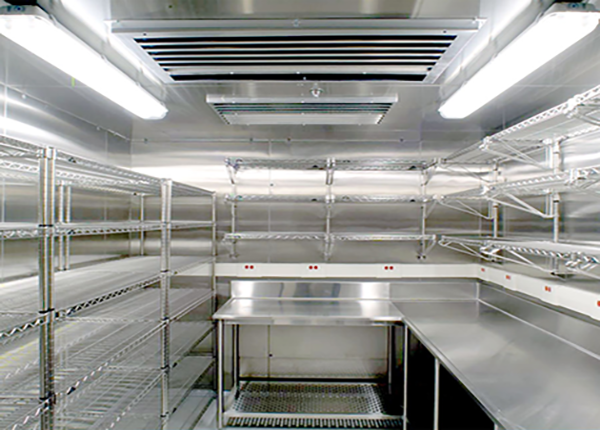
“Is the room within limits?”
That simple question comes up every day in labs, manufacturing floors, and testing facilities. And behind it sits a much bigger responsibility: ensuring that a Controlled Environment Room consistently meets the standards required for quality, safety, and compliance.
Controlled environment standards aren’t about creating a “perfect” room. They’re about controlling the right variables, documenting them properly, and responding quickly when something drifts out of range. Let’s break down what truly must be controlled—and why each element matters.
1. Temperature: The Foundation of Stability
Temperature is often the first parameter defined in a Controlled Environment Room standard—and for good reason.
Even small fluctuations can:
Affect chemical reactions
Alter material properties
Impact test accuracy
Reduce product shelf life
In real operations, temperature control isn’t just about comfort. I’ve seen stability studies invalidated because room temperature slowly drifted outside acceptable limits over a weekend.
Standards typically define:
Target temperature range
Acceptable tolerance limits
Continuous monitoring requirements
Quality teams don’t just check temperature—they trend it. That data becomes evidence during audits and investigations.
2. Humidity: The Silent Disruptor
Humidity is one of the most underestimated variables in a Controlled Environment Room.
Too much moisture can cause:
Corrosion
Microbial growth
Material degradation
Too little can lead to:
Static discharge
Product cracking
Measurement errors
Standards clearly define relative humidity ranges based on the activity being performed. For electronics, low humidity control is critical. For pharmaceuticals, stable mid-range humidity prevents both microbial risk and material instability.
If humidity isn’t monitored continuously, it’s not truly controlled—and auditors know that.
3. Air Quality and Particulate Control
Ask any auditor what defines a controlled environment, and air quality will be near the top of the list.
Standards focus on:
Particulate concentration limits
Air change rates
HEPA or ULPA filtration
Cleanliness classifications
A Controlled Environment Room isn’t just about clean air—it’s about controlled airflow. Proper air patterns prevent particles from settling on sensitive surfaces or moving between zones.
I’ve seen rooms meet particulate limits on paper but fail in practice due to poor airflow design. Standards exist to prevent exactly that scenario.
4. Pressure Differentials: Keeping Contamination Out—or In
Pressure control is how facilities manage risk between spaces.
Standards define whether a room must be:
Positively pressurized (to keep contaminants out)
Negatively pressurized (to contain hazardous materials)
Pressure differentials help ensure that air flows in the correct direction—especially between corridors, gowning areas, and processing rooms.
Without pressure control, even the best filtration systems lose effectiveness. That’s why pressure monitoring is a non-negotiable standard in controlled environments.
5. Microbial Control and Cleanliness
In environments where sterility or hygiene matters, microbial control standards become critical.
This includes:
Surface cleanliness limits
Routine cleaning and disinfection schedules
Environmental monitoring programs
Defined alert and action levels
A Controlled Environment Room standard doesn’t expect zero microorganisms—but it does require predictable, acceptable levels and documented responses when limits are exceeded.
This is where experience matters most. Quality teams learn which trends signal real risk and which are operational noise.
6. Lighting, Noise, and Human Factors
Not all standards are purely technical.
Controlled Environment Room guidelines also consider:
Adequate lighting for inspections
Noise levels that support concentration
Ergonomic layout for operators
Why does this matter? Because human error is a major quality risk.
When people can work comfortably and clearly, mistakes decrease. Standards exist to support both product quality and human performance.
7. Monitoring, Alarms, and Documentation
Control without documentation doesn’t count.
Standards require:
Continuous or frequent monitoring
Calibrated sensors
Alarm systems for excursions
Data retention and review procedures
Auditors don’t just ask, “Is the room controlled?”
They ask, “How do you know—and where is the proof?”
A Controlled Environment Room must generate reliable data that supports quality decisions, investigations, and regulatory compliance.
8. Change Control and Requalification
One often-overlooked standard: what happens when something changes.
Any modification—equipment upgrades, layout changes, HVAC adjustments—can impact environmental control. Standards require:
Risk assessments
Requalification testing
Updated documentation
Controlled environments aren’t “set and forget.” They evolve, and standards ensure that control evolves with them.
Why These Standards Matter
Controlled Environment Room standards exist for one reason: to make quality predictable.
When temperature, humidity, air, pressure, and cleanliness are controlled:
Results become repeatable
Products remain consistent
Compliance becomes manageable
Quality assurance stops being reactive and becomes preventive.
Final Thought
A Controlled Environment Room isn’t defined by how advanced it looks—but by how well it controls what truly matters.
Standards provide the roadmap. Experience teaches how to follow it effectively. When both work together, quality isn’t something you inspect at the end—it’s built into the environment from the start.



The global Controlled Environment Rooms Market report offers a comprehensive assessment of the market for the forecast years.
This global industry offers an outlook on the strategic development of the market in terms of revenue profits over the forecast period 2021-2026.The key market players for the global Controlled Environment Rooms market are listed below:BioCold EnvironmentalDarwin Chambers CompanyPercival ScientificVernickCannon Quality GroupTriMark RW SmithH2I GroupCan-Trol Enviromental SystemsLabworks InternationalStarrcoScientific Climate SystemsThermmaxPanel BuiltOthersClick here to get a FREE Sample Copy of the Controlled Environment Rooms Market Research Report @ https://www.decisiondatabases.com/contact/download-sample-18751The Global Controlled Environment Rooms Market Report is equipped with market data from 2016 to 2026.
It also evaluates the competitive scenario of the leading players.
The report forecasts sales and revenue from 2021 to 2026.
The detailed sales channel is also covered in the study.COVID-19 Impact Analysis on Controlled Environment Rooms MarketThe global pandemic COVID-19 has affected the Controlled Environment Rooms market directly or indirectly.
The impact study on production, supply-demand, and sales provides a holistic approach to the future.Do You Have Any Query Or Report Customization?