Food safety Management is crucial responsibility for every organisation involved in the food industry. From raw material sourcing to final consumption, food businesses must ensure that their products are safe, compliant, and trustworthy. A Food Safety Management System (FSMS) provides a structured approach to achieving this goal.
Understanding FSMS in the Context of ISO 22000
A Food Safety Management System (FSMS) is a set of policies, processes, and controls designed to identify, prevent, and manage food safety hazards. ISO 22000 is an internationally recognized standard that defines the requirements for an effective FSMS. It combines food safety principles with a management system approach, making it suitable for organizations of all sizes. ISO 22000 Lead Implementer Training helps professionals understand how these principles work together to build a reliable and compliant food safety system.
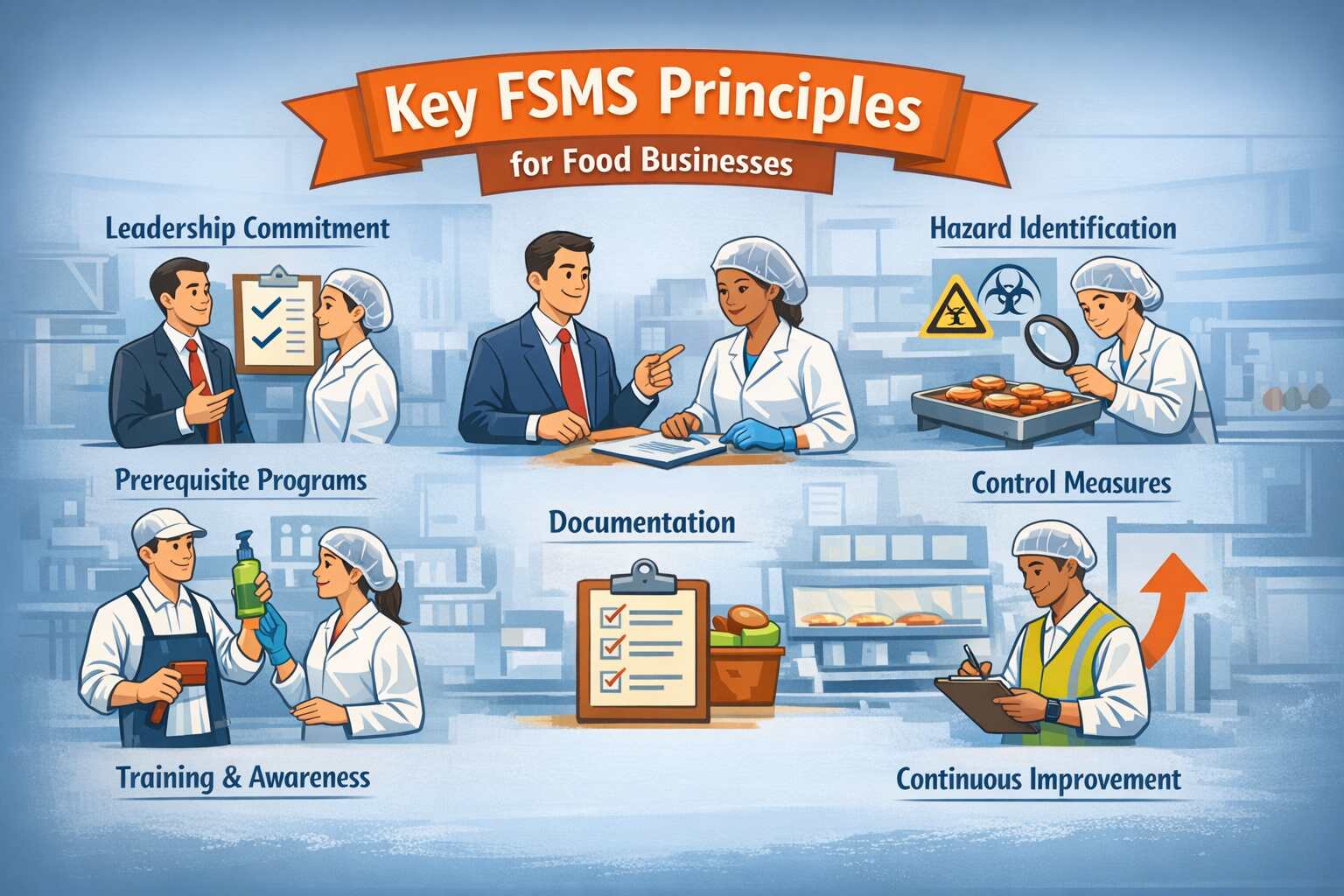
Core FSMS Principles Every Food Business Should Know
Some of core Food Safety Management System (FSMS) principles are given as below:
1. Leadership Commitment and Food Safety Policy
One of the most important FSMS principles is leadership commitment. Top management must define a clear food safety policy, allocate necessary resources, and actively promote a strong food safety culture across the organization. Leadership roles, responsibilities, and accountability are strongly emphasized in ISO 22000 Lead Implementer Training, as effective leadership drives the success of the entire Food Safety Management System.
2. Hazard Identification and Risk-Based Thinking
Another key FSMS principle is identifying potential food safety hazards and applying risk-based thinking. Food businesses must recognize biological, chemical, and physical hazards that could impact product safety. By assessing risks early in the process, organizations can take preventive actions to reduce or eliminate food safety issues before they occur.
3. Control Measures and Operational Planning
Control measures and proper operational planning are fundamental to maintaining food safety. FSMS requires food businesses to establish processes that keep hazards under control during production, handling, storage, and distribution. This includes implementing preventive measures and ensuring that critical activities are consistently monitored to maintain safe operations.
4. Prerequisite Programs (PRPs)
Prerequisite Programs support the day-to-day operations of a food business and form the foundation of an effective FSMS. These programs include personal hygiene practices, cleaning and sanitation, pest control, equipment maintenance, and workplace safety.
5. Documentation and Record Control
Documentation and record control are essential FSMS principles. Maintaining clear procedures and accurate records helps demonstrate compliance with food safety requirements, ensures traceability, and supports continuous improvement. Well-managed documentation also simplifies audits, inspections, and certification processes.
6. Competence, Training, and Awareness
An effective FSMS depends on the competence and awareness of employees. Regular training ensures that staff understand their food safety responsibilities and follow established procedures. Ongoing communication and awareness programs help reduce human errors and promote consistent food safety practices throughout the organization.
7. Monitoring, Verification, and Validation
Monitoring, verification, and validation activities ensure that food safety controls are functioning as intended. Routine checks, internal reviews, and assessments help identify gaps or weaknesses early, allowing organizations to address potential problems before they impact food safety.
8. Corrective Actions and Continual Improvement
Corrective actions and continual improvement allow food businesses to learn from nonconformities and incidents. By identifying root causes and implementing improvements, organizations can strengthen their FSMS over time. Continuous improvement is a key principle reinforced through ISO 22000 Lead Implementer Training.
Conclusion
FSMS principles form the foundation of safe and sustainable food operations. Understanding and applying these principles helps food businesses protect consumers, meet regulatory expectations, and build a strong reputation. ISO 22000 Lead Implementer Training plays a vital role in equipping professionals with the knowledge needed to implement and maintain an effective Food Safety Management System.



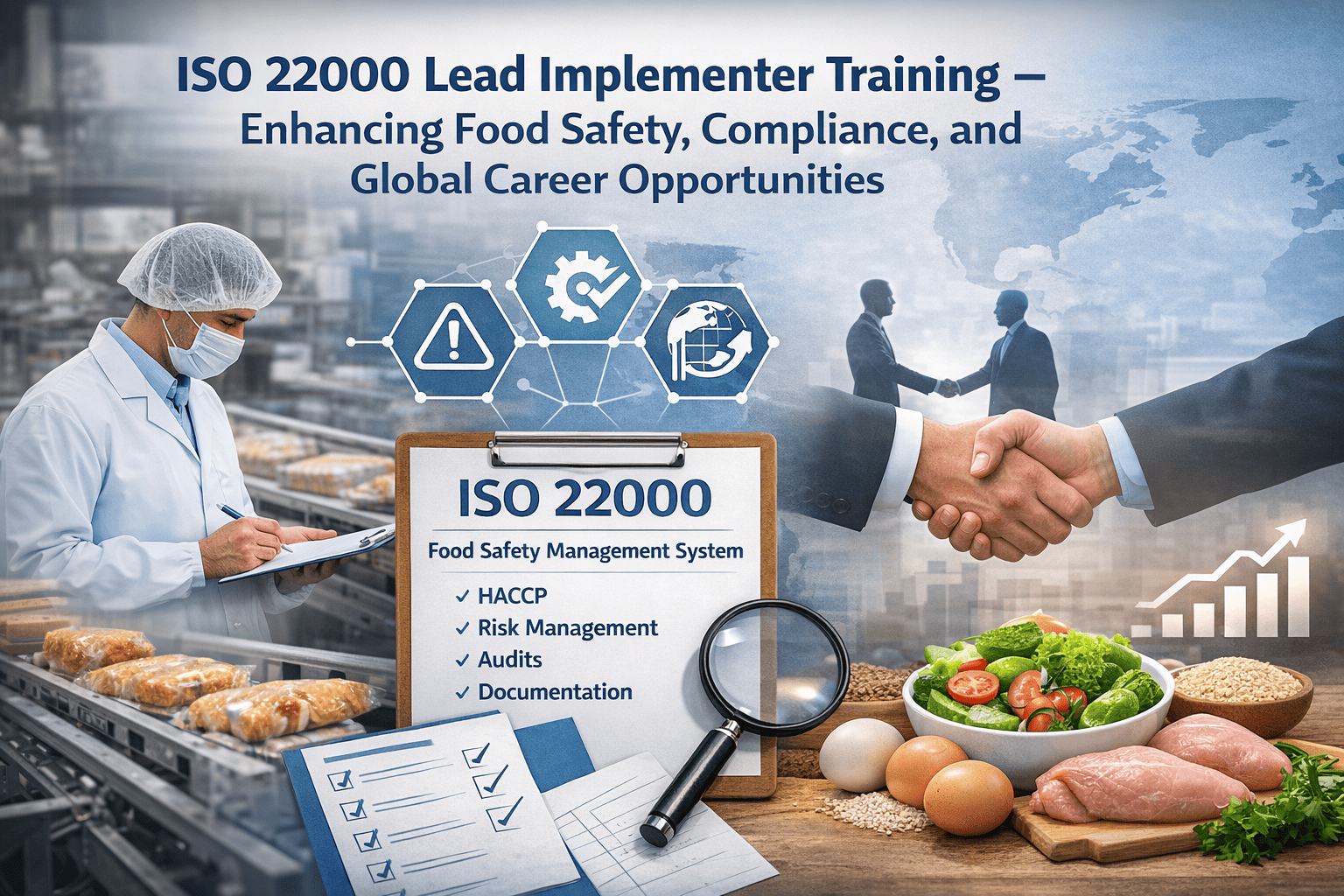
The food sector in the present era is such that maintaining safety and compliance standards is not an option but a necessity. This is where ISO 22000 Lead Implementer Training comes into play. It e