


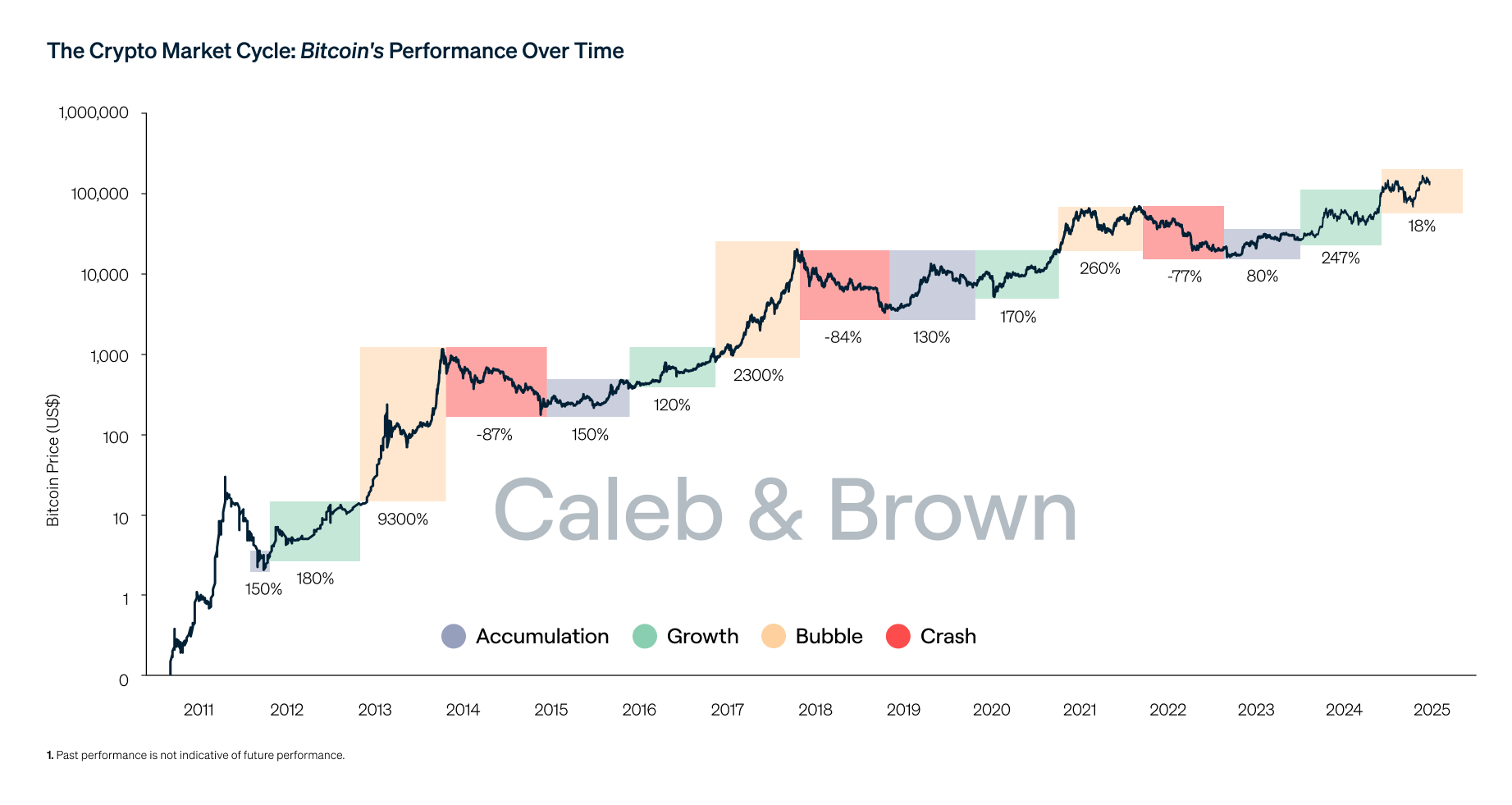
Bitcoin’s famous four-year cycle has long been treated as a roadmap for investors. But in 2025, that playbook is being questioned like never before. With ETFs reshaping demand, regulation easing in the US, and global liquidity back in focus, analysts are split on whether the cycle is officially over or simply changing form.
Why the 4-Year Cycle Ever Mattered
Bitcoin’s four-year cycle comes from one simple mechanic: the halving. Every four years, miner rewards are cut in half, slowing the flow of new Bitcoin entering the market. That supply shock has historically acted as the spark for major market moves.
Over time, this created a rhythm traders came to know well:
* Quiet accumulation leading up to the halving
* A powerful rally once supply tightened
* A market peak roughly 12–18 months later
* Followed by a deep correction and a long cooling-off period
Because this pattern repeated across multiple cycles, it became the mental model for the entire crypto market shaping everything from investor psychology to trading strategies for years.

The Case for “The Cycle Is Breaking”
A growing number of analysts think 2025 could be a real inflection point for Bitcoin.
Nick Ruck, director at LVRG Research, argues that the traditional halving-driven cycle has started to lose its grip mainly because of constant institutional demand coming from ETFs and corporate balance sheets.
According to him, this steady wall of capital has changed the market’s behavior:
* The brutal post-peak crashes we’re used to are being muted
* Volatility is noticeably lower than in past cycles
* The bull phase looks more stretched out rather than compressed
Instead of topping out in 2025, Ruck believes the broader uptrend could roll into 2026, fueled by long-term capital, deeper liquidity, and a market structure that looks very different from earlier cycles.
This thinking is echoed by Grayscale, which recently forecast a new Bitcoin all-time high in the first half of 2026, citing macro pressures like currency debasement and a more crypto-friendly regulatory environment in the US.
Standard Chartered also weighed in. Its digital assets research head Geoffrey Kendrick called the four-year cycle “no longer valid,” projecting Bitcoin to reach $150,000 by the end of 2026.
Other well-known voices including Cathie Wood, Arthur Hayes, Ki Young Ju, Matt Hougan, Hunter Horsley, and Raoul Pal have also suggested that Bitcoin is moving beyond rigid four-year cycles.

The Argument That the Cycle Still Exists
Not everyone agrees.
Some analysts argue that Bitcoin is behaving exactly as it has in past cycles. After peaking post-halving, BTC has already fallen roughly 30% from its highs, which they see as confirmation that a traditional bear phase is underway.
10x Research CEO Markus Thielen believes Bitcoin entered a bear market in late October 2025 making it one of the first major risk assets to reflect a slowing global economy.
Market analyst Rekt Capital also maintains that the four-year cycle is intact, though he noted that if it appears “broken,” it may simply be “leveling up” rather than disappearing.
Expectations May Be the Real Problem
Another perspective is that trader behavior itself is distorting the cycle. Many market participants expect a post-halving downturn and sell in advance creating a self-fulfilling slowdown.
The creator of the Stock-to-Flow model, PlanB, said much of the recent selling pressure comes from long-term holders still scarred by 2021, combined with traders positioning early for a cycle-based bear market.
Analyst Alex Wacy summed it up bluntly: the cycle may not be broken expectations are.
While stocks pushed to new highs, AI assets surged, and gold outperformed, crypto markets saw weak sentiment, bleeding altcoins, and little excitement. “Cycles don’t always end,” he noted. “Sometimes, they just stretch.”
So… Is the 4-Year Cycle Dead?
The answer depends on perspective.
Bitcoin may no longer follow the clean, dramatic boom-and-bust cycles of the past. Institutional ETFs, macro liquidity, and regulatory clarity have clearly changed the game. But that doesn’t mean cycles have vanished entirely—only that they may be longer, flatter, and more complex.
Instead of a clean break, Bitcoin’s four-year cycle may be evolving into something more mature, shaped as much by global finance as by halvings alone.




Bitcoin halving is the verge.
Catchup latest cryptonews about bitcoin halving to understand investment strategy.
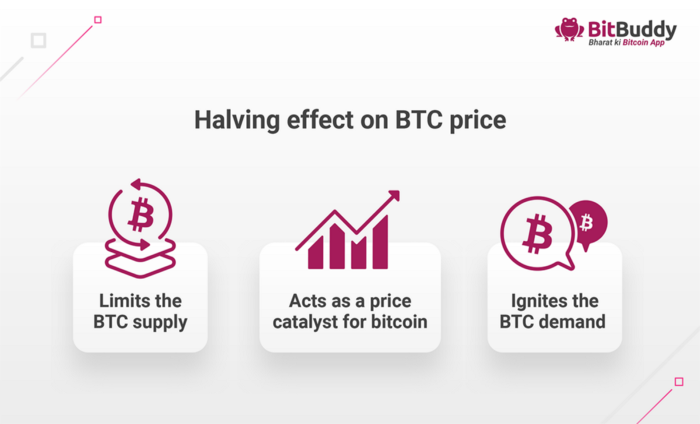
Bitcoins are created by solving a number of blocks and in return, the miners who solve these blocks are rewarded with bitcoins for their work.
Bitcoin halving is to maintain the supply of bitcoins in the network so as to regulate the price and demand of bitcoin.
When the supply of a commodity decreases in the market, its demand increases, and as the demand increases, it results in the commodity bitcoin price increase.